
I. A Warning Born Out of Deliberate Rejection
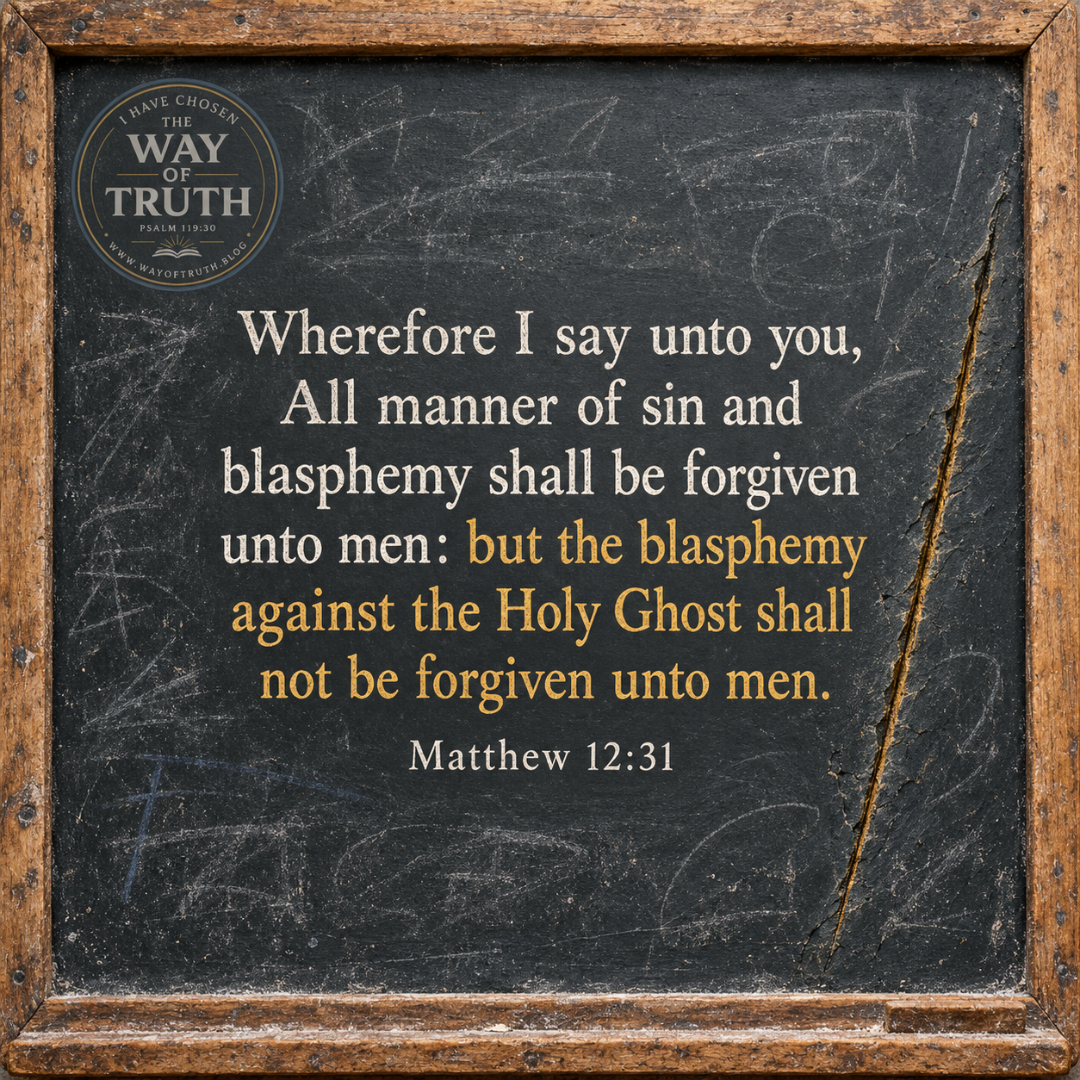
Matthew 12:31 contains one of the most sobering warnings Jesus ever delivered. It also contains one of His most remarkable declarations about God’s willingness to forgive. Within a single sentence, Christ speaks of mercy broad enough to encompass every manner of human sin, followed by a warning about a particular offense for which forgiveness won’t be granted.
Understandably, the second half of the verse receives most of the attention. The possibility of committing an unforgivable sin is frightening, especially for someone who sincerely desires to follow God. But if we concentrate exclusively on the warning, we risk overlooking the extraordinary promise that introduces it.
Both statements matter. And to understand either one properly, we must begin with the circumstances that prompted Jesus to speak these words.
A. The Accusation That Provoked the Warning
The opening word, wherefore, connects this warning directly to the confrontation recorded in the preceding verses. Jesus had healed a man who was possessed by a demon, blind, and unable to speak (Matthew 12:22). The miracle was unmistakable. A man who had been suffering under demonic oppression was suddenly able to see and speak.
The astonished crowd began wondering whether Jesus might be the promised Son of David, the Messiah they’d been awaiting. The Pharisees, however, offered a very different explanation. “This fellow doth not cast out devils, but by Beelzebub the prince of the devils” (Matthew 12:24).
They weren’t simply questioning whether the healing had happened. Their accusation concerned the source of Jesus’ power. Rather than acknowledging the possibility that God was working through Him, they attributed His authority over demons to Satan himself.
Jesus exposed the absurdity of their reasoning. If Satan were systematically overthrowing his own kingdom, he would be working against himself. Christ then explained that His authority over demons demonstrated the arrival of God’s kingdom. “But if I cast out devils by the Spirit of God, then the kingdom of God is come unto you” (Matthew 12:28).
In verse 29, Jesus compared His work to that of someone binding a strong man before taking possession of his goods. His deliverance of the oppressed demonstrated His superiority over Satan. Verse 30 then established that no one could remain spiritually neutral toward Christ. Those who refused to stand with Him stood against Him.
Now, in verse 31, Jesus identifies the dreadful seriousness of what the Pharisees were doing. They were witnessing the liberating work of God’s Spirit and attributing it to the enemy. Their accusation wasn’t merely an inaccurate theological opinion. It was a direct attack upon the divine testimony being presented through Jesus Christ.
B. The Astonishing Breadth of God’s Forgiveness
Before addressing the unforgivable sin, Jesus makes a remarkable declaration: “All manner of sin and blasphemy shall be forgiven unto men.” Consider the breadth of that statement. Christ doesn’t limit forgiveness to minor offenses, occasional failures, or sins committed without full awareness. He includes blasphemy, a serious offense involving speech or conduct that dishonors God.
Throughout Scripture, we encounter individuals guilty of terrible wrongdoing who nevertheless received divine mercy. David committed adultery and arranged the death of Uriah. Yet when confronted with his sin, he repented and sought God’s forgiveness (2 Samuel 11–12; Psalm 51). Peter publicly denied knowing Jesus, even after repeatedly declaring his willingness to die for Him. Yet the risen Christ restored Peter and entrusted him with further responsibility (John 21:15–19). Paul had persecuted the Church and opposed the name of Jesus Christ. Looking back upon his former life, he wrote: “Who was before a blasphemer, and a persecutor, and injurious: but I obtained mercy, because I did it ignorantly in unbelief” (1 Timothy 1:13). These examples demonstrate that the seriousness of a person’s past sins doesn’t automatically place that person beyond God’s forgiveness.
However, Jesus isn’t teaching that everyone will eventually be forgiven regardless of repentance or faith. The promise must be understood alongside Scripture’s consistent teaching that salvation comes through Jesus Christ and that sinners are called to repent and believe the gospel. Forgiveness is neither automatic nor deserved. It’s a gift of divine grace made possible through Christ’s sacrificial death.
The encouragement in Jesus’ words is that no ordinary measure of human wickedness can establish that a repentant sinner is beyond the reach of God’s mercy. The person who has wasted years in rebellion, denied Christ, or committed shameful acts need not conclude that the opportunity for forgiveness has passed simply because the sins were serious.
That’s an extraordinary promise. And it makes the exception that follows all the more solemn.
C. The Blasphemy That Won’t Be Forgiven
Jesus continues: “But the blasphemy against the Holy Ghost shall not be forgiven unto men.” What exactly does He mean? We shouldn’t begin with speculation about which particular words, thoughts, or actions might qualify. The immediate context provides the most reliable starting point.
Mark‘s parallel account is especially helpful. After recording Jesus’ warning, Mark explains why He gave it: “Because they said, He hath an unclean spirit” (Mark 3:30). This explanation is crucial.
The religious leaders were attributing the work of the Holy Spirit to a demonic source. The very power demonstrating Christ’s divine authority was being condemned as satanic. Their words revealed something more serious than uncertainty about Jesus’ identity. In the face of powerful testimony concerning His authority, they were responding with a hostile accusation that reversed the moral and spiritual significance of what they had witnessed. Rather than recognizing God’s deliverance of a suffering man, they portrayed that deliverance as the work of Satan.
This brings to mind Isaiah‘s warning: “Woe unto them that call evil good, and good evil” (Isaiah 5:20). The Pharisees were committing precisely that kind of reversal concerning the work of Christ.
The most convincing understanding of blasphemy against the Holy Spirit, therefore, begins with a deliberate, hostile rejection of the Spirit’s unmistakable testimony concerning Jesus Christ, expressed in the accusation that His divine work was demonic. This is much more specific than a moment of doubt, an ill-considered statement, or a period of spiritual struggle.
Nor should we reduce the offense to a mere verbal formula. The seriousness lies in the conscious opposition to God’s revealed truth that the accusation expresses. Jesus was exposing a deeply dangerous condition of the heart.
D. Why Is This Sin Unforgivable?
An important question naturally follows: Why would blasphemy against the Holy Spirit be unforgivable when other sins, including blasphemy in general, can be forgiven?
We must avoid suggesting that the Holy Spirit possesses greater divine dignity than the Father or the Son. Scripture presents the Father, Son, and Holy Spirit as distinct divine Persons sharing the one divine nature. Jesus isn’t establishing a hierarchy of importance within the Trinity. Neither does the passage suggest that Christ’s sacrifice is inadequate to deal with some especially powerful category of evil. The distinction concerns the nature of the offense.
The Holy Spirit bears witness to the identity and saving work of Jesus Christ (John 15:26; 16:8–14). Through His testimony, sinners are confronted with the truth about their condition and their need for the Savior. In Matthew 12, the religious leaders were confronted with a remarkable demonstration of that testimony. Yet they were calling the Spirit’s work demonic. Their accusation represented a frightening inversion of spiritual judgment. What should have led them toward recognizing the Messiah became the occasion for further hostility against Him.
This helps explain why the offense is so serious. The sinner isn’t merely resisting a particular command while acknowledging God’s authority. They’re rejecting the divine testimony that identifies Christ as the Savior.
There are different Christian interpretations of precisely how this relates to the impossibility of forgiveness. Some understand the unforgivable sin as the final, hardened rejection of Christ, particularly when a person dies without repentance. This interpretation rightly recognizes that persistent unbelief leaves a sinner without forgiveness. However, by itself, it doesn’t fully account for the specific accusation that prompted Jesus’ warning.
Others argue that the sin could occur only during Jesus’ earthly ministry, when people personally witnessed His Spirit-empowered miracles and deliberately attributed them to Satan. This view takes the historical circumstances seriously, but Scripture doesn’t explicitly state that the warning became irrelevant after Christ’s ascension. Jesus also gives a warning about speaking against the Holy Spirit in Luke 12:10, in a different immediate setting.
The strongest reading preserves the distinctive historical offense while recognizing its continuing warning: deliberately opposing the Holy Spirit’s testimony to Christ is profoundly dangerous, especially when someone knowingly portrays God’s revealed work as evil.
We shouldn’t claim more certainty than the passage permits about every possible modern expression of this sin. What Jesus makes unmistakably clear is that blasphemy against the Holy Spirit isn’t a harmless mistake. It’s an offense of eternal seriousness.
II. Responding to the Warning with Reverence and Discernment
A. Don’t Confuse Spiritual Struggles with Deliberate Blasphemy
One of the most unfortunate consequences of misunderstanding this passage is the unnecessary fear it creates among sincere believers. Some Christians become deeply troubled because they remember saying something irreverent about God. Others experience unwanted blasphemous thoughts and fear that merely having those thoughts means they’ve committed the unforgivable sin. Still others worry because they passed through a period of skepticism, questioned a biblical teaching, or struggled to understand God’s work in their lives.
We need to distinguish these experiences from what Jesus describes. The Pharisees weren’t presented as frightened people seeking forgiveness for an unwanted thought. They were openly attacking the divine authority demonstrated through Christ. A passing thought isn’t the same as a deliberate accusation. Neither is sincere questioning identical to malicious rejection. Even serious past blasphemy doesn’t necessarily mean someone has committed the particular offense described in Matthew 12:31. Paul’s testimony demonstrates that a former blasphemer can receive mercy.
At the same time, we shouldn’t offer simplistic reassurance that anyone who feels concerned must necessarily be innocent of every form of spiritual hardness. Concern alone isn’t an infallible measure of the heart.
The better response is to direct troubled individuals toward Christ and His promises. Jesus declares: “Him that cometh to me I will in no wise cast out” (John 6:37). A person genuinely seeking forgiveness shouldn’t be encouraged to speculate endlessly about whether salvation remains possible. The appropriate response to sin is repentance and faith in the Savior. Christ doesn’t instruct sinners to determine whether they’re eligible for mercy before coming to Him. He calls them to come.
B. Take Seriously the Danger of Resisting Revealed Truth
Although this passage shouldn’t produce unnecessary anxiety, neither should its warning be softened until it loses its force. The Pharisees possessed considerable knowledge of Scripture. They understood the religious expectations of their day and occupied positions of spiritual influence. Yet their familiarity with biblical teaching didn’t protect them from profoundly misjudging God’s work. Religious knowledge can become dangerous when someone uses it to defend a conclusion that they refuse to reconsider, regardless of the evidence.
The lesson isn’t that every disagreement with a religious leader amounts to resisting the Holy Spirit. Scripture actually commands believers to exercise discernment. “Beloved, believe not every spirit, but try the spirits whether they are of God” (1 John 4:1). Christians must evaluate spiritual claims according to Scripture. We should never allow someone to silence legitimate questions or biblical correction by threatening that disagreement constitutes blasphemy against the Holy Spirit. That would misuse Jesus’ warning and give human claims an authority they don’t possess.
Instead, this passage calls us to a different kind of humility: a willingness to submit our judgments to God’s revealed truth rather than forcing that truth to conform to our preferences. The Pharisees had witnessed a miraculous deliverance. Their difficulty wasn’t simply a lack of information. Their hostility toward Jesus influenced what they were willing to acknowledge. We should therefore examine not only what we believe, but also whether pride, resentment, or personal interests are preventing us from responding honestly to Scripture.
C. Guard Against a Heart That Becomes Increasingly Resistant
The Pharisees’ accusation also illustrates how dangerous persistent resistance to truth can become. Sin doesn’t always begin with outright hostility toward God. Sometimes it develops through a series of smaller compromises: dismissing conviction, excusing disobedience, or repeatedly refusing to acknowledge something Scripture has made clear. Over time, a person can become increasingly practiced at defending what should be confessed.
This doesn’t mean that every stubborn decision places someone on an inevitable path toward the unforgivable sin. Jesus is addressing a particular offense, and we must not treat every form of spiritual resistance as though it were identical.
Nevertheless, His warning gives us good reason to take the condition of our hearts seriously. When Scripture confronts us, the proper response isn’t to search for excuses but to acknowledge the truth. When we discover that our assumptions are mistaken, we should be willing to correct them. And when God exposes sin, we should repent rather than defend it. Humility isn’t merely admitting that we might sometimes be wrong. It’s being willing to change when God’s Word demonstrates that we are.
III. Living in the Light of God’s Mercy and Holiness
A. Approach God with Repentance Rather Than Despair
Matthew 12:31 places two truths before us: God’s forgiveness is astonishingly generous, and rejecting His revealed truth is terribly serious. For believers, these truths should encourage both gratitude and reverence. We don’t need to pretend that our sins are insignificant. We can acknowledge their seriousness because Christ has provided the means of forgiveness.
When we fail, our response should be confession rather than concealment. When our conscience troubles us, we should examine ourselves honestly in the light of Scripture, not become trapped in endless speculation about our spiritual condition. John reminds believers: “If we confess our sins, he is faithful and just to forgive us our sins, and to cleanse us from all unrighteousness” (1 John 1:9).
The Christian life isn’t sustained by our ability to avoid every failure. It’s sustained by the grace of God through Jesus Christ, whose saving work gives us reason to repent and continue following Him.
B. Cultivate a Humble and Teachable Spirit
The Pharisees provide a sobering example of what happens when religious certainty becomes detached from submission to God. Their confidence in their own judgment was no substitute for recognizing the truth standing before them. We should therefore approach Scripture with a willingness to be corrected.
This matters when studying difficult passages, discussing theological disagreements, and responding to people whose understanding differs from our own. Being firmly committed to biblical truth doesn’t require pretending that our interpretations are always flawless. We can remain confident in Scripture’s authority while humbly recognizing our own limitations. In fact, genuine reverence for God’s Word should make us more careful about claiming divine authority for our personal opinions.
C. Protect the Church from Spiritual Manipulation
This passage has sometimes been misused to discourage people from questioning religious experiences, charismatic claims, or the teachings of influential leaders. That’s a serious distortion. No modern preacher, congregation, or ministry possesses the right to identify criticism of its activities with the unforgivable sin.
The Pharisees were responding to the actual work of God’s Spirit through Jesus Christ. The passage doesn’t establish that every claimed miracle or spiritual experience comes from God.
Churches should encourage careful biblical examination, welcome legitimate questions, and correct errors without using fear to demand unquestioning loyalty. Such discernment honors the Holy Spirit because He’s the Spirit of truth, not the defender of human pride or deception.
D. Proclaim Both the Promise and the Warning
As believers, we have a responsibility to communicate the full message of this passage. We must not minimize Christ’s warning about blasphemy against the Holy Spirit. But neither should we present Christianity as though God’s primary desire were to discover reasons to reject repentant sinners.
Jesus begins this verse with a sweeping declaration of forgiveness. That should shape the way we speak to those burdened by guilt. Some people need to hear that their sins are serious and that rejecting Christ has eternal consequences. Others already understand their guilt but struggle to believe forgiveness is possible. Faithful Christian witness addresses both situations through the same gospel.
We proclaim the holiness of God without diminishing His mercy, and we proclaim His mercy without diminishing the seriousness of sin. Most importantly, we point people toward Jesus Christ rather than toward themselves. The Church’s message must remain centered on the Savior who came to redeem sinners and whose authority over Satan, demonstrated in Matthew 12, assures us that His saving power is greater than the enemy’s.
IV. Don’t Turn Away from the One Who Can Forgive
Perhaps you’ve read Jesus’ warning and wondered whether you’ve already gone too far. Maybe your past includes deliberate rebellion, harsh words against God, or years of rejecting the Christian faith. Before allowing those memories to overwhelm you, consider what Jesus actually says. He begins with the remarkable assurance that all manner of sin and blasphemy can be forgiven. His warning is real, but so is His invitation to receive mercy.
Scripture teaches that every one of us has sinned against our holy Creator. We’ve violated His commands, failed to honor Him as we should, and placed our own desires above His authority. And sin carries a terrible consequence. “For the wages of sin is death” (Romans 6:23).
We can’t remove our guilt through good works, religious observances, or sincere intentions. But God, in His love and mercy, provided the Savior we desperately need. Jesus Christ, the eternal Son of God, became man, lived without sin, and willingly died upon the cross as the sacrifice for sinners. He bore the penalty that we deserved, and on the third day He rose bodily from the dead, demonstrating His victory over sin and death (1 Corinthians 15:3–4). Forgiveness and eternal life are offered through Him.
The proper response is repentance and faith: turning from sin and trusting Jesus Christ alone for salvation. You don’t need to make yourself worthy before coming to Him. You can’t earn the forgiveness He freely provides. And you shouldn’t allow fear about your past to become another reason for refusing His invitation.
Come to Christ, acknowledge your sin, trust in His finished work, and follow Him as Lord. The Savior who warned so solemnly against rejecting the Holy Spirit is the same Savior who promises to receive those who come to Him. His words deserve to be believed, His mercy deserves to be received, and His name deserves to be glorified.
V. Reflection and Response
- When I consider the breadth of God’s mercy in Matthew 12:31, does it deepen my gratitude for Christ’s sacrifice? Are there past sins I continue to dwell upon rather than resting in His promises of forgiveness?
- Have there been occasions when pride, personal preferences, or preconceived ideas made me reluctant to acknowledge something Scripture clearly teaches? How can I cultivate a humbler and more teachable spirit?
- How can I distinguish between faithfully testing spiritual claims according to Scripture and dismissing biblical truth simply because it challenges my assumptions?
- When God’s Word exposes an attitude or behavior that needs to change, do I respond with repentance or begin searching for ways to justify myself?
- How can I communicate both the seriousness of rejecting Christ and the extraordinary mercy available through Him, especially when speaking with someone burdened by guilt or fear about their past?