
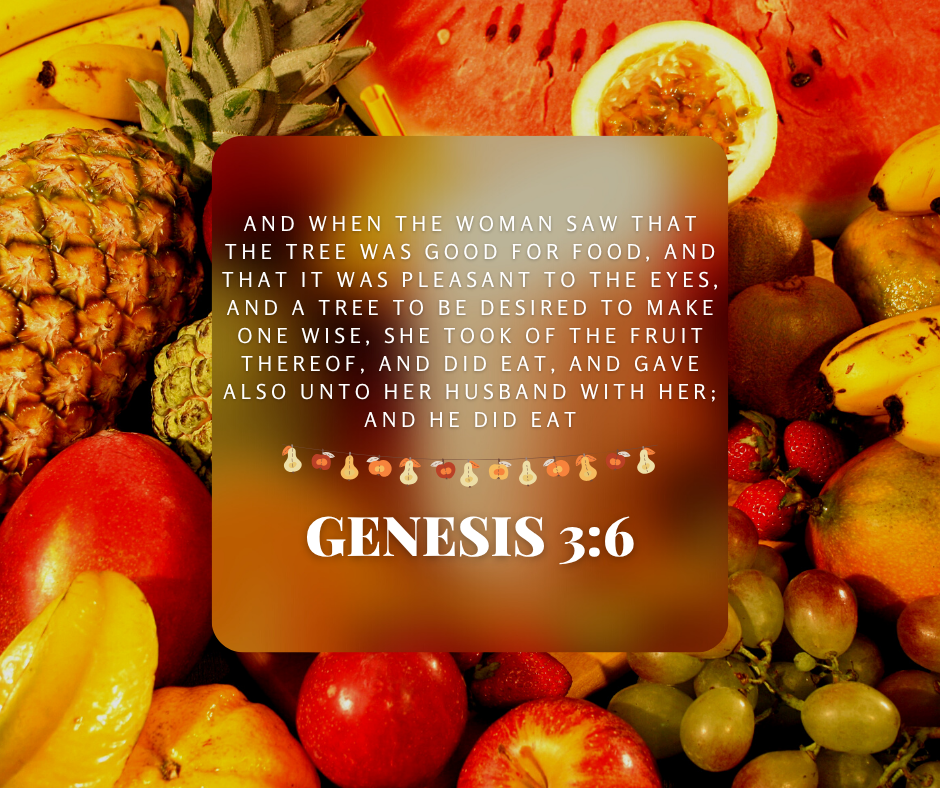
Genesis 3:6 stands at a decisive crossroads in Christian theology, shaping centuries of reflection on human nature, free will, the role of desire, and the universality of sin. While all orthodox traditions acknowledge it as the moment when humanity fell from innocence, they diverge on how that fall is understood and explained. For some, the verse reveals a legal rupture between God and humanity; for others, it marks a deep wounding of human nature or the onset of corruption and death. In every case, Genesis 3:6 functions as a theological mirror, reflecting each tradition’s wider vision of grace, freedom, and redemption.
Augustinian and Reformed Perspectives: The Fall as Total Corruption
In Augustine’s theology—and later in Reformed thought—the act of eating the forbidden fruit represents the total corruption of human nature. Sin is not simply a moral mistake but a radical rupture in the will, rendering humanity spiritually dead and unable to choose righteousness apart from divine grace. Augustine viewed Eve’s desire for wisdom as the spark of pride, the self-exaltation that dethrones God in the heart. Calvin concurred, writing that “Augustine, indeed, is not far from the mark, when he says (in Psal. 19), that pride was the beginning of all evil, because, had not man’s ambition carried him higher than he was permitted, he might have continued in his first estate.”1 This interpretation finds strong textual support in the serpent’s promise: “ye shall be as gods,” a direct invitation to self-deification.
Under this view, Genesis 3:6 becomes a theological hinge connecting anthropology to soteriology: because Adam and Eve’s sin corrupted the entire human race, salvation must come through sovereign grace, not human effort. Thus, the “seeing, desiring, taking” pattern illustrates humanity’s ongoing inability to restrain disordered affections without regeneration. The Reformed reading, therefore, sees the verse as both diagnosis and prophecy, revealing the depth of depravity and the necessity of Christ’s substitutionary obedience.
Arminian and Wesleyan Perspectives: The Fall as Loss of Moral Freedom
Arminian and Wesleyan traditions agree that Genesis 3:6 marks a catastrophic fall but interpret its consequences with greater emphasis on human responsibility and prevenient grace. While humanity is undeniably fallen, Arminius and his successors insist that the will, though impaired, is not utterly extinguished. Eve’s act, in this view, demonstrates how free beings can resist or yield to temptation, and how divine grace now operates to restore that capacity for moral choice.2 Wesley later described the Fall as the loss of holy liberty, a freedom once perfectly aligned with God’s will, now enslaved to sin but still reachable by grace.3
For these traditions, the verse also underscores the relational nature of sin. Eve and Adam’s shared disobedience illustrates how sin propagates through influence and imitation, not only inheritance. The “gave also unto her husband” clause thus becomes a moral warning about shared responsibility rather than purely federal guilt. Whereas Reformed theology stresses Adam’s headship, Wesleyan thought highlights the communal contagion of sin and the restorative work of the Spirit to renew human cooperation with God’s will.
Roman Catholic and Eastern Orthodox Perspectives: The Fall as Wounding of Nature
Roman Catholic theology, particularly as articulated by Thomas Aquinas, interprets Genesis 3:6 as the loss of original righteousness, the supernatural harmony between reason, desire, and will. Humanity’s nature itself remains good but is wounded and disordered. The result is concupiscence, the inward inclination to sin, which is not sin itself but the residual effect of disobedience. The verse’s emphasis on desire—“to be desired to make one wise”—therefore represents the disordering of natural longing. The eyes and mind that were meant to delight in God now turn inward upon themselves.4
Eastern Orthodoxy offers a parallel yet distinct understanding. The fall, for the Orthodox, is not primarily a legal guilt inherited from Adam but an ontological death: the corruption and mortality that spread through the human race. Where the West often frames Genesis 3:6 in juridical terms (law, guilt, punishment), the East reads it therapeutically (sickness, corruption, healing). Eve’s desire for wisdom, then, was not wholly evil but tragically misdirected. Salvation, in this framework, restores humanity to communion and theosis, the participation in divine life that the serpent falsely promised but Christ truly grants.5
Conclusion
Genesis 3:6 reveals both the depth of human corruption and the necessity of divine redemption. Whether approached through Reformed or Arminian frameworks, the verse demonstrates that moral autonomy leads to death and that salvation requires grace. Eve’s seeing and taking epitomize the heart of sin: to prefer one’s own judgment over God’s. Yet even here, grace foreshadows redemption. Just as sin entered through the act of taking, grace will enter through the act of giving: God giving His Son, and Christ giving His life for the world (John 3:16).
Across traditions, Genesis 3:6 thus remains a theological touchstone. The verse stands as the universal diagnosis of the human condition: that we desire what appears good, forsake what is truly good, and must be restored by the God whose goodness we doubted. It reminds every reader that wisdom begins not in the fruit of rebellion but in the fear of the Lord.
- Calvin, John. Institutes of the Christian Religion. Book 2, Chapter 1. Translated and published online at BibleStudyTools.com. Accessed October 21, 2025. https://www.biblestudytools.com/history/calvin-institutes-christianity/book2/chapter-1.html. ↩︎
- Philip Brown, “Free Will and Prevenient Grace,” Holy Joys, April 24, 2006, https://holyjoys.org/free-will-prevenient-grace/. ↩︎
- John Wesley, “Sermon 57 — On the Fall of Man,” in The Sermons of John Wesley (1872 Edition), Wesley Center Online, ed. George Lyons (Nampa, ID: Northwest Nazarene University), https://wesley.nnu.edu/john-wesley/the-sermons-of-john-wesley-1872-edition/sermon-57-on-the-fall-of-man/. ↩︎
- Thomas Aquinas, Summa Theologiae, I-II, Q. 85, “On the effects of sin, and, first, of the corruption of the good of nature,” in The Summa Theologiae of St. Thomas Aquinas. Second and Revised Edition, 1920, translated by the Fathers of the English Dominican Province (Westminster: Christian Classics, 1981), accessed October 21, 2025, https://www.newadvent.org/summa/2085.htm. ↩︎
- Cristian Sebastian Sonea, “Theosis and Martyria—The Spiritual Process of Deification and Its Implication for the Mission of the Church” Religions 14, no. 1 (2022): 1-21. Available at https://www.mdpi.com/2077-1444/14/1/12 ↩︎