
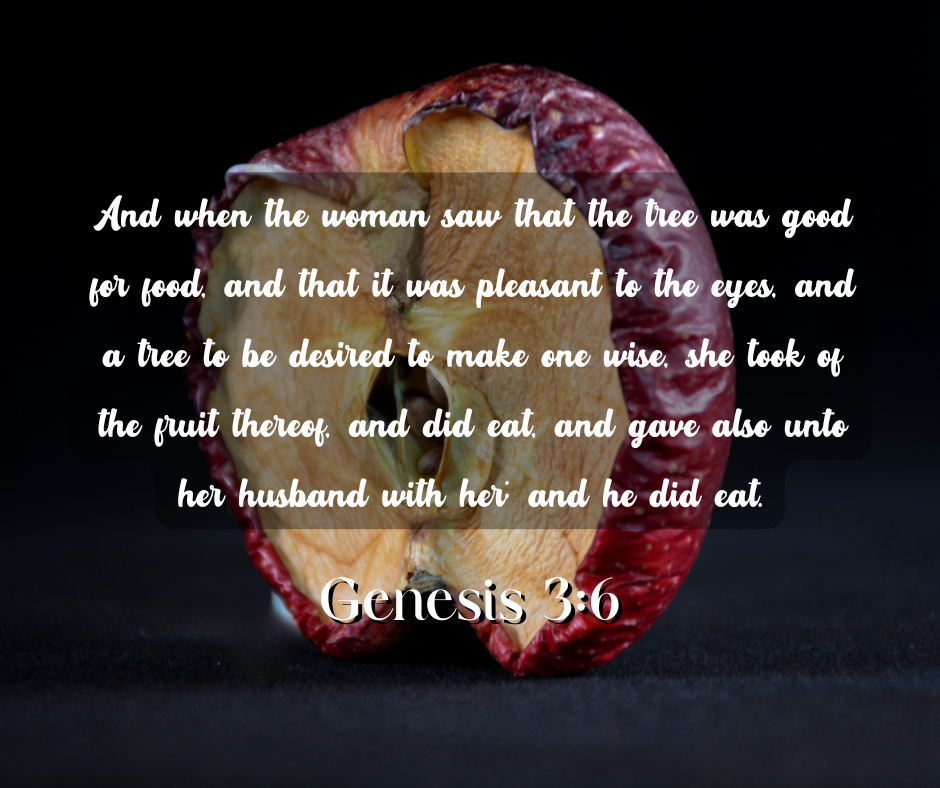
Few verses in Scripture have been more frequently reinterpreted—or more dangerously so—than Genesis 3:6. Because it lies at the heart of the human story, it also lies at the crossroads of every competing theology. To alter the meaning of the Fall is to alter the meaning of redemption; to redefine sin is to redefine salvation itself. If one can transform this act of rebellion into a symbol of enlightenment, the need for a Savior dissolves into the myth of self-perfection.
Throughout history, heterodox teachers and cultic movements have sought to reframe this moment of disobedience as divine awakening, a necessary step in humanity’s spiritual evolution. What Scripture calls rebellion, they call revelation. The forbidden fruit becomes wisdom attained, not grace rejected. The serpent’s ancient promise, “ye shall be as gods,” finds new expression in every system that glorifies self-knowledge over submission and self-realization over repentance. From early Gnosticism to modern esotericism and spiritual humanism, the same poison runs through the roots: sin is not the problem to be cured but the path to illumination.
Since many of these distortions were already addressed in our study of Genesis 3:4–5—where the serpent’s deception took shape—our discussion here will be more concise. Yet a brief survey remains essential. For as long as the Church has proclaimed the truth of the Fall, there have always been those who offer a sweeter version of the fruit: polished, appealing, and deadly. To understand the gospel rightly, we must learn to recognize its counterfeits.
Gnostic and Esoteric Inversions: The Fall as Awakening
Among the earliest distortions of Genesis 3:6 are those found in the Gnostic and esoteric traditions, which turn Eve’s act of taking and eating into a moment of transcendence rather than transgression. Second-century sects such as the Ophites, Naassenes, and later Valentinian groups reimagined the fruit as a symbol of secret wisdom and the serpent as a liberator from cosmic ignorance. In this retelling, the Creator is cast as a jealous demiurge, while the woman who ate is praised as the first to seek divine enlightenment. The act of eating becomes the dawn of consciousness rather than the death of innocence.
This interpretation reframes the entire moral landscape of Scripture. What the Bible presents as rebellion, the Gnostic myth celebrates as revelation. The serpent’s lie, “ye shall be as gods,” becomes their gospel of spiritual ascent. Genesis 3:6 is emptied of its moral gravity and rebranded as humanity’s first spiritual victory.
Modern heirs of this worldview appear in various mystical and “esoteric Christian” systems—Theosophy, Rosicrucianism, certain strands of New Age spirituality—which interpret the fruit as a metaphor for awakening the “divine spark” within. Such teachings deny the historical reality of the Fall and transform salvation into self-realization. In the biblical narrative, humanity falls because it seeks to define goodness apart from God; in the Gnostic imagination, it rises by doing exactly that.
“Little-Gods” Theology in Word-Faith and Prosperity Movements
A subtler form of inversion appears within strands of the modern Prosperity and Word-Faith movements, where Genesis 3:6 is re-imagined as a foreshadowing of human potential rather than the exposure of human pride. Some teachers have claimed that because believers are “new creations” and “partakers of the divine nature,” they can exercise the same creative authority as God Himself: “speaking things into existence” or shaping reality through positive confession. What Eve reached for in error, they claim, believers may now claim by faith.
Such reasoning blurs the Creator-creature distinction that undergirds all of Scripture. In effect, the serpent’s promise is repackaged as spiritual empowerment: humanity no longer needs to submit but to “realize” its godlike nature. Yet Scripture never grants believers divinity; it grants them conformity to Christ’s character (Romans 8:29). To imitate Christ is to reflect His holiness, not to share His essence. True faith receives; it does not create.
By redefining Genesis 3:6 as a story of latent potential rather than lost innocence, this theology transforms disobedience into destiny. The forbidden fruit becomes a prototype of prosperity, the symbol of what humanity can achieve through spiritual technique. It is the old temptation wearing a smile: “ye shall be as gods,” now preached in the language of success.
Feminist Theologies Recasting Eve as Heroine
Certain forms of radical feminist theology read Genesis 3:6 through the lens of resistance and empowerment. In this reinterpretation, Eve is the first seeker of truth, courageously challenging unjust authority and reclaiming intellectual agency. Her act of eating is portrayed as the beginning of self-knowledge and liberation from divine patriarchy. The fruit becomes a metaphor for forbidden wisdom, and Eve becomes a symbol of protest against restrictive structures.
While such readings aim to restore the dignity of womanhood, they do so by overturning the text’s moral and theological framework. Scripture presents Eve’s decision not as an act of courage but of misplaced trust, an error shared by Adam, not inflicted by him. True dignity arises not from rejecting God’s design but from bearing His image within that design. The biblical narrative already affirms equality in creation and value (Genesis 1:27) and complementarity in calling (Genesis 2:18).
By romanticizing Eve’s disobedience, this approach transforms moral failure into moral progress. What was an act of rebellion becomes a myth of awakening. Yet genuine liberation, for both men and women, flows from reconciliation with God, not independence from Him. Redemption restores what deception destroyed; it does not celebrate the deception as liberation.
Occult and Luciferian Readings: The Serpent as Savior
At the farthest extreme are occult and Luciferian interpretations that openly celebrate Genesis 3:6 as the birth of human sovereignty. In such systems—whether in certain branches of modern Satanism, Thelema, or ritual occultism—the serpent is exalted as a bringer of light and knowledge, and the act of eating as humanity’s first assertion of self-deification. The narrative of sin becomes a manifesto of freedom from divine restraint.
These ideologies turn moral order upside down: rebellion becomes virtue, submission becomes vice. The serpent is praised for bestowing knowledge, and God is accused of suppressing it. This is not new theology but the unmasking of the oldest blasphemy. By calling defiance enlightenment, these systems canonize the lie that humanity flourishes only when freed from God.
Such readings expose the logical end of every heresy that begins by softening the Creator-creature divide. When God is reduced to an obstacle and the serpent becomes benefactor, worship itself is reversed. The “fruit” of such theology is not illumination but decay: the moral and spiritual decomposition that follows the rejection of truth.
The Sexual-Symbolism Theory
A final, recurring misinterpretation treats “eating the forbidden fruit” as a euphemism for sexual intercourse. Advocates of this view, ancient and modern, have suggested that the “knowledge of good and evil” refers to sexual awakening and that Adam and Eve’s shame over nakedness confirms this reading. Yet this theory collapses under the plain testimony of the text.
As John J. Davis observes, the narrative explicitly states that Eve sinned alone before giving the fruit to Adam, making the sexual reading untenable.1 Moreover, God had already sanctified sexual union within marriage (Genesis 1:28) and reaffirmed it as honorable (Hebrews 13:4). Physical intimacy within God’s design was not forbidden but commanded. The sin of Genesis 3:6 lies not in sexuality but in moral autonomy: in redefining “good” apart from divine command.
By reducing the Fall to a sexual act, this interpretation shifts attention from the heart to the body and from disobedience to sensation. It transforms a spiritual rebellion into a biological event. The result is a reading that trivializes both the gravity of sin and the glory of human sexuality as God intended it.
Summary
Across these divergent movements—Gnostic, Prosperity, Feminist, Occult, or Symbolic—the pattern is the same. Each redefines wisdom and goodness without reference to revelation. The serpent’s theology of independence persists under new guises: enlightenment instead of obedience, self-realization instead of repentance, and autonomy instead of grace. Yet the antidote remains unchanged: the Word of God, rightly believed and obeyed.
Genesis 3:6 does not celebrate humanity’s awakening; it mourns humanity’s fall. It stands as a perpetual warning against every “fruit” that looks nourishing but bears decay within. Every generation must decide whether to interpret the fruit as food for pride or to return to the Tree of Life, where wisdom and life are once again united in Christ.
- John J. Davis, Paradise to Prison: Studies in Genesis (Grand Rapids: Baker, 1975), 91. ↩︎