
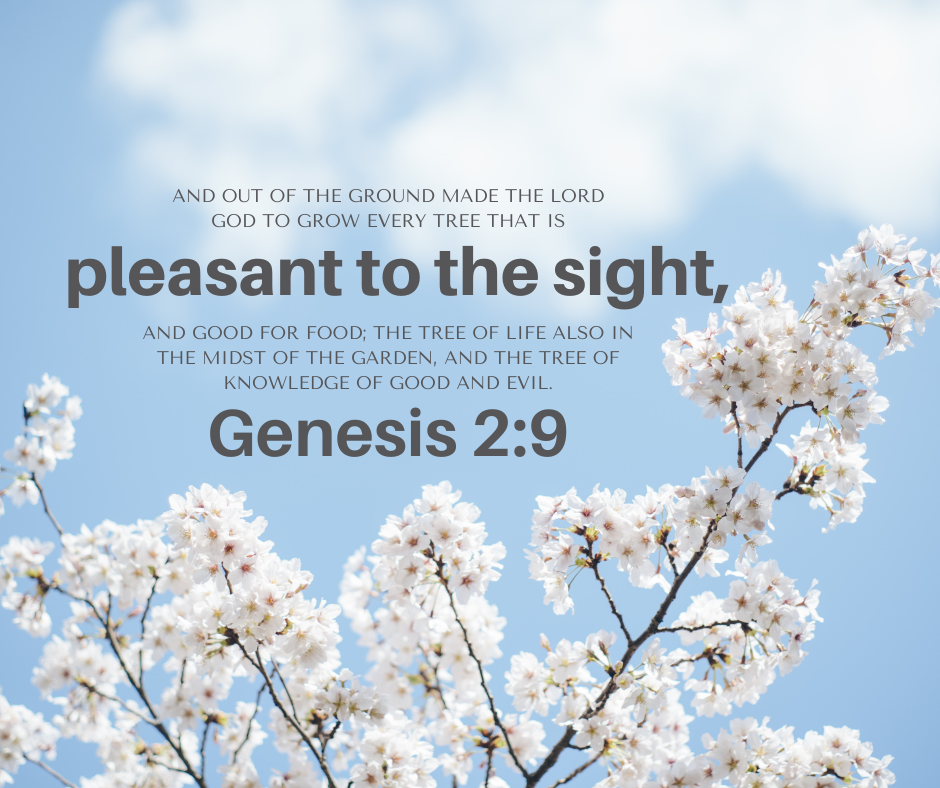
Robert Bergen observes that “God’s concern for beauty is seen in the fact that the trees he cause[d] to grow were pleasant to the sight” (2018, p. 12). This observation draws attention to a profound yet often underexplored aspect of the creation narrative in Genesis 2:9. In this verse, the inspired text affirms that God intentionally crafted the garden not merely as a source of sustenance, but also as a realm of aesthetic delight. The mention of trees being “pleasant to the sight” reflects a divine intention that transcends mere utility, revealing a Creator who values beauty and who designed creation to reflect that beauty.
This dual emphasis—on what is “good for food” and what is “pleasant to the sight”—points to the richness and generosity of God’s provision. He gives not only what is necessary for life, but also what is desirable for joy and delight. Theologians, both historic and modern, have long recognized the theological significance of this detail.
John Calvin, in his Commentary on Genesis, affirms that this phrase testifies to the “liberality” of God. He writes, “Besides the utility which the trees afforded, there was added the elegance of appearance, to make their use more delightful. Thus, we are taught that God has consulted, in our sustenance, not merely for necessity, but also for delight and pleasure” (1554). Calvin underscores that aesthetic beauty is not a worldly indulgence but a divine gift, intended to be received with gratitude.
Matthew Henry likewise emphasizes the benevolence of God revealed through the pleasantness of creation. In his well-known Commentary on the Whole Bible, he states, “God provided not only for Adam’s support, but for his delight. He lodged him, not in a common garden, but in Eden, a garden of pleasure” (1997, p. 4). For Henry, the beauty of the trees is a deliberate act of God’s kindness, demonstrating that God created the world to be enjoyed, not merely endured.
Moving to more contemporary voices, Francis Schaeffer highlighted the theological importance of beauty in creation. In Art and the Bible, Schaeffer argues that the Christian worldview must recover a high view of creation’s beauty because it reflects the character of the Creator. “The Christian,” Schaeffer writes, “is the one whose imagination should fly beyond the stars” (1973). Genesis 2:9, for Schaeffer, reveals that the aesthetic dimension of the natural world is not incidental but essential. Nature’s beauty, beginning with Eden, is to be received as part of God’s revelation.
Similarly, Wayne Grudem, in his Systematic Theology, emphasizes that the entire created order reflects the attributes of God, including His beauty, harmony, and order. While Grudem does not dwell extensively on Genesis 2:9, his broader theological framework supports the interpretation that God’s design includes the intentional communication of beauty. The physical world is meant to point to the majesty and goodness of God (Psalm 19:1; Romans 1:20), and this includes its visual and sensory aspects (1994).
In addition, Douglas Kelly, in his work Creation and Change, affirms that the aesthetic aspect of creation is an expression of God’s glory. He writes, “The sheer beauty of the created order—its variety, balance, and elegance—is testimony to the divine Artist who made it” (2021). Kelly underscores that man, made in the image of God, is uniquely capable of appreciating such beauty, which is part of what makes the Garden of Eden a fitting home for humanity.
Taken together, these perspectives converge on a central theological theme: God delights in beauty, and He created the world to reflect that delight. The phrase “pleasant to the sight” is not a mere literary flourish; it is a theological affirmation that the material world, when rightly ordered under God’s will, is not only good but beautiful. Such beauty is not to be idolized, but neither is it to be ignored. It serves as a gracious reminder of the nature of the God who created it—a God who gives richly, “all things to enjoy” (1 Timothy 6:17).
Therefore, Genesis 2:9 calls the reader to recognize beauty as part of God’s good design and as an invitation to worship. In a fallen world where the appreciation of beauty can be distorted or lost, this verse reminds believers that true beauty originates in the Creator, and that delighting in what is “pleasant to the sight” can be a sanctified act when rooted in thankfulness and rightly ordered desire.