
In the beginning, God created the heaven and the earth, bringing order and life out of a formless void. Over six days, He formed the light, sky, land, seas, vegetation, celestial bodies, animals, and finally mankind in His own image—male and female. God blessed His creation and gave man dominion over the earth. On the seventh day, God rested, sanctifying it as holy. Genesis 2 then recounts the creation of man in more detail, describing how God formed Adam from the dust of the ground and breathed into him the breath of life, placing him in the Garden of Eden, which He had specially prepared.
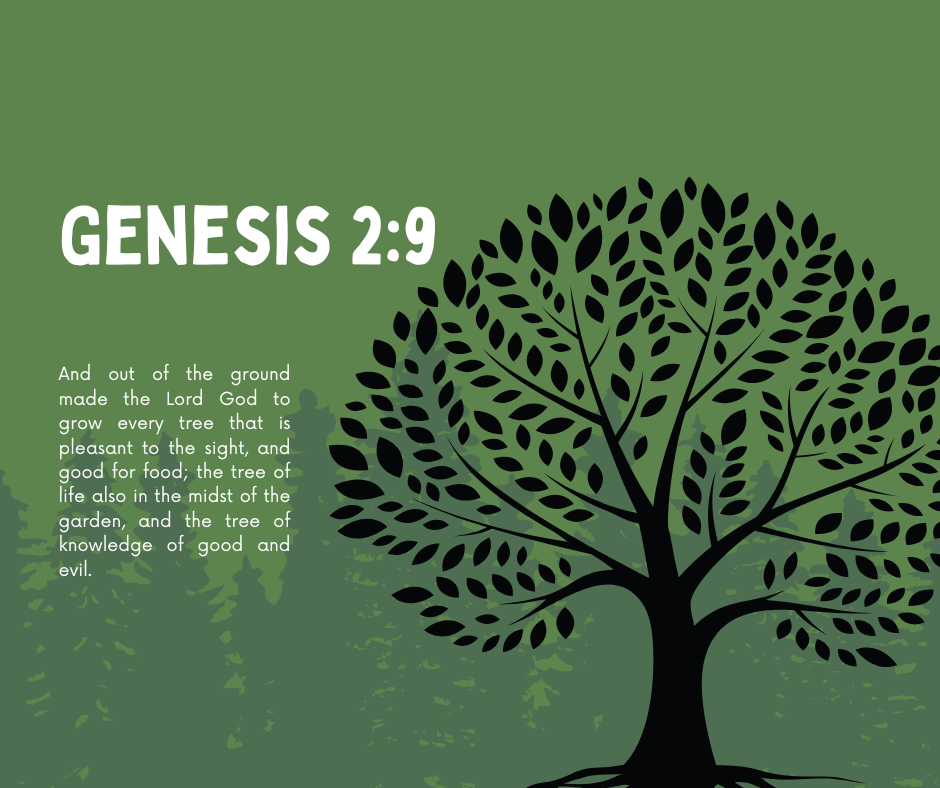
As the narrative continues in Genesis 2:9, it transitions to a detailed description of the Garden of Eden and the trees within it. Among the trees that the Lord God caused to grow were not only those that were “pleasant to the sight, and good for food,” but also two unique and spiritually significant trees: “the tree of life” and “the tree of knowledge of good and evil.” These trees, while literal, also symbolized deeper spiritual truths. The tree of life represented continued fellowship with God and eternal life, while the tree of the knowledge of good and evil would become the center of mankind’s moral testing. This verse sets the stage for the moral and spiritual challenge that would soon confront Adam and Eve, and foreshadows the fall of man and the need for redemption.