
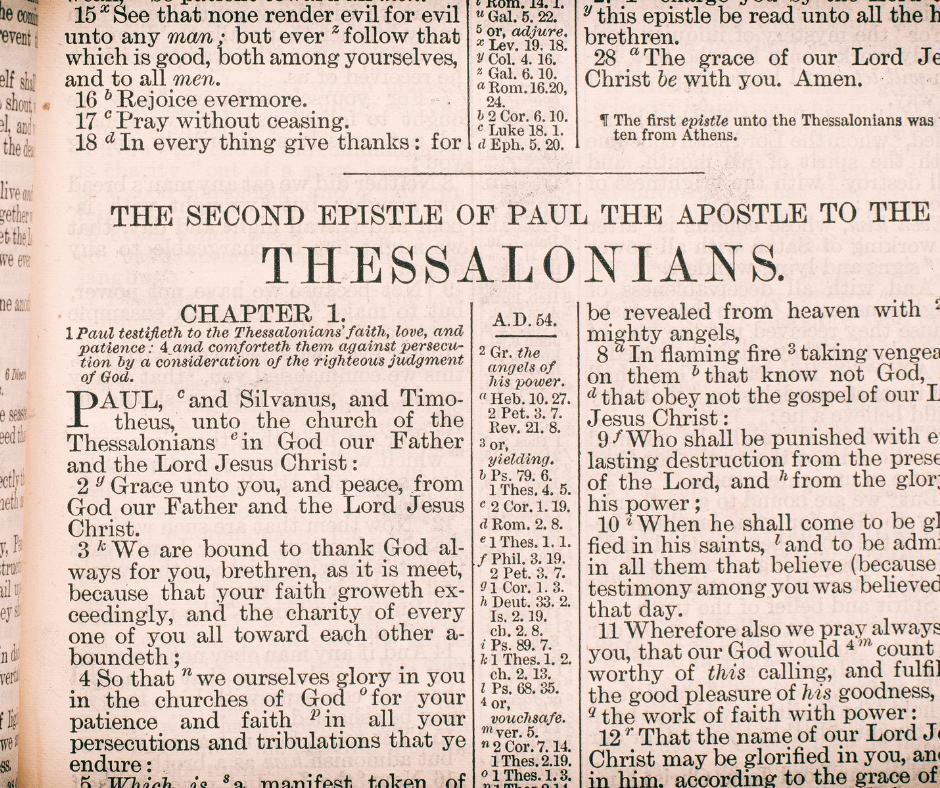
The Second Epistle to the Thessalonians is a sober, clarifying, and resolute pastoral letter written to steady a faithful church amid confusion and escalating pressure. Where Paul’s first letter encouraged perseverance and comforted anxious hearts, this second letter brings needed correction and discernment. The Thessalonian believers had continued to endure persecution with remarkable steadfastness, yet misunderstandings regarding the timing and nature of the Lord’s return had begun to unsettle the congregation. Paul writes to restore balance: strengthening hope while guarding against error and encouraging endurance while correcting disorder.
Second Thessalonians reflects the pastoral wisdom of an apostle who understands both the dangers of despair and the hazards of misplaced enthusiasm. Paul neither diminishes the hope of Christ’s return nor allows that hope to be distorted into speculation or passivity. Instead, he anchors the Church in truth, reminding believers that God’s purposes unfold according to His sovereign timetable and that faithful obedience in the present remains essential. The letter thus serves as a necessary companion to 1 Thessalonians, reinforcing its encouragements while addressing new challenges that had arisen in their wake.
I. Authorship, Audience, and Setting
The letter opens with Paul identifying himself as its author, writing together with Silvanus and Timothy to the church of the Thessalonians. Pauline authorship is firmly established by early Christian testimony and by the close literary, theological, and historical continuity with 1 Thessalonians. The two letters share similar language, concerns, and circumstances, indicating composition within a short span of time.
Second Thessalonians was likely written from Corinth around A.D. 51–52, not long after the first letter. Paul had received further reports concerning the Thessalonian church, learning both of their continued faithfulness under persecution and of growing confusion related to eschatological teaching. Some believers had come to think that the day of the Lord had already arrived, possibly due to false prophetic claims or letters falsely attributed to Paul.
The recipients remain the same congregation in Thessalonica: a young church living within a politically charged and religiously pluralistic city. As a Roman provincial capital and major commercial center, Thessalonica presented both opportunities and challenges for believers seeking to live out their faith publicly. The church’s experience of opposition had not diminished since Paul’s first letter, and the pressure of suffering combined with doctrinal confusion created an urgent need for apostolic guidance.
II. Purpose and Occasion of the Letter
Paul writes 2 Thessalonians primarily to correct misunderstandings concerning the return of Christ. Some within the congregation had become alarmed by claims that the day of the Lord had already come, leading to fear, instability, and confusion. Paul responds by urging discernment and reminding the believers that certain events must precede the culmination of God’s redemptive plan. His aim is not to foster speculation but to calm troubled hearts and reestablish confidence in God’s orderly purposes.
Another significant purpose of the letter is to address behavioral consequences arising from these misunderstandings. Some believers, convinced that the end was imminent, had withdrawn from ordinary responsibilities and had begun living in idleness. This behavior disrupted the life of the church and contradicted the pattern of faithful living Paul had modeled among them. Paul therefore exhorts the Thessalonians to continue working quietly, contributing responsibly, and living in a manner consistent with the gospel they had received.
Paul also writes to encourage perseverance amid ongoing persecution. He commends the Thessalonians for their growing faith and steadfast love, affirming that their endurance is evidence of God’s righteous judgment and future vindication. His words strengthen their resolve by placing present suffering within the broader context of God’s justice and final restoration.
Finally, Paul seeks to reinforce apostolic authority and protect the church from deceptive influences. By reminding the Thessalonians of his earlier instruction and urging them to hold fast to the traditions they had received, Paul emphasizes the importance of remaining anchored to the apostolic message rather than being swayed by false claims or sensational teachings.
III. Literary Features and Structural Observations
Second Thessalonians is concise and focused, marked by a serious and corrective tone balanced with pastoral encouragement. The letter moves deliberately from thanksgiving to instruction and from reassurance to exhortation. Paul’s writing reflects urgency without alarmism, firmness without harshness, and clarity without unnecessary detail.
One notable feature of the letter is its emphasis on stability. Paul repeatedly urges the Thessalonians not to be quickly shaken or troubled, highlighting the importance of spiritual steadiness grounded in truth. This concern shapes both the letter’s content and its tone, as Paul seeks to calm fears and reestablish confidence in God’s purposes.
The letter also employs contrast effectively, juxtaposing faithful perseverance with disorderly conduct, truth with deception, and patient endurance with misplaced urgency. These contrasts serve to clarify the practical implications of sound teaching and to expose the dangers of distorted expectation.
Structurally, the letter mirrors many elements of 1 Thessalonians while addressing new developments. It begins with thanksgiving and encouragement, transitions into doctrinal clarification, and concludes with practical exhortation. This progression reinforces the idea that theological understanding and daily conduct are inseparable aspects of faithful Christian living.
IV. Historical Reliability and Canonical Importance
The historical authenticity of 2 Thessalonians is closely tied to that of 1 Thessalonians. Its references to ongoing persecution, its concern with eschatological misunderstanding, and its pastoral exhortations align well with the circumstances described in Acts and in Paul’s earlier letter. The continuity between the two epistles supports their common authorship and setting.
Canonically, 2 Thessalonians plays a crucial role in shaping the Church’s understanding of Christian hope and responsibility. It guards against extremes, both despair in the face of suffering and irresponsibility fueled by misguided expectation. The letter reinforces the principle that hope in Christ’s return should inspire faithful living rather than withdrawal from daily obligations.
Throughout church history, 2 Thessalonians has served as a stabilizing voice in times of eschatological speculation and social disruption. Its call to perseverance, discernment, and orderly conduct has helped guide believers through periods of uncertainty and upheaval.
V. Paul’s Relationship to the Thessalonian Church
Paul’s affection for the Thessalonian believers continues unabated in this second letter. He speaks with confidence in their faith and expresses gratitude for their growth despite hardship. At the same time, he does not hesitate to address areas of concern, demonstrating the balance of encouragement and correction that marks faithful pastoral care.
His relationship with the church allows him to speak plainly, appealing to his own example and reminding them of his earlier instruction. Paul’s authority is exercised not as domination but as service, aimed at protecting the congregation’s spiritual health and guiding them toward maturity.
VI. Conclusion
The Second Epistle to the Thessalonians stands as a vital pastoral word of clarity and balance. It reassures believers that God’s purposes are unfolding according to His sovereign plan and calls them to live faithfully in the present while awaiting the future fulfillment of His promises. Paul’s letter confronts confusion without diminishing hope and corrects disorder without extinguishing zeal.
To study 2 Thessalonians is to be reminded that Christian expectation must be shaped by truth and expressed through faithful obedience. The letter continues to encourage believers to stand firm, work diligently, and rest confidently in the assurance that the Lord is faithful and will establish and guard His people until the end.