
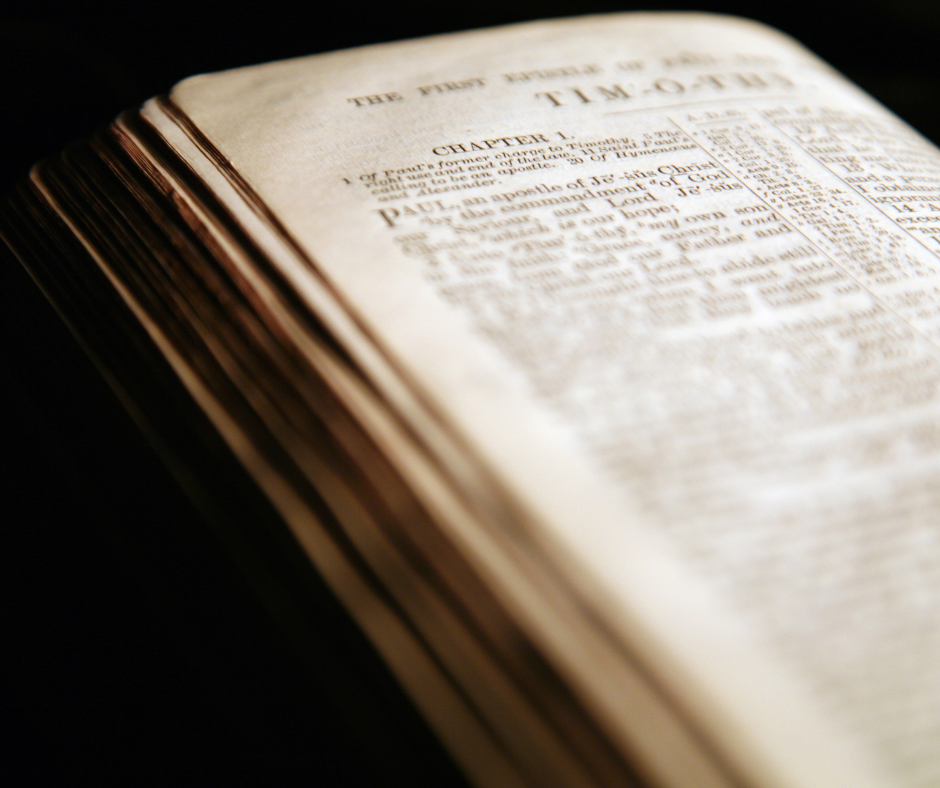
The First Epistle to Timothy marks a transition within the Pauline corpus from missionary correspondence to pastoral instruction. Written to a trusted coworker rather than to a congregation at large, this letter provides an intimate window into the apostle’s concern for the ongoing health, order, and doctrinal faithfulness of the Church. Here Paul addresses not the founding of churches or the defense of the gospel against external opposition, but the internal life of the Christian community: its leadership, teaching, worship, and moral integrity.
First Timothy is therefore a letter about stewardship: the stewardship of sound doctrine, of godly leadership, and of faithful conduct within the household of God. Paul writes with urgency and care, knowing that the stability of the Church depends not merely on zeal or growth, but on truth rightly taught and lived. The epistle reflects a mature stage of Paul’s ministry, shaped by years of experience, suffering, and pastoral labor. It is both practical and deeply theological, offering guidance that remains foundational for the Church’s life and ministry in every age.
I. Authorship, Recipient, and Setting
The letter identifies Paul as its author and Timothy as its recipient, a claim supported by early Christian testimony and the letter’s personal tone and historical detail. Timothy had been one of Paul’s closest companions, first joining him during the second missionary journey and later serving alongside him in various regions. Paul regarded Timothy not merely as a coworker, but as a faithful servant entrusted with significant responsibility within the Church.
First Timothy was likely written after Paul’s release from his first Roman imprisonment, during a period of renewed travel and ministry. Paul had left Timothy in Ephesus to address pressing concerns within the church there, while he himself continued on to Macedonia. Ephesus was a major center of commerce and religious activity, known for its devotion to Artemis and its intellectual climate. The church in Ephesus, though well established and richly taught, faced ongoing challenges from false teachers and internal disorder.
The setting of the letter reflects a Church no longer in its infancy but confronting the complexities of growth, leadership succession, and doctrinal vigilance. Paul writes to Timothy as his delegate, entrusting him with the task of strengthening the church and safeguarding the truth in a demanding and influential city.
II. Purpose and Occasion of the Letter
Paul’s primary purpose in writing 1 Timothy is to equip Timothy to confront false teaching and to establish proper order within the church. Certain individuals in Ephesus were promoting speculative doctrines, misusing the law, and engaging in controversies that distracted from godly living. Paul instructs Timothy to address these errors decisively, emphasizing that teaching must serve the goal of love flowing from a pure heart, a good conscience, and sincere faith.
Another major purpose of the letter is to provide guidance on church leadership. Paul outlines the character and responsibilities expected of those who serve as overseers and deacons, underscoring that leadership in the Church is grounded in moral integrity and spiritual maturity rather than status or ambition. These instructions are not presented as temporary measures but as enduring principles for the governance of God’s people.
Paul also writes to instruct Timothy on matters of public worship and community life. He addresses prayer, conduct, relationships among believers, care for widows, and the responsibilities of various groups within the congregation. In doing so, Paul highlights the Church’s calling to live in a manner that reflects God’s holiness and truth before a watching world.
Underlying all these purposes is Paul’s concern that the Church remain faithful to its identity as “the house of God,” entrusted with the proclamation and preservation of the gospel. Paul writes not simply to correct problems, but to shape a community that embodies the truth it professes.
III. Literary Features and Structural Observations
First Timothy is pastoral in tone and practical in focus, yet it is carefully structured and theologically grounded. Paul writes with clarity and authority, alternating between instruction, exhortation, and personal encouragement. The letter reads as a manual for faithful ministry, yet it is deeply relational, reflecting the bond between Paul and Timothy.
One notable feature of the letter is its repeated emphasis on sound teaching. Paul contrasts healthy doctrine with speculative myths and empty discussions, underscoring the necessity of teaching that accords with the gospel. This concern shapes much of the letter’s content and provides coherence to its various instructions.
Another significant aspect is the letter’s attention to character. Whether addressing leaders or the broader congregation, Paul consistently emphasizes godliness, self-control, and integrity. Doctrine and conduct are inseparably linked; the truth of the gospel must be reflected in the lives of those who teach it and those who receive it.
The letter also includes moments of personal reflection and encouragement, reminding Timothy of his calling, his spiritual gifts, and Paul’s confidence in him. These passages reveal Paul’s pastoral heart and his desire to strengthen Timothy amid the challenges of leadership.
IV. Historical Reliability and Canonical Importance
The historical reliability of 1 Timothy has been affirmed by its early acceptance within the Church and by its coherence with the broader Pauline tradition. The letter reflects a plausible historical setting following Paul’s recorded ministry in Acts, addressing issues consistent with the development of early Christian communities. Its references to Ephesus, false teaching, and church leadership align with what is known of the period.
Canonically, 1 Timothy occupies a crucial place as one of the Pastoral Epistles, offering foundational guidance for church order and leadership. Its instructions have shaped Christian practice across centuries, informing the Church’s understanding of ministry, governance, and discipleship. The letter’s emphasis on truth, godliness, and faithful stewardship continues to resonate with congregations navigating cultural pressure and internal challenges.
V. Paul’s Relationship with Timothy
Paul’s relationship with Timothy is central to the tone and content of the letter. He addresses Timothy as a trusted coworker and charges him with responsibilities that require courage, wisdom, and perseverance. Paul’s words reflect both affection and expectation; he encourages Timothy while also reminding him of the seriousness of his calling.
This relationship highlights the importance of mentorship and continuity within the Church. Paul entrusts Timothy with safeguarding the gospel and guiding the community, modeling a pattern of leadership development that remains vital for the Church’s life and mission.
VI. Conclusion
The First Epistle to Timothy stands as a vital guide for the Church’s faithful stewardship of the gospel. It calls believers to uphold sound teaching, cultivate godly leadership, and live in a manner that reflects the truth they proclaim. Paul’s letter reminds the Church that faithfulness requires vigilance, humility, and perseverance, especially in the face of error and cultural pressure.
To study 1 Timothy is to be drawn into the apostle’s pastoral vision for a Church grounded in truth and marked by holiness. The letter continues to equip leaders and congregations alike to serve faithfully within the household of God, guarding the treasure entrusted to them until the appearing of Jesus Christ.