
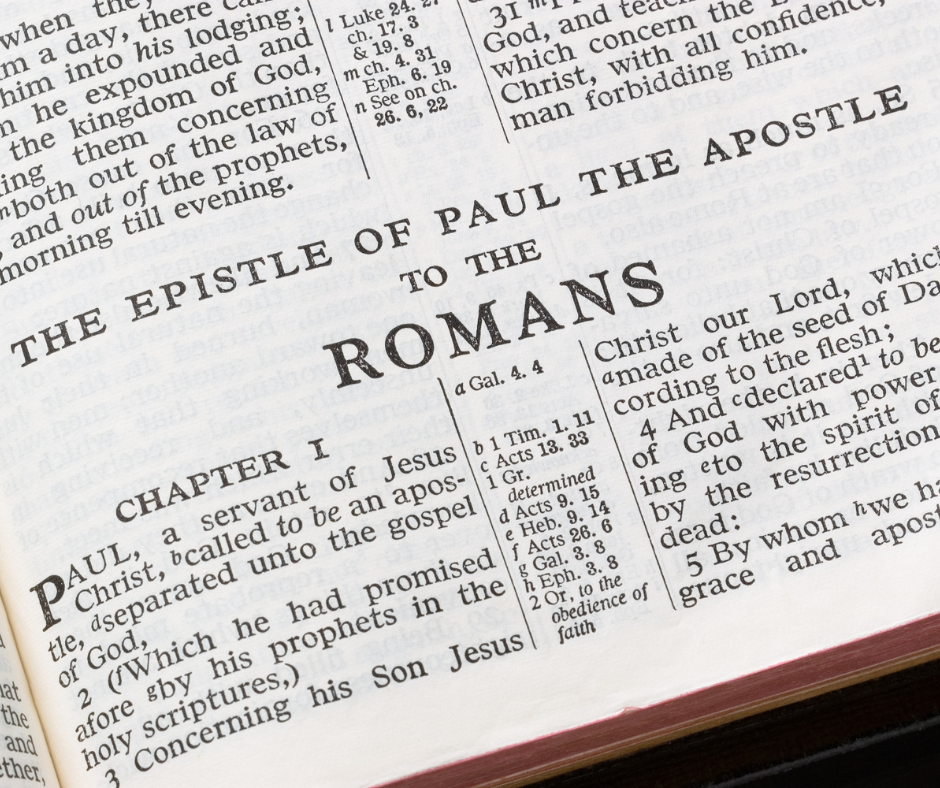
The Epistle to the Romans stands as one of the most profound and influential writings in all of Scripture. It is Paul’s longest, most deliberate, and most carefully constructed letter, written not as a brief pastoral response to a local crisis, but as a comprehensive presentation of the gospel he proclaimed throughout the Roman world. Though not a systematic theology, Romans possesses a breadth and coherence unmatched elsewhere in Paul’s writings. It is both intensely personal and universally relevant, blending theological depth with pastoral care, missionary zeal, and heartfelt affection. Written to a congregation Paul had never visited, the letter reflects his desire to strengthen their faith, clarify the message he preached, and prepare the way for fruitful partnership in the advance of the gospel. As such, Romans stands at the head of the Pauline corpus as the Spirit-inspired masterpiece through which generations of believers have encountered the majesty of God’s redemptive purpose in Christ.
I. Authorship, Audience, and Setting
The Epistle to the Romans is universally acknowledged as the work of the apostle Paul. Written during his stay in Corinth around A.D. 56–57, the letter reflects a mature period in Paul’s ministry, after years of missionary labor, church planting, doctrinal instruction, and pastoral experience. Paul had completed his work in the East and was preparing for a decisive new phase of ministry that would take him to Jerusalem, then westward toward Rome, and eventually beyond to Spain. At this pivotal moment, he turned his attention to the believers in Rome, a congregation he had long prayed for, often hoped to visit, and earnestly desired to strengthen through his preaching and presence.
The Roman church was a diverse community composed of both Jewish and Gentile believers. Its origins likely trace back to Jewish pilgrims from Pentecost who returned to Rome carrying the message of Christ. Over time, the congregation grew, faced internal challenges, and endured the effects of Emperor Claudius’s edict expelling Jews from the city. When Jewish Christians later returned, the church’s composition and dynamics had shifted, creating questions of identity, tradition, and fellowship. Paul writes into this environment with pastoral wisdom and apostolic authority, addressing both the unity and maturity of the congregation while preparing them to join him in the ongoing mission of the gospel.
II. Purpose and Occasion of the Letter
Paul’s reasons for writing Romans are multifaceted, shaped both by his missionary calling and the particular needs of the church in Rome. First, he sought to prepare the Roman believers for his future visit. He longed to minister among them, strengthen their faith, and be mutually encouraged by their fellowship. Moreover, Paul viewed Rome as a strategic base for advancing the gospel further west. To fulfill this vision, he needed the Roman church not merely to welcome him but to understand the message he preached and partner with him in the work that lay ahead.
Second, Paul wrote to address the relationship between Jewish and Gentile believers within the congregation. The events surrounding Claudius’s expulsion had created a shifting social reality, and questions inevitably arose concerning the law, tradition, dietary practices, and the nature of the people of God. Paul engages these issues not by issuing policies but by grounding both groups in the truth of the gospel, showing that all believers—regardless of ethnicity—stand equal before God and united in Christ.
Third, Paul desired to articulate and defend the gospel with clarity. Because he had not personally ministered in Rome, misunderstandings about his message and methods may have circulated. Romans therefore serves as a formal introduction to the gospel Paul preached everywhere: the good news of God’s righteousness revealed in Christ for Jew and Gentile alike.
Finally, Paul wrote to strengthen the believers for steadfast endurance amid suffering. Living at the heart of the empire, the Roman Christians faced cultural suspicion, social pressures, and the potential of imperial hostility. Paul’s letter fortifies their hope, calling them to perseverance grounded in the unshakeable promises of God.
III. Literary Features and Structural Observations
Romans displays a literary artistry and theological intentionality evident from its opening lines. The letter unfolds with a carefully ordered progression, guiding the reader step by step through the revelation of God’s righteousness, the transformation of the believer, and the unity of the Church. Paul employs a variety of rhetorical techniques—formal introductions, doxologies, chains of logical reasoning, probing questions, dialogues with imagined interlocutors, and sweeping appeals to Scripture—to build a coherent and compelling exposition.
Throughout the letter, Paul weaves together imagery drawn from daily life and biblical history: courtrooms and covenants, slavery and sonship, offering and sacrifice, creation groaning and glory revealed. He maintains a deliberate balance between doctrinal argument and pastoral exhortation. The theological sections do not float above the concerns of real believers but flow naturally into guidance for Christian living, mutual love, humility, and service.
Romans also stands out for its sustained engagement with the Old Testament. Paul cites Scripture extensively, not merely as proof texts but as the foundation upon which the gospel rests. His argumentation situates the gospel within the larger story of God’s faithfulness, showing how the promises made to Abraham and the hope of Israel come to fulfillment in Christ. The letter’s unity of theme and structure, combined with its pastoral warmth and missionary urgency, contribute to its enduring significance.
IV. Historical Reliability and Canonical Importance
The historical reliability of Romans is affirmed by both internal and external evidence. Paul’s personal references, greetings, and travel plans align seamlessly with the narrative of Acts and with details from his other letters. The individuals mentioned in Romans 16 reflect a genuine network of believers in first-century Rome, many of whom are corroborated by archaeological or historical data. The theological concerns addressed in the letter fit the social and religious context of the Roman church during the mid-first century, further confirming its authenticity.
Canonically, Romans occupies a place of prominence. Although not the earliest of Paul’s letters, it stands first among them due to its theological breadth, literary quality, and foundational role in shaping Christian doctrine. Early Christians read, copied, and circulated the letter widely. Church fathers cited it frequently; reformers built entire theological frameworks upon its teaching; and generations of believers have turned to it for clarity regarding sin, grace, faith, obedience, and hope. Romans thus serves as the interpretive gateway to the Pauline epistles and a cornerstone of the Church’s doctrinal understanding.
V. Paul’s Relationship to the Roman Church
Though Paul had not personally visited the Roman church, he had deep affection for its members. The extensive greetings in Romans 16 reveal a tapestry of relationships: fellow workers, beloved brothers and sisters, households of faith, and individuals of proven character. Paul’s knowledge of these believers reflects his wide influence and abiding pastoral concern. He writes not as a distant theologian but as a shepherd whose heart burns for the maturity and unity of God’s people.
Paul’s desire to visit Rome was driven by both pastoral longing and missionary necessity. He viewed Rome’s believers as full participants in the work of the gospel: men and women equipped by the Spirit, situated in a strategic city, and prepared to support him in his mission to Spain. His letter therefore serves as both a pastoral introduction and a missionary appeal, inviting the church to stand with him in the unfolding purpose of God.
VI. Conclusion
The Epistle to the Romans is a monumental contribution to the New Testament. Rooted in real history and written with pastoral urgency, it offers a Spirit-inspired portrait of the gospel that has shaped Christian thought for centuries. Romans is not an abstract theological treatise but a living letter, addressed to real believers, written for the edification of the Church, and intended to strengthen the mission of Christ in the world. Its themes of unity, faith, endurance, and hope resonate as deeply today as in Paul’s time.
To study Romans is to encounter the mind of Paul under the guidance of the Holy Spirit and to behold the unwavering faithfulness of God who calls His people, sustains them by grace, and leads them toward the glory that awaits. It is a letter that continues to teach, correct, comfort, and transform, all to the praise of the God whose righteousness is revealed from faith to faith.