
I. When Astonishment Turned Toward the Messiah
A. The Miracle That Prompted the Question
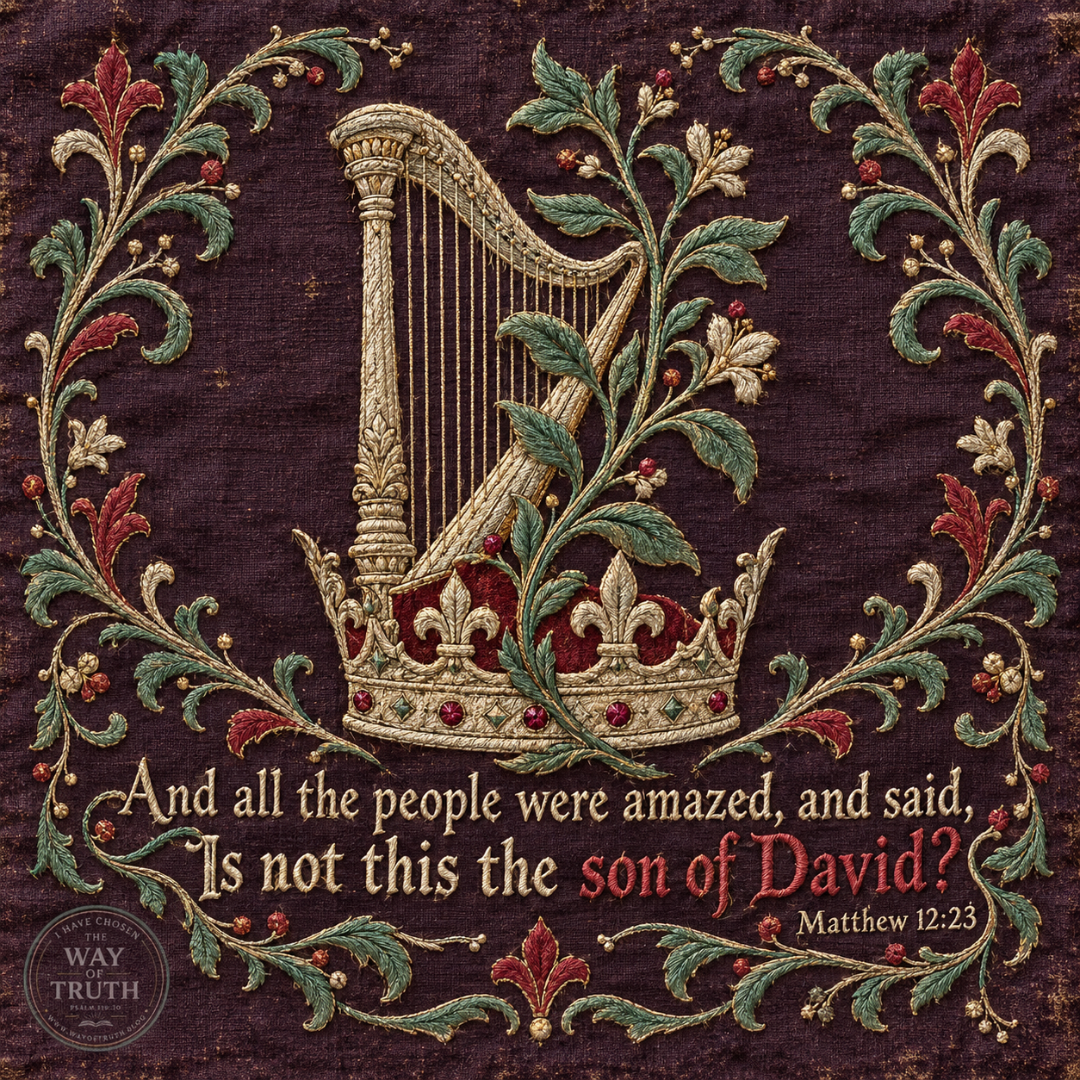
Matthew 12:23 records a remarkable moment in Jesus’ earthly ministry. A man who had been demon-possessed, blind, and unable to speak had just been healed. The crowd had witnessed something extraordinary, and their reaction went beyond ordinary amazement. They began considering whether the One responsible for this miracle might be Israel’s long-awaited Messiah.
The preceding verse describes the man’s complete restoration. Jesus had delivered him from demonic oppression and restored his sight and speech. Now Matthew turns our attention away from the man who was healed and toward the people who witnessed what happened.
Their reaction is significant because they didn’t merely ask how Jesus performed the miracle. They began asking who He was.
Throughout Matthew’s Gospel, Jesus’ miracles demonstrate His compassion toward suffering people while providing evidence of His extraordinary authority. His works weren’t intended to entertain crowds or establish His reputation as an unusually gifted healer. They revealed something about His identity and the arrival of God’s promised kingdom.
This particular miracle brought a familiar messianic title into the conversation. The people had seen what Jesus could do, and now they were beginning to connect His works with what Scripture had promised concerning the Messiah.
B. The Significance of the Son of David
The title Son of David carried considerable theological weight among the Jewish people. It wasn’t simply a reference to someone descended from Israel’s most celebrated king. It was closely associated with God’s promise that a future ruler from David’s family would establish an everlasting kingdom.
God had made that promise through the prophet Nathan: “And thine house and thy kingdom shall be established for ever before thee: thy throne shall be established for ever” (2 Samuel 7:16).
Although the promise had an immediate connection to David’s royal descendants, its ultimate fulfillment pointed beyond any ordinary earthly king. Israel’s history demonstrated that David’s descendants were mortal, their reigns were temporary, and their kingdom eventually suffered judgment and exile.
The prophets continued anticipating a righteous ruler who would arise from David’s family. Jeremiah declared: “Behold, the days come, saith the LORD, that I will raise unto David a righteous Branch, and a King shall reign and prosper, and shall execute judgment and justice in the earth” (Jeremiah 23:5).
Against this background, the crowd’s question becomes much more meaningful. They weren’t merely wondering whether Jesus possessed impressive spiritual abilities. They were considering whether He might be the promised King through whom God would fulfill His covenant with David.
Matthew has prepared his readers to recognize the significance of this question from the beginning of his Gospel: “The book of the generation of Jesus Christ, the son of David, the son of Abraham” (Matthew 1:1). The very identity the crowd was beginning to question had already been established in Matthew’s opening declaration.
There’s something especially striking about this progression. Matthew identifies Jesus as the Son of David before recounting His public ministry. The crowd, however, encounters Him through His teaching and miracles and must consider what those things reveal. The reader knows the answer. The people in the account are still wrestling with the question.
C. The Promised King and the Humble Servant
The crowd’s question also connects naturally with the prophecy Matthew quoted immediately before this healing. In Matthew 12:18–21, Matthew identifies Jesus as the fulfillment of Isaiah‘s prophecy concerning God’s chosen Servant. This Servant would act with gentleness rather than self-promotion, bring justice according to God’s purposes, and become the hope of the Gentiles. Now, only two verses after that quotation concludes, the crowd wonders whether Jesus is the Son of David.
The connection brings together two important aspects of the Messiah’s identity. Jesus is the promised royal descendant of David, but His kingship doesn’t conform to ordinary expectations of political ambition or public displays of power. He advances God’s kingdom through obedience, righteousness, compassion, and ultimately His sacrificial death. The same Christ who fulfills the promise of an everlasting kingdom also fulfills Isaiah’s description of God’s gentle Servant. His healing of the afflicted man is consistent with both.
The Old Testament had associated God’s coming salvation with the restoration of sight and speech. Isaiah 35:5–6 describes blind eyes being opened and the tongue of the speechless singing. Although Matthew doesn’t explicitly identify this particular miracle as a direct fulfillment of that passage, the resemblance is meaningful within the broader pattern of Jesus’ ministry.
The promised King had arrived, and His works displayed the character of His kingdom. His authority wasn’t exercised for personal advancement. He used it to deliver someone who had been suffering.
D. A Question That Wasn’t Yet a Confession
We should be careful not to read more into the crowd’s words than Matthew actually tells us. Their question wasn’t necessarily a declaration of saving faith. They were amazed, and they were beginning to consider Jesus’ messianic identity, but Matthew doesn’t say that everyone present believed in Him. In fact, the wording of their question suggests a measure of hesitation. It can convey something similar to asking whether this really could be the Son of David, perhaps with some expectation that the answer would be no.
That makes their reaction particularly interesting. The miracle challenged their existing understanding of Jesus. Something they witnessed demanded an explanation, and the possibility that He was the Messiah could no longer be ignored. Yet astonishment and faith aren’t identical.
A person can recognize something extraordinary about Jesus without embracing everything Scripture reveals about Him. Someone may admire His teachings, acknowledge His compassion, or even accept the historical testimony concerning His miracles while remaining unwilling to submit to Him as Lord.
Matthew provides an earlier contrast in the two blind men who approached Jesus in Matthew 9:27. They directly appealed to Him as the Son of David and asked for mercy. Their words expressed confidence in His identity and ability to help them. The crowd in Matthew 12:23 hadn’t necessarily reached that point. Their question was significant, but it remained a question. This distinction protects us from assuming that emotional excitement, religious curiosity, or intellectual agreement automatically constitutes genuine faith.
E. The Same Evidence, Two Very Different Responses
The importance of Matthew 12:23 becomes even clearer when we consider the response recorded in the following verse. The crowd wondered whether Jesus might be the Messiah. The Pharisees, however, attributed His power to Beelzebub, the prince of demons (Matthew 12:24).
The contrast is remarkable. Both groups were confronted with the same healing, yet they reached radically different responses. The crowd entertained the possibility that Jesus was God’s promised King, while the Pharisees attempted to explain His authority through an accusation of demonic involvement.
Jesus subsequently exposed the inconsistency of their reasoning. If Satan were actively destroying his own kingdom, that kingdom would be divided against itself. Jesus then connected His authority over demons with the work of God’s Spirit and the arrival of God’s kingdom (Matthew 12:25–28).
The Pharisees’ accusation wasn’t simply another reasonable interpretation of the miracle. Within Matthew’s account, it represented a serious rejection of what Jesus’ works revealed. That said, we shouldn’t assume that every person who struggles with questions about Jesus is behaving like the Pharisees. The crowd itself was questioning His identity, and Matthew doesn’t condemn them merely for asking. There’s an important difference between honestly examining evidence and deliberately distorting it to avoid an unwelcome conclusion.
This also helps us respond to modern skepticism concerning Jesus’ miracles. Some dismiss the Gospel accounts because miracles don’t fit their understanding of how the world operates. Others suggest that the crowd merely misinterpreted an unusual healing. Those objections deserve careful consideration, but they shouldn’t determine the interpretation of Matthew’s account before the evidence is examined.
Matthew presents the healing as an actual event involving a suffering man, a public response, and a subsequent dispute over the source of Jesus’ authority. The account doesn’t offer an independent medical investigation, nor does the crowd’s amazement by itself establish every claim about Jesus. Its testimony must be considered within Matthew’s larger presentation of Christ, which consistently connects Jesus’ words, works, fulfillment of prophecy, death, and resurrection.
Christian faith isn’t founded merely upon the excitement of an astonished crowd. It rests upon the testimony of Scripture concerning the person and saving work of Jesus Christ. And Matthew’s testimony is clear: the One whom the people were beginning to identify as David’s promised Son was indeed the Messiah.
II. Moving from Curiosity to Conviction
A. Allow Scripture to Answer Our Questions
The crowd’s question offers a useful starting point for personal reflection. Questions about Jesus aren’t necessarily evidence of hostility or unbelief. Honest questions can lead us toward a clearer understanding of God’s truth.
Perhaps you’ve wondered how Jesus’ miracles relate to His identity, why the Old Testament promises matter, or what it means to acknowledge Him as King. Those are worthwhile questions. The important issue is what we do with them. We shouldn’t be satisfied with forming an opinion about Jesus from a few familiar sayings or secondhand impressions. We need to examine what Scripture actually teaches about Him.
At the same time, there’s a difference between seeking an answer and continually postponing a decision because the answer might require something of us. The crowd’s question invites examination. The fuller testimony of Scripture calls for a response.
B. Worship the King God Actually Revealed
Matthew 12:23 also challenges believers to consider whether their understanding of Christ is shaped by Scripture or by personal expectations. We may readily acknowledge Jesus as Savior while giving less attention to His authority as King. Yet the title Son of David reminds us that God’s promised Messiah possesses royal authority. His commands aren’t optional suggestions, and His purposes aren’t subject to our approval.
His kingship should affect how we worship, make decisions, treat others, and respond to circumstances that challenge our preferences. Consider how Jesus exercised His authority in the surrounding passage. He didn’t use His power to demand public admiration. He delivered someone from suffering. Our worship should reflect reverence for such a King, and our conduct should reflect His righteous character. Glorifying Christ means honoring Him not only for what He can do for us but also for who He is.
C. Guard Against Pride That Resists Correction
The contrasting responses of the crowd and the Pharisees should encourage humility within the Church. We can become so attached to our assumptions that we resist biblical correction when it challenges our thinking.
That doesn’t mean abandoning discernment or accepting every religious claim without examination. Scripture calls us to test what we hear. But genuine discernment requires a willingness to be corrected by God’s Word.
Christians sometimes disagree about secondary matters, ministry practices, or interpretations of difficult passages. Those disagreements should lead to careful study, patience, and respectful discussion rather than immediate suspicion of one another’s motives. We should never treat our preferred conclusions as though they possess the same authority as Scripture itself. The Church belongs to Christ, not to our opinions. Unity grows stronger when believers humbly submit themselves to His revealed truth.
D. Help Others Discover Who Jesus Is
The crowd’s question also provides a natural connection to evangelism. Many people today know something about Jesus without understanding who He claimed to be. They may admire His compassion, appreciate His moral teaching, or respect His influence upon history. Those observations can provide an opportunity for meaningful conversation.
Rather than immediately turning every discussion into an argument, we can invite people to examine the biblical evidence concerning Christ. We can explain the significance of His messianic identity, the purpose of His miracles, and the salvation accomplished through His death and resurrection.
Our responsibility isn’t to manufacture a particular emotional response or pressure someone into a superficial profession of faith. It’s to proclaim the gospel faithfully and lovingly, trusting God to work through His Word. And as we do, let’s remember that the purpose of our witness isn’t to demonstrate how knowledgeable we are. It’s to direct attention toward the Lord Jesus Christ. The crowd was beginning to ask the right question. We have the privilege of proclaiming the answer.
III. The Promised King Who Came to Save Sinners
The question raised in Matthew 12:23 is worth considering personally. Jesus wasn’t merely another remarkable teacher or healer. He was the promised Son of David, the Messiah who came to accomplish God’s saving purpose. And His mission reaches beyond the physical suffering addressed in this particular miracle.
Our greatest need is forgiveness and reconciliation with God. Scripture declares: “For all have sinned, and come short of the glory of God” (Romans 3:23). We’ve all violated God’s righteous standards through our thoughts, words, and actions. Sin isn’t merely a collection of unfortunate mistakes. It’s rebellion against our Creator, and it carries an eternal consequence. The Bible tells us: “For the wages of sin is death” (Romans 6:23).
No amount of personal goodness, religious activity, or sincere effort can remove our guilt before a holy God. But Jesus Christ came to provide the salvation we could never accomplish ourselves. The sinless Son of God willingly died upon the cross, bearing the penalty our sins deserved. He was buried, and on the third day He rose bodily from the grave, demonstrating His victory over sin and death. The gospel declares: “Christ died for our sins according to the scriptures; And that he was buried, and that he rose again the third day according to the scriptures” (1 Corinthians 15:3–4).
This salvation is offered by God’s grace, not earned through human achievement. God calls us to repent of our sins and place our faith in Jesus Christ alone. To believe in Him means more than acknowledging His historical existence or admiring His miracles. It means trusting Him as the only Savior who can reconcile us to God.
If you’ve never personally trusted Christ, don’t remain satisfied with simply wondering who He is. Consider what Scripture reveals about Him, acknowledge your need for His mercy, and turn to Him in repentance and faith.
The promised King came to save sinners. Through Him, you can receive forgiveness, new life, and the assurance of eternal salvation. Trust Him, follow Him, and live for His glory.
IV. Reflection and Response
- Have I moved beyond simply knowing facts about Jesus to genuinely trusting and obeying Him as Savior and Lord?
- How does understanding Jesus as the fulfillment of God’s promises to David deepen my confidence in the faithfulness of God?
- When biblical teaching challenges my assumptions or preferences, am I willing to reconsider my understanding and submit to God’s Word?
- Does my daily conduct reflect genuine reverence for Jesus as King, or do I sometimes treat His authority as secondary to my own desires?
- Who in my life has questions about Jesus, and how can I lovingly help that person move beyond curiosity toward understanding the gospel and placing faith in Christ?