
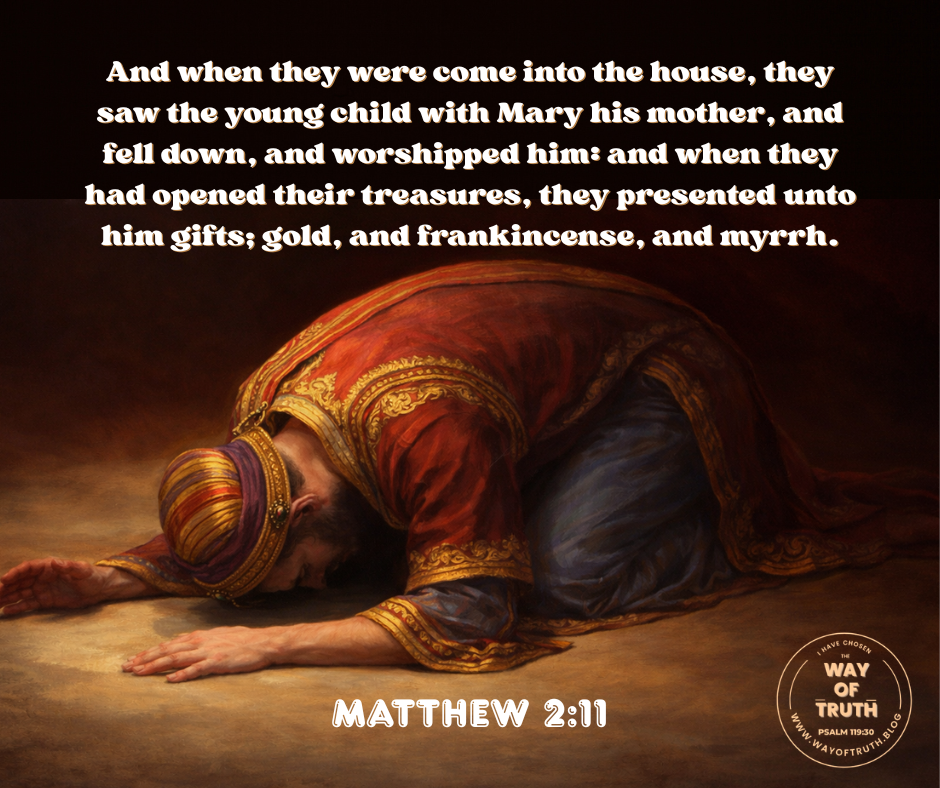
The wise men have followed the star, rejoiced at its guidance, and now, in Matthew 2:11, they enter the house. Notice the detail. Not a manger. Not a stable. A house. Time has passed. The child is described as a “young child,” not an infant in a feeding trough. Matthew isn’t crafting a sentimental tableau; he’s recording an event with care.
They see “the young child with Mary his mother.” The focus is unmistakable. Not Mary first. Not Joseph. The child. The object of their long journey and searching inquiry is before them.
And what do they do? They fall down.
Matthew uses physical language to describe spiritual reality. Worship is not casual here. It’s embodied humility. These are learned men, likely respected in their homeland, and yet they bow before a small child in an ordinary home. That image alone carries theological weight. True worship recognizes worth, not appearance.
Then they open their treasures. This isn’t an afterthought. Their worship expresses itself in giving. Gold, frankincense, and myrrh are costly gifts, not symbolic trinkets pulled from a pocket. Whether or not we press each item for layered meaning, the point is clear: they give what is valuable.
The passage naturally reinforces Christ’s identity. Men from the nations bow before Him. They worship Him without correction. In Scripture, worship belongs to God alone. Matthew doesn’t criticize their act. He records it approvingly. That’s a powerful testimony to who Jesus is.
Some skeptics reduce this scene to legend or symbolic storytelling. Yet the narrative bears marks of realism: ordinary housing, specific materials, and restrained description. There’s no dramatic embellishment beyond what’s necessary. The focus is worship, not spectacle.
Matthew 2:11 shows us worship that’s humble, joyful, and costly.
Worship That Costs Something
This verse challenges comfortable ideas about worship.
The wise men didn’t merely feel admiration. They fell down. Physical posture reflected inward reverence. In a culture where worship can become routine or even consumer-driven, this image resets our expectations. Worship isn’t about preference or atmosphere. It’s about recognizing the worth of Christ.
Notice also that they worship before they give, but they do give. Their treasures follow their bowing. Giving isn’t a substitute for worship, but it’s a natural extension of it. When Christ is recognized as King, possessions lose their grip. What we value reveals whom we value.
For the Church, this passage speaks directly to our priorities. Do we gather around Christ, or around secondary themes? The wise men were not distracted by surroundings. They weren’t evaluating the décor of the house or the status of the family. They were focused on the child. Churches must be careful not to drift into self-focus, programming focus, or personality focus. The center must remain Christ.
There’s also encouragement here. The setting is simple. No palace. No throne. No royal court. Yet worship erupts. God doesn’t require grandeur to receive glory. He requires hearts that recognize His Son.
On a personal level, this verse invites honest reflection. What do we bring to Christ? Not merely in material terms, but in trust, obedience, and allegiance. The wise men opened their treasures. We are called to open our lives.
This doesn’t mean dramatic gestures alone. It means daily surrender. Time offered. Resources stewarded. Sin relinquished. Priorities reordered. Worship that costs something is worship that reveals love.
There’s a soft rebuke embedded here, too. Jerusalem was only a few miles away. Religious leaders knew the prophecy. Yet foreign seekers fall down in reverence while insiders remain unmoved. Familiarity can dull awe. Distance can sharpen it.
The call isn’t to imitate the wise men sentimentally, but to examine whether Christ truly receives our reverence and our resources.
Bowing Before the Savior-King
Matthew 2:11 presents a simple but profound truth: Jesus is worthy of worship.
The wise men didn’t fully understand the cross or resurrection yet. But they knew enough to bow. Today we know far more. Scripture reveals that this child grew to live a sinless life, fully obedient to the Father. He came not merely to be admired, but to save.
Sin separates us from God and leaves us guilty before Him. The penalty for sin isn’t minor. It’s real and eternal. No gift we bring can erase it. No effort we offer can earn forgiveness.
But Jesus did what we could not. On the cross, He bore the judgment sin deserves. He gave Himself. His resurrection declares that the sacrifice was accepted and that new life is possible.
The gospel calls for more than appreciation. It calls for repentance and faith. To bow, as the wise men did, is to acknowledge Christ’s authority. To open our treasures is to entrust Him with our lives.
If you don’t already know Jesus Christ as your Lord and Savior, consider what it means that men traveled far and fell down before Him. He’s not merely a teacher or moral example. He is the Savior-King. He invites you to turn from sin and trust in Him. Forgiveness is offered freely. New life begins with surrender.
And if you belong to Christ, let this passage renew your worship. Let your life reflect the worth of the One before whom wise men bowed. Worship Him not only with words, but with wholehearted devotion.
Reflection and Response
- What does the posture of the wise men teach you about genuine worship?
- How does giving reflect the sincerity of our reverence for Christ?
- In what ways might familiarity with Jesus dull your sense of awe?
- What “treasures” might God be calling you to surrender more fully?
- How can your daily life reflect that Christ is truly King?