
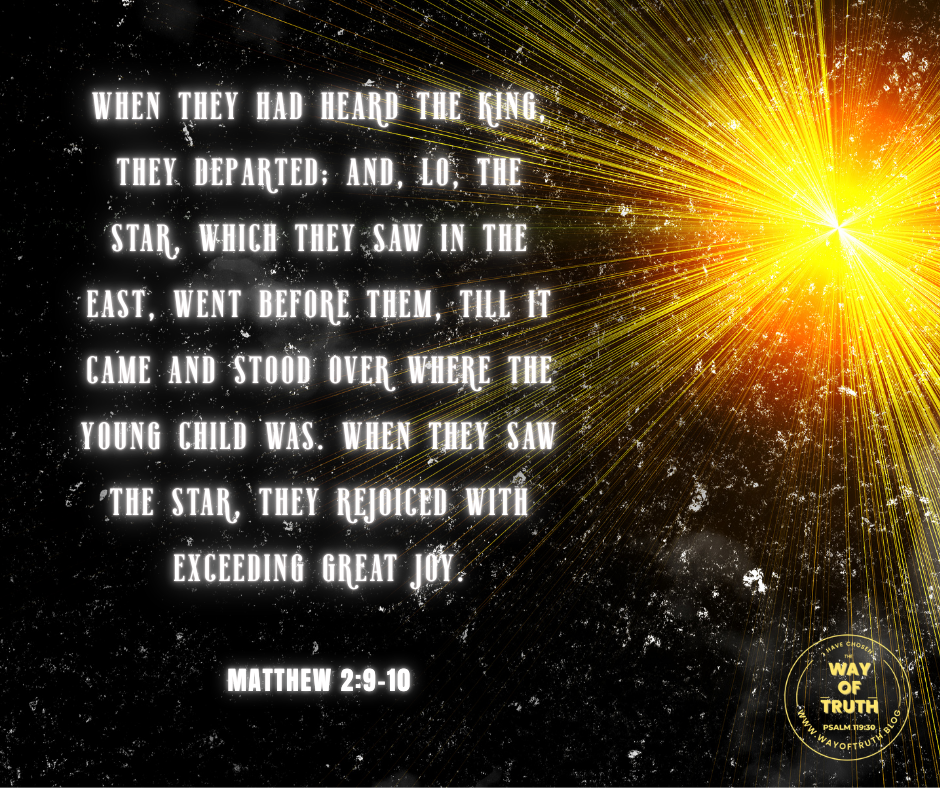
Matthew moves us from tension back to movement. The wise men have heard Herod’s instructions. They depart. There’s no recorded debate or hesitation. They continue seeking the child. And then, quietly but dramatically, the star reappears.
The text says the star “went before them.” However we understand the mechanics of that sign, Matthew’s emphasis is theological rather than astronomical. The same God who revealed the King’s birth is guiding seekers to the King’s location. The star doesn’t wander randomly; it leads. It comes and “stood over where the young child was.” The language suggests deliberate direction, not vague symbolism.
This detail matters. God does not tease sincere seekers with distant clues. He brings them to Christ. The star that first stirred their curiosity now confirms their path. Revelation progresses. It doesn’t contradict itself.
Verse 10 gives us one of the simplest yet most profound responses in the infancy narrative: “they rejoiced with exceeding great joy.” Matthew stacks words to make the point. This isn’t mild satisfaction. It’s overflowing gladness. The journey, the questions, the uncertainty, the long road through foreign lands, all of it culminates in joy.
There’s no hint of cynicism in these men. They’re not embarrassed to rejoice. They don’t treat the moment as academic fulfillment. They experience delight because they’re close to the King.
From an apologetic standpoint, the passage resists both reduction and exaggeration. Matthew neither speculates about the nature of the star nor embellishes emotional drama beyond what’s written. The focus remains steady: God guides; seekers follow; joy erupts.
Matthew 2:9–10 shows us that divine revelation is purposeful and that genuine pursuit of Christ leads not to disappointment, but to joy.
Following the Light All the Way to Joy
These verses gently challenge how we think about guidance and joy.
The wise men didn’t receive the entire roadmap at once. They were given a sign, enough to move them forward. Along the way, they needed clarification from Scripture in Jerusalem. Now, the star appears again. God often guides in stages. We’re given enough light for the next step, not the entire journey.
That can feel frustrating. We prefer full clarity before obedience. But the pattern here is consistent with the wider story of Scripture. Abraham left not knowing all the details. Israel followed a pillar one day at a time. The wise men moved as they were led. Faith isn’t blind, but it is progressive.
There’s also encouragement here for those who feel they’re seeking Christ sincerely. God doesn’t hide Himself from honest pursuit. He may not answer every question immediately, but He leads faithfully. The star didn’t disappear forever. It reappeared at the right time.
The joy described in verse 10 also speaks deeply to the Christian life. Notice the order. They rejoiced before they entered the house. Joy erupted at the confirmation that they were close. Sometimes we assume that joy must wait until circumstances are perfect or understanding is complete. Yet biblical joy often springs from the assurance that God is guiding us rightly.
For the Church, this passage offers perspective. Our role is not to manufacture light, but to point to it. God draws seekers. God guides hearts. When people come to Christ, it’s not the brilliance of our strategies but the faithfulness of His revelation.
There’s also a quiet warning embedded here. The wise men rejoiced when they saw the sign that confirmed Christ’s location. Jerusalem, by contrast, remained troubled. The difference isn’t access to information, but response to it. Joy follows surrender.
On a personal level, ask yourself: are you following the light you have? Or are you waiting for more before taking a step? God rarely reveals the entire path. He reveals enough to lead us to Christ.
And when we find Him, even partially, joy follows. Not shallow excitement, but steady gladness rooted in the nearness of the King.
The Joy Found at the End of the Journey
Matthew 2:9–10 shows us something beautiful about the gospel: those who are brought to Christ find joy.
The wise men did not create the light that led them. They responded to it. In the same way, salvation begins with God’s initiative. He reveals Himself through His Word, through the testimony of Scripture, and supremely through Jesus Christ.
Humanity’s deepest problem is not confusion about direction, but separation from God because of sin. Sin darkens the heart and distances us from the One we were created to know. The penalty for sin is real, and no amount of effort can erase it.
But God hasn’t left the world in darkness. Jesus Christ came as the true Light. He lived without sin, walked among sinners, and ultimately bore sin’s penalty on the cross. His resurrection declares that death has been defeated and that forgiveness is real.
The gospel invites a response similar to that of the wise men: follow the light you have. Turn from sin. Trust in Christ. Seek Him not casually, but sincerely.
If you don’t already know Jesus Christ as your Lord and Savior, consider the joy described here. It’s not sentimental optimism. It’s the deep gladness of being brought near to the King. God’s calling you to trust His Son, who died and rose again to save.
And if you belong to Christ, let this passage renew your joy. Remember the gladness of first seeing Him clearly. Let that joy fuel worship, obedience, and witness. The King who guided the wise men still guides His people today.
Reflection and Response
- What does the reappearance of the star teach you about how God guides His people?
- Are you following the light God has already given, or waiting for more clarity?
- What distinguishes the wise men’s joy from Herod’s disturbance?
- How does proximity to Christ shape genuine joy?
- Who in your life might God be guiding toward Christ through your faithful witness?