
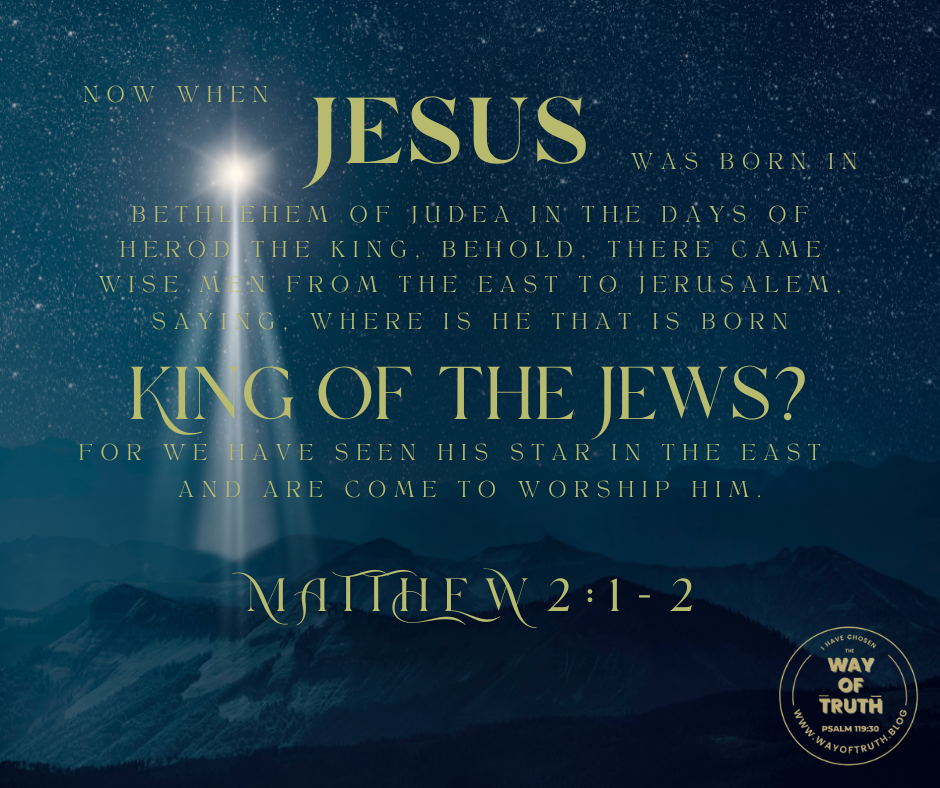
Matthew opens chapter 2 by widening the lens. The birth of Jesus is no longer confined to a quiet home or a small circle of faithful Israelites. News of the Messiah has crossed borders. Wise men arrive from the east, and with them comes a question that exposes hearts and threatens power: “Where is he that is born King of the Jews?”
Matthew is careful with details. Jesus is born in Bethlehem, fulfilling long-standing promise, and this happens “in the days of Herod the king.” That phrase alone sets up tension. Herod is a ruler clinging tightly to power, known for paranoia and violence. Into his reign comes word of another king, not appointed by Rome, not crowned by men, but born.
The wise men are outsiders. They’re not priests, scribes, or covenant insiders. They come from the east, likely skilled observers of the heavens. Matthew doesn’t glorify their background, but he does emphasize their response. They see a sign, interpret it as pointing to a king, and act. They travel. They ask. They seek. Most importantly, they come “to worship him.”
Their question assumes something remarkable: the King has already been born. They don’t ask whether He exists or whether He might become king someday. They assume His kingship is a present reality. That assumption is grounded in God’s action, not human recognition.
This passage also answers quiet objections about the gospel being narrow or tribal. From the very beginning, Gentiles were drawn to Christ. The Messiah of Israel is revealed as a King worthy of worship from the nations. Scripture doesn’t force this meaning onto the story; it unfolds naturally from the events.
Matthew presents a contrast without commentary. Pagan scholars seek and worship. Jerusalem’s ruler and religious center will soon be shown as disturbed or indifferent. Revelation doesn’t guarantee response. Hearts matter.
These two verses announce a theme that will echo throughout the Gospel: Jesus is King, and His presence demands a response.
Seeking Christ When Others Feel Threatened
Matthew 2:1–2 challenges us to examine how we respond to the kingship of Jesus.
The wise men model a faith that moves. They don’t stay home debating the meaning of the sign. They act on what they know. Their knowledge is incomplete, but it’s enough to set them in motion. That’s often how faith works. God rarely gives the full picture at once. He gives enough light to take the next step.
There’s also humility here. These men travel far to ask questions. They’re not ashamed to say, “Where is he?” Seeking Christ begins with admitting we don’t already have Him figured out. Pride resists that posture. Worship requires it.
In contrast, Herod represents another response. Though not yet revealed in these verses, his fear of a rival king makes him feel threatened. That reaction hasn’t disappeared. Even today, people resist Jesus not because the evidence is lacking, but because His authority challenges control, comfort, or identity.
For the Church, this passage is a reminder that the gospel will always draw unexpected seekers. God often brings people to Christ from directions we don’t anticipate, with backgrounds we wouldn’t predict. Our role isn’t to stand guard over the door, but to point faithfully to the King.
This text also shapes how the Church speaks about Jesus. The wise men don’t come looking for inspiration, therapy, or moral guidance. They come looking for a King. When the Church reduces Jesus to something less than Lord, it undercuts the very reason that He’s worthy of worship.
On a personal level, these verses ask a quiet but piercing question: Are we seeking Christ, or merely managing Him? The wise men rearranged their lives to find Him. They invested time, energy, and risk. That kind of seeking still marks genuine faith.
There’s encouragement here for believers who feel small or unnoticed. God placed a sign in the heavens, but He revealed its meaning to those who were watching. Faithful seeking matters. God honors hearts that genuinely desire to worship Him.
The King Who Invites Worship, Not Fear
The question asked by the wise men still stands today: “Where is he that is born King?”
Jesus Christ came as a true King, but not the kind humanity expected. He didn’t come to seize power by force or dominate through fear. He came to save. Scripture is clear that sin has placed every person under judgment. We’re not neutral subjects; we’re rebels in need of grace. The penalty for sin is real, and no amount of effort can remove it.
God’s answer was to send His Son. Jesus lived in perfect obedience, fully pleasing to the Father. On the cross, He bore the judgment sin deserves. His death was not defeat, but purpose. And His resurrection declared that the King has conquered sin and death.
The gospel calls for a response, just as it did for the wise men. The call isn’t merely to admire Jesus, but to worship Him. To turn from sin and trust in Him as Savior and Lord.
If you don’t already know Jesus Christ as your Lord and Savior, this passage invites you to seek Him honestly. You don’t need full understanding to begin. You need a willing heart. God has revealed enough to call you to faith.
And if you belong to Christ, let this passage renew your worship. The King has come. He is worthy of your trust, obedience, and devotion. Seek Him daily, not out of fear, but because He is worthy.
Reflection and Response
- What stands out to you about the wise men’s question and their desire to worship?
- How do you typically respond to Jesus as King: with joy, resistance, or indifference?
- What might it look like for you to seek Christ more intentionally right now?
- How does this passage challenge shallow or reduced views of who Jesus is?
- Who around you may be quietly seeking the King and needs guidance toward Him?