
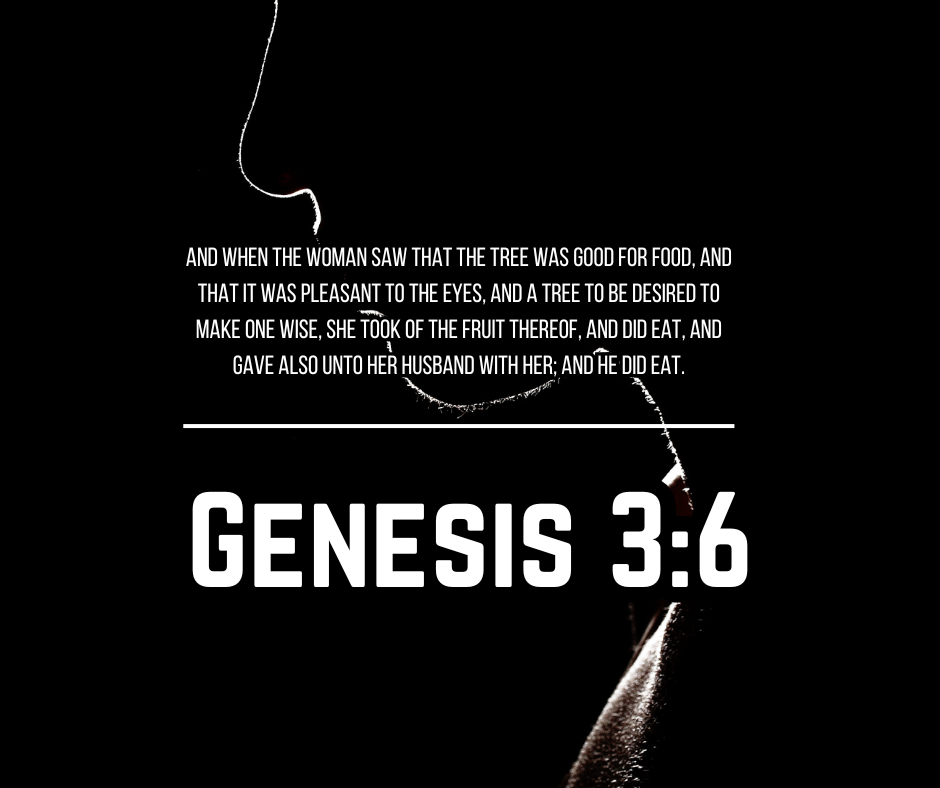
With these simple verbs, the story of temptation becomes the story of transgression. The deliberation ends, and decision takes over. What the mind has reasoned and the eyes have admired, the hand now claims. “She took… and did eat.” The serpent’s voice fades into silence; he no longer needs to speak. His work is complete, for desire has now taken on a will of its own.
The narrative’s brevity here is striking. Moses does not describe the fruit, the sensation, or even Eve’s immediate reaction. The act is left unadorned, as though Scripture refuses to dignify it with detail. The simplicity of the words—took and ate—heightens their gravity. What could be more ordinary than eating? And yet, in this ordinary act lies the most extraordinary catastrophe. The daily rhythm of nourishment becomes the vehicle of death. Sin rarely wears dramatic colors; it enters quietly, through ordinary gestures that carry eternal weight.
This is the climax of human autonomy. The woman reaches for what God has forbidden, and in that moment, creation’s perfect harmony fractures. It’s more than a dietary choice; it’s a declaration of independence. The act of taking the fruit is symbolic of seizing moral authority, assuming the right to determine what is good and evil apart from divine command. The hand that grasps the fruit is merely the instrument of a heart already turned from trust to self-rule.
In taking the fruit, Eve reverses the proper order of creation. The human, meant to govern creation under God, now obeys a creature, the serpent. The subordinate instructs the steward, and the steward defies the Sovereign. The very structure of moral order collapses. The tragedy is not only that Eve ate but that she took. That small verb exposes the essence of sin: grasping what belongs to God. Every rebellion since has echoed that motion: reaching for what we have no right to claim and believing fulfillment can be taken rather than received.
Yet even here, grace whispers through the text. The God who will later clothe them in mercy already sees beyond this taking to another. Centuries later, another woman will receive a divine word—not from a serpent, but from an angel—and she will not take but humbly accept. Where Eve reached to seize divinity, Mary will bow to bear it: “Be it unto me according to thy word” (Luke 1:38). The two gestures—Eve’s grasping hand and Mary’s open one—frame the story of redemption.
Eve’s act of taking brings ruin, but it also sets in motion the history of grace. The fruit she grasped would one day be answered by another act of giving: “This is my body, which is given for you.” The hands that tore from the tree will find salvation in hands stretched out upon another tree. What was taken in disobedience will one day be offered in love.
Loving your series of articles, Brother Tharp!
Thank you for sharing enlightening thoughts and truths!
God bless your fsmily and ministry!
Sincerely,
Brother Ireneo
Thank you so much, Brother Ireneo! Your gracious words are always an encouragement and a true blessing. I pray that the Lord continues to strengthen you and richly bless your family and ministry as well.
In Christ,
Brother Mike