
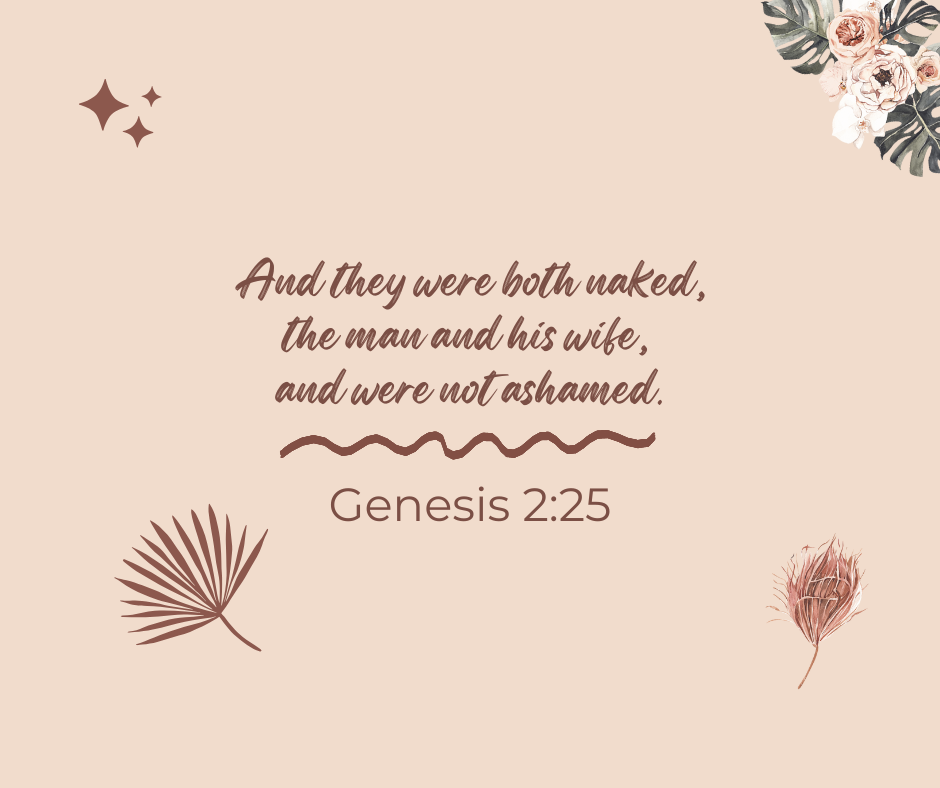
The word “naked” in Genesis 2:25 comes from the Hebrew term ʿărummîm, describing Adam and Eve’s unclothed state. In most settings, the idea of exposure carries a sense of danger, vulnerability, or even shame. But here the word is morally neutral; it signals openness without fear, a condition of vulnerability that was not yet corrupted by sin. Strikingly, the very next verse (Gen 3:1) describes the serpent as ʿārûm, “crafty” or “shrewd.” The similarity in sound is deliberate, setting up a sharp contrast: humanity’s innocent transparency will soon collide with the serpent’s cunning deception.1
Nakedness as Total Transparency
Scholars have observed that “naked” here communicates more than physical description. Victor P. Hamilton, in his commentary on Genesis, argues that the Hebrew word ʿărummîm conveys more than a mere statement of physical nudity.2 For him, the verse is not satisfied with reporting Adam and Eve’s unclothed condition; it also underscores their complete transparency before one another. Hamilton writes that Genesis 2:25 is “claiming a total transparency between this primal couple,” a state in which no barriers, pretenses, or hidden agendas existed. Nakedness, in this reading, functions symbolically as well as literally: it is the outward expression of an inward honesty.
What makes Hamilton’s contribution distinctive is that he ties nakedness not simply to physiology but to relationship. To be naked was to live in a condition where nothing was concealed, not physically, not emotionally, not spiritually. There was no fear that vulnerability would be met with exploitation, nor any impulse to manipulate, deceive, or self-protect. For Hamilton, ʿărummîm highlights an intimacy that goes deeper than skin, pointing to the covenantal harmony intended between husband and wife.
This interpretation has significant theological weight. First, it helps explain why the serpent is described in the very next verse as ʿārûm (“crafty, shrewd”; Genesis 3:1). The wordplay suggests a deliberate contrast: the couple’s openness is set against the serpent’s cunning. In other words, their nakedness is not only descriptive but narratively functional. Genesis 2:25 paints a picture of radical transparency, only to have it shattered by deceit in Genesis 3. Second, Hamilton’s view underscores that shame in Scripture is relational before it is psychological. Shame enters not merely because bodies are exposed, but because relationships are broken, first with God, then with one another.
There are, however, questions to raise about Hamilton’s interpretation. The primary sense of ʿărummîm is indeed physical nakedness, and the plain reading of the text should not be eclipsed by its symbolic dimensions. Nakedness is not simply a metaphor for transparency but a real condition of being unclothed. Nevertheless, Hamilton’s insight that physical nakedness points beyond itself to a state of interpersonal honesty is persuasive, especially given how the text uses “nakedness” as a theological symbol elsewhere in Scripture (e.g., Genesis 3:7; Ezekiel 16:36; Revelation 3:18).
In sum, Hamilton’s reading enriches our understanding of ʿărummîm by refusing to limit it to biology. Nakedness in Genesis 2:25 communicates both the absence of clothing and the presence of trust. It describes a relationship where nothing needed to be hidden, where the physical state reflected the purity of the spiritual and relational state. This interpretation deepens the contrast between Genesis 2 and Genesis 3 and anticipates the brokenness that will soon replace innocence.
Nakedness as Innocence and Ease
Allen Ross similarly interprets the description of Adam and Eve as “naked” in Genesis 2:25 as far more than a note about their lack of clothing.3 For Ross, the word points to a state of innocence in which their exposed condition carried no suggestion of danger or exploitation. Nakedness, he explains, expressed the ease they shared with one another, free from the self-consciousness and fear that would come only after sin. This detail tells us that in Eden, transparency was safe because the context was untainted by selfishness, lust, or malice.
Ross highlights the relational dimension of ʿărummîm. Nakedness was not simply about bodies without garments but about lives without barriers. Adam and Eve’s openness to one another reflected a world where nothing was hidden and nothing distorted intimacy. To stand naked was to stand completely revealed, yet also completely secure. In this sense, Ross sees nakedness as a visible sign of their sinlessness: without guilt before God or suspicion toward each other, they had no reason to cover themselves or withdraw.
A key strength of Ross’ interpretation is how he situates this word within the broader narrative. Genesis 2:25 sets up a sharp literary contrast with Genesis 3:7, where nakedness immediately becomes associated with shame, concealment, and fear. By pointing out the innocence of nakedness here, the text prepares us for the tragedy of its loss. What was once pure and natural would soon become tainted, requiring covering and leading to hiding from God. In Ross’ view, this shift underscores how deeply the Fall altered human experience: what had once been a sign of openness and trust became a source of anxiety and alienation.
Ross also sees enduring implications for marriage in this description. Though the complete innocence of Eden can never be replicated in a fallen world, the covenantal bond of marriage provides a sphere where vulnerability and intimacy can again be experienced without shame. Nakedness in marriage, then, is not merely physical but relational; it’s about being fully known and still fully accepted. For Ross, Genesis 2:25 reminds us that God’s design for human relationships was one of safety, wholeness, and joy, and that in Christ, that design finds its restoration.
In sum, Ross interprets nakedness in Genesis 2:25 as the outward expression of an inward reality: innocence before God and harmony between husband and wife. The verse does not simply report their physical condition but reveals the theological depth of human relationships as God intended them: transparent, secure, and good.
Taken together, these perspectives remind us that the nakedness of Genesis 2:25 is not a trivial detail but a profound theological sign. It describes far more than unclothed bodies; it portrays lives lived in unbroken trust, where physical openness mirrored spiritual and relational wholeness. Hamilton helps us see nakedness as radical transparency without barriers, while Ross emphasizes the ease and safety that flowed from innocence and purity. Both views converge to show that nakedness in Eden symbolized a world untainted by sin, where vulnerability was not dangerous but good, and where intimacy was marked by security rather than fear. This final glimpse of creation before the Fall points us to what was lost in Genesis 3 and, at the same time, stirs our longing for the restoration of openness, innocence, and peace that only God can bring through redemption in Christ.
- Zvi Ron, “Wordplay in Genesis 2:25–3:1,” Jewish Bible Quarterly 42, no. 1 (Winter 2014): 3–7, accessed September 7, 2025, https://jbqnew.jewishbible.org/assets/Uploads/421/JBQ_421_1_wordplay.pdf. ↩︎
- Victor P. Hamilton, “Genesis,” in Baker Commentary on the Bible, ed. Walter A. Elwell (Grand Rapids: Baker Books, 1989), 13. ↩︎
- Allen P. Ross, “Genesis,” in The Bible Knowledge Commentary: Old Testament, ed. John F. Walvoord and Roy B. Zuck (Colorado Springs: Chariot Victor Publishing, 1985), 31–32. ↩︎