
From the very beginning, Scripture shows us a God who speaks life into existence with purpose and beauty: light, sky, land, seas, stars, plants, animals, and finally man and woman, made in His image to reflect His glory and care for His creation. In Eden, God gave Adam both a home and a calling: to tend the garden, to trust His word, and to live in joyful fellowship with Him. Yet God saw that Adam needed more than work and worship; he needed a partner. None of the animals could fill that role, so God formed the woman from Adam’s side and brought her to him, establishing marriage as a covenant of love and unity. These opening chapters remind us that we were created for relationship—with God and with one another—and that our deepest flourishing comes when we live within His good design.
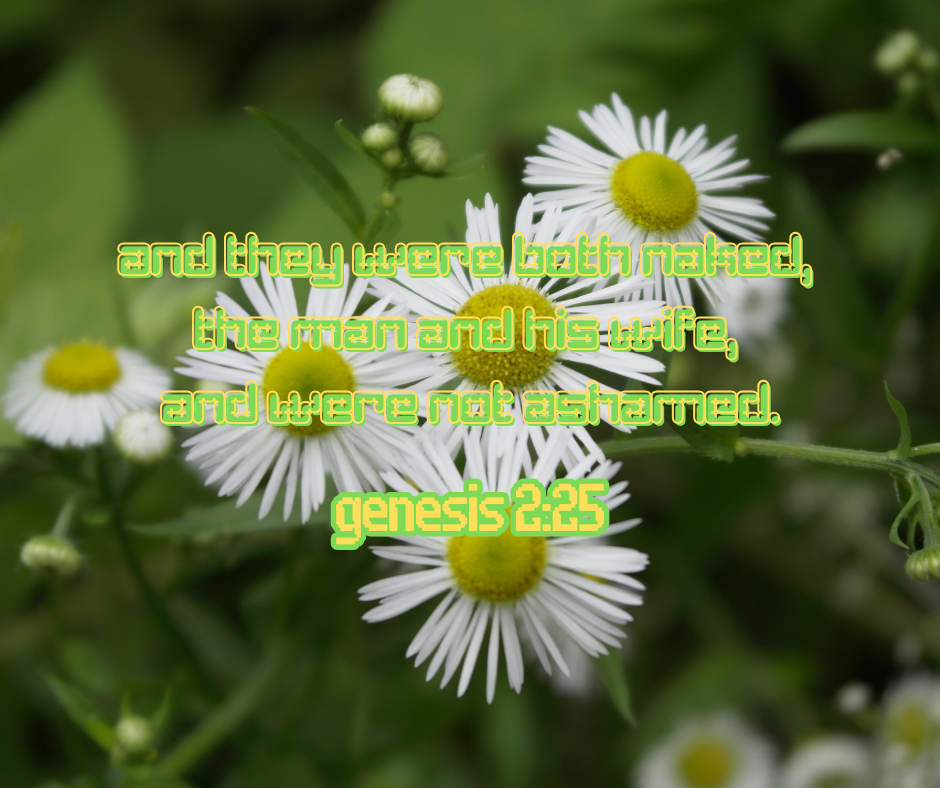
As we come to Genesis 2:25, we arrive at the final note in the creation symphony, a verse that captures both the beauty of Eden and the innocence of humanity before the Fall. In just a few words, Scripture opens a window into a world untouched by sin, where openness and trust marked every relationship. Here we see humanity exactly as God designed us: whole, pure, living in perfect harmony, and at peace with Him and with one another. It’s not only a description of physical nakedness, but a picture of something far deeper: complete transparency without fear, intimacy without guilt, and unity without fracture. This verse closes the account of creation with a picture of unspoiled joy, while also preparing us for the heartbreaking contrast of Genesis 3, when shame and hiding will enter the story. To linger on this verse is to glimpse the goodness of God’s original design, the kind of innocence and unity that our hearts still long for, and that only Christ can ultimately restore.