
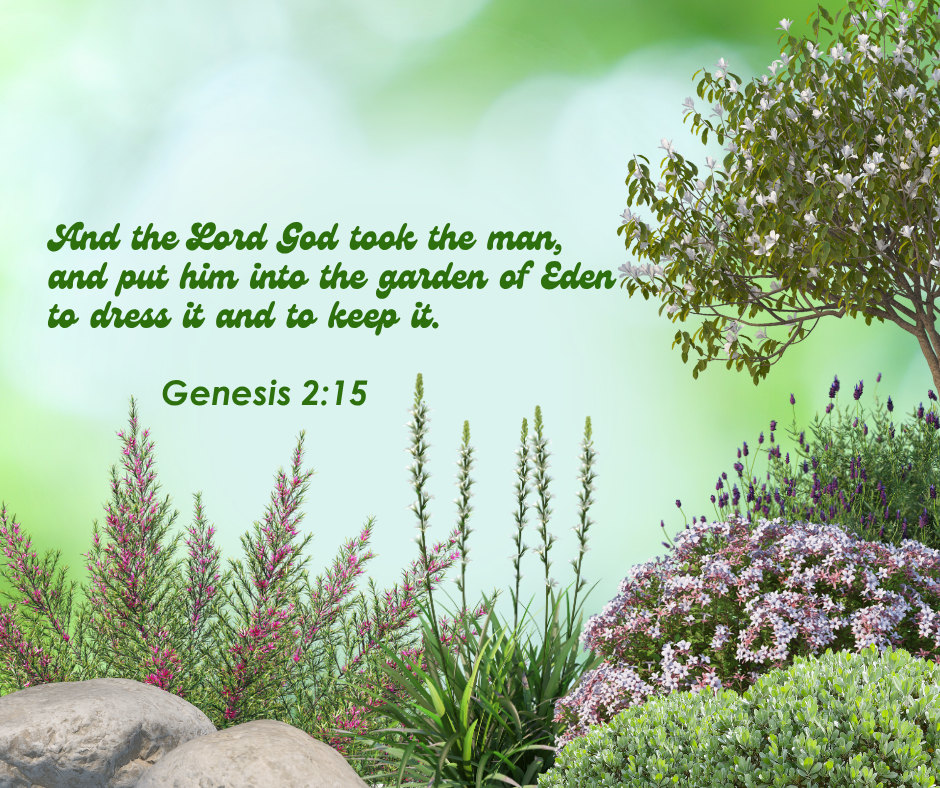
Bergen notes that “the verb translated in Genesis 2:15 as dress literally means ‘serve’” (2018, p. 12). This reveals that Adam’s role in the Garden of Eden was not simply to perform manual labor but to act as a servant of God, faithfully stewarding His creation. This affirms that work is inherently good and was instituted before the Fall, demonstrating that serving God through diligent care of His world is part of humanity’s original design (cf. Colossians 3:23). Work, therefore, is not a punishment but a means by which mankind glorifies the Creator.
In addition, various Jewish Midrashim connect the command to keep it with the broader idea of obeying and guarding the commandments (Nggada & Malgwi, 2023). Adam’s charge to keep the garden prefigures Israel’s covenant responsibility to guard the Torah and remain faithful to God’s word. Bergen further elaborates that “the verb [translated ‘keep’] is used elsewhere to refer to the action of God toward his people (Psalm 121:3–4) or the work of a military guard (Song of Solomon 5:7)” (2018, p. 12). The language implies vigilant watchfulness and active protection, suggesting that Adam’s role encompassed spiritual guardianship as well as physical care.
Early Jewish literature also reinforces this idea by presenting Adam as a priestly figure. Texts such as Jubilees, the writings of Philo, and certain Dead Sea Scrolls describe the Garden as a kind of temple sanctuary. To dress and keep it implies priestly service and guarding holiness, much like the Levitical priests who served and guarded the tabernacle (cf. Numbers 3:7–8). In this sense, Eden foreshadows later temple imagery: a sacred space where humanity enjoys communion with God under conditions of obedience and holiness.
This understanding has also shaped some Christian theological traditions. The Eastern Orthodox Church strongly emphasizes humanity’s priestly vocation within creation. Adam’s task is seen sacramentally: to cultivate and preserve creation in continual communion with the Creator. The Fall disrupted this harmony, but salvation in Christ restores mankind’s priestly role and reunites creation with its true purpose. Similarly, the Oriental Orthodox Church and the Assyrian Church of the East uphold the idea that humanity is called to be the priest and steward of creation, a sacred role requiring holiness, gratitude, and watchfulness.
This raises an important question: why was there a need to guard a perfect garden where evil had not yet manifested? Severian of Gabala, an early church theologian, addressed this dilemma by proposing that Adam’s greatest threat was not an external adversary but his own inclination toward disobedience. Severian wrote that Adam should “guard it against himself: Do not lose it by transgressing the command. Instead, he would preserve the commandment and in so doing preserve himself in paradise” (Oden, 2001, p. 60).
This insight is consistent with biblical teaching on human responsibility and sin. Though the serpent would later introduce external temptation, the deeper issue was Adam’s freedom to choose obedience or rebellion. The call to dress and keep the garden illustrates that true stewardship always includes guarding the heart against sin. Scripture affirms this principle repeatedly: “Keep thy heart with all diligence; for out of it are the issues of life” (Proverbs 4:23).
Moreover, Adam’s priestly stewardship prefigures the greater Priest and King to come: Jesus Christ, the second Adam (cf. Romans 5:12–19; 1 Corinthians 15:45). Where the first Adam failed to guard the sanctuary, Christ perfectly kept the Father’s will and opened the way for redeemed humanity to be restored as true worshippers and faithful stewards in the new creation.
In summary, the command to dress and keep Eden teaches that humanity was created not merely to work the earth but to worship God, cultivate His creation, and guard holiness within themselves and the world around them. Though the Fall shattered this vocation, redemption in Christ restores believers to this priestly calling, equipping them to serve and guard the living temple of the Holy Spirit until the final restoration of all things.