
In the beginning, God created the heaven and the earth, bringing order and beauty out of the formless void over six days: dividing light from darkness, setting the firmament, gathering the waters to reveal dry land clothed with vegetation, and ordaining the sun, moon, and stars to rule day and night and mark seasons. He filled the seas with living creatures, the skies with birds, and the earth with animals, then made man and woman in His own image, blessing them to be fruitful, multiply, and exercise dominion over all living things. When His work was finished, God rested on the seventh day and sanctified it, establishing a divine pattern for labor and rest.
Genesis 2 offers a more detailed account, describing how God formed man from the dust and breathed life into him, then planted a garden eastward in Eden, an abundant, beautiful place watered by a river that parted into Pison, Gihon, Hiddekel (Tigris), and Euphrates where He caused every tree pleasant to the sight and good for food to grow, including the tree of life and the tree of knowledge of good and evil.
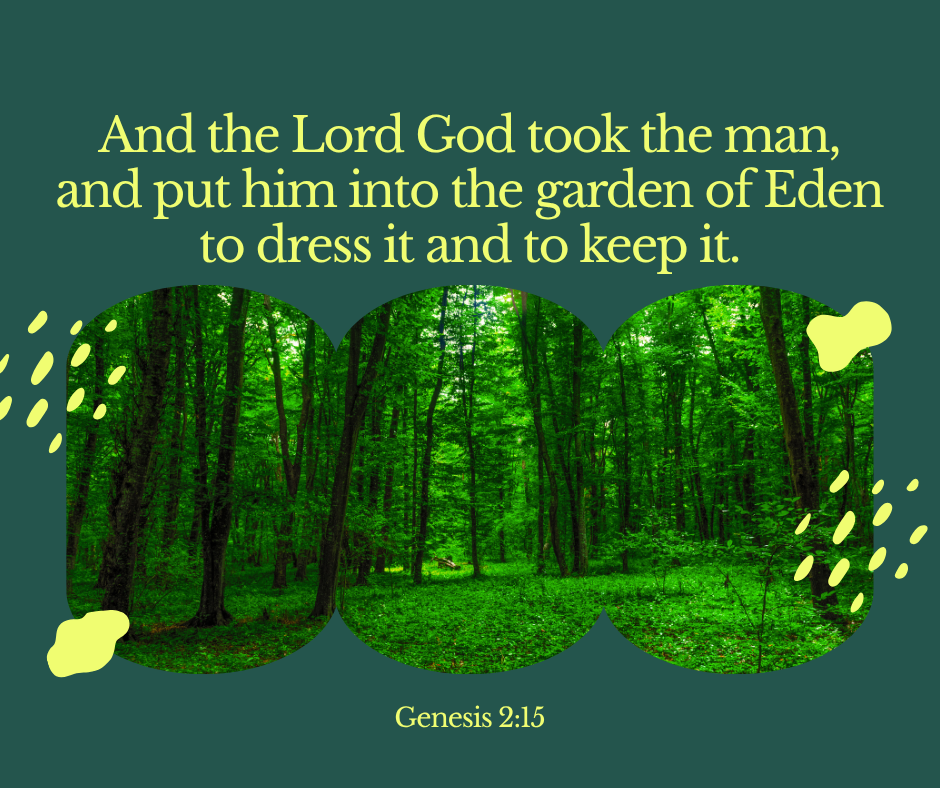
We now come to Genesis 2:15, where the purpose for which man was placed in this paradise is made clear. Scripture says, “And the LORD God took the man, and put him into the garden of Eden to dress it and to keep it.” Here we see that Adam was given not only life and a beautiful dwelling but also a sacred charge: to cultivate the garden, to labor and tend it, and to guard it and watch over it faithfully. This reveals that work, far from being a result of sin, was part of God’s original, good design for mankind. Labor was intended to be fulfilling and meaningful, a way for man to reflect God’s own creative and sustaining work.
This verse lays the foundation for the biblical principle of stewardship: mankind is entrusted by God to care for His creation, to use it wisely, and to preserve it for His glory. This divine calling extends beyond Eden, shaping the Christian understanding of vocation, responsibility, and man’s rightful place within the created order. Even now, redeemed through Christ, believers are reminded that they labor not merely for themselves but as caretakers of what belongs to the Lord, seeking to honor Him in all things until the day when creation itself will be restored in perfect harmony under His eternal reign.