
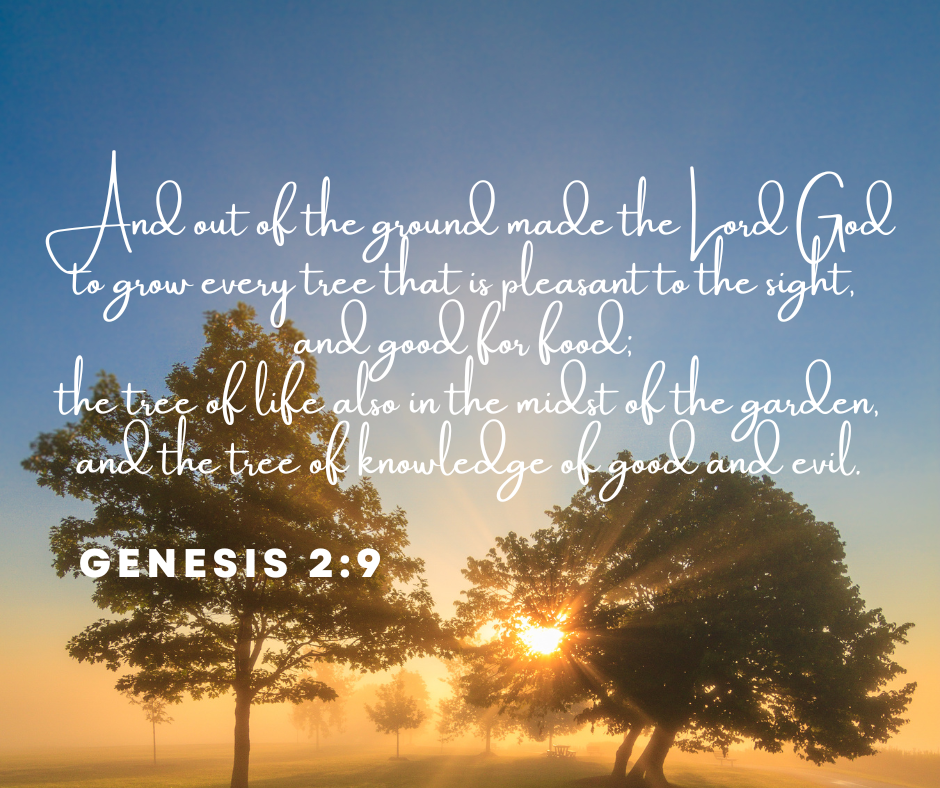
Unitarian Universalism, a religious movement known for its pluralism and non-creedal approach to faith, often interprets biblical narratives not as divinely revealed history, but as metaphorical expressions of human moral and spiritual evolution. This interpretive stance is clearly seen in how many Unitarian Universalists read the story of the Garden of Eden, especially the two central trees: the Tree of Life and the Tree of the Knowledge of Good and Evil.
In this view, the Tree of Life represents the ongoing human pursuit of spiritual growth, personal integrity, and inner wholeness. It is not a divine provision of eternal life tied to obedience or grace, but a symbol of human flourishing—of becoming the best version of oneself through experience, reflection, and community. The Tree is understood to signify the human capacity for wisdom, empathy, and self-actualization.
The Tree of the Knowledge of Good and Evil, rather than symbolizing a forbidden boundary, is often seen as an emblem of moral complexity and the necessity of human freedom. Eating its fruit is interpreted not as a transgression, but as a necessary milestone in human development. According to this perspective, the so-called “Fall” is not a tragic rupture between God and man, but a courageous act of moral awakening—an essential step in becoming autonomous, ethically responsible agents capable of discerning right from wrong.
In this symbolic reading, the Genesis narrative is recast as a myth of coming of age, in which the journey from innocence to responsibility is celebrated rather than lamented. Moral autonomy becomes the goal, and the trees serve not as theological markers of life and death, but as poetic images for internal growth and ethical self-realization (Pohl-Kosbau, 2004).
While this interpretation may resonate with modern individualistic ideals, it diverges sharply from the biblical teaching on the trees, the Fall, and the nature of true spiritual life.
The Trees Were Real, and So Was the Rebellion
The Unitarian Universalist reading of Genesis 2 reinterprets the Fall as progress and human autonomy as virtue. But the Bible presents a very different picture. It roots the story of Eden not in poetic metaphor or moral fable, but in historical reality with theological weight.
The Tree of Life is not symbolic of vague spiritual enrichment. It is God’s gracious provision of eternal life, contingent upon continued obedience. After the Fall, God barred access to it specifically to prevent sinful humanity from living forever in a state of spiritual death: “And now, lest he put forth his hand, and take also of the tree of life, and eat, and live for ever…” (Genesis 3:22).
The Tree of the Knowledge of Good and Evil, far from being a milestone in ethical development, was the clear boundary God placed to test Adam and Eve’s obedience: “But of the tree of the knowledge of good and evil, thou shalt not eat of it: for in the day that thou eatest thereof thou shalt surely die.” (Genesis 2:17)
The moral framework here is not about discovering one’s truth but about trusting God’s truth. The serpent’s temptation in Genesis 3:5—“ye shall be as gods, knowing good and evil”—was not an invitation to maturity but a lie designed to encourage rebellion. The result was not enlightenment but alienation, guilt, shame, and eventual death (Genesis 3:7–19).
The apostle Paul reaffirms this in Romans 5:12: “Wherefore, as by one man sin entered into the world, and death by sin; and so death passed upon all men, for that all have sinned.”
The Fall was real, its effects universal, and its consequences eternal apart from Christ. Far from being a “step forward,” it was the moment when humanity chose self-rule over God’s rule, bringing sin and death into a world that was originally “very good” (Genesis 1:31).
Furthermore, the idea that moral autonomy is the highest good is directly opposed by Scripture. Proverbs 3:5–6 exhorts: “Trust in the Lord with all thine heart; and lean not unto thine own understanding. In all thy ways acknowledge him, and he shall direct thy paths.”
True spiritual growth comes not through independence from God, but through dependence on Him and trust in His revealed Word.
Conclusion: The Trees Point to Christ, Not to Self-Reliance
While the Unitarian Universalist interpretation offers an optimistic view of human nature and moral potential, it strips the Genesis narrative of its historical, theological, and redemptive meaning. The Tree of Life is not a metaphor for self-fulfillment—it is a real promise restored only through Jesus Christ. The Tree of the Knowledge of Good and Evil is not a rite of passage, but the boundary where humanity broke trust with its Creator.
The good news is that Christ, the Second Adam, came to restore what the first Adam lost. In Revelation 2:7, Christ promises: “To him that overcometh will I give to eat of the tree of life, which is in the midst of the paradise of God.”
This access is not granted to those who assert moral independence, but to those who submit to Christ in faith. The Gospel is not about finding your truth—it’s about being rescued from error and restored to fellowship with the Truth Himself (John 14:6).