
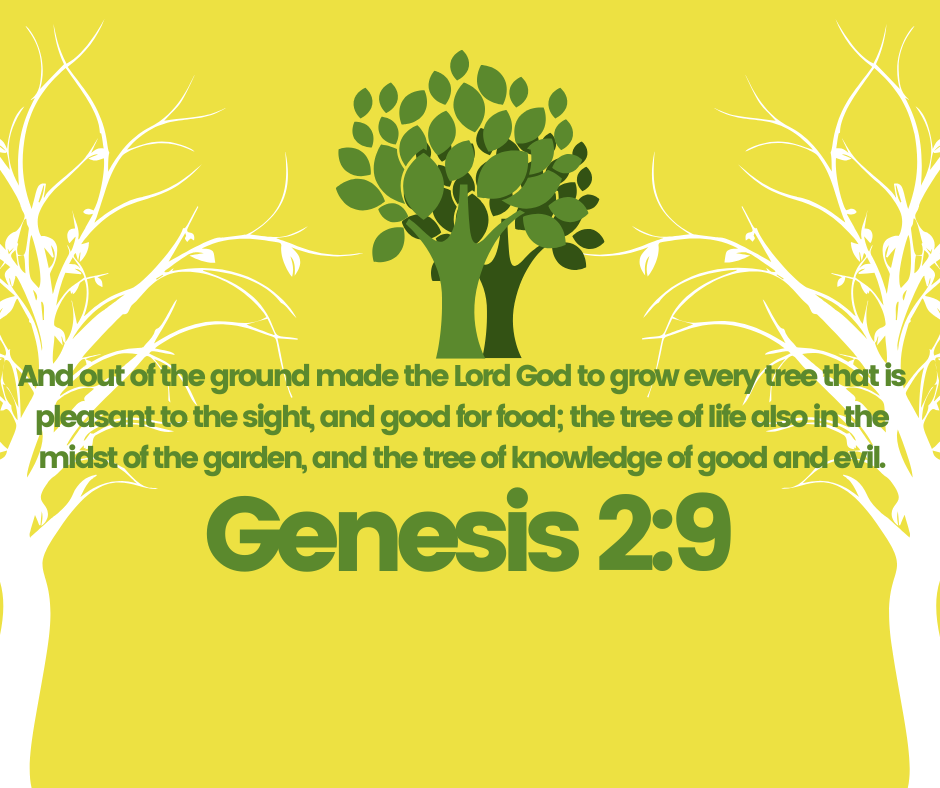
Christian Science, a religious movement founded in the 19th century by Mary Baker Eddy, reinterprets the Genesis account through the lens of divine metaphysics—a worldview that sees all of reality as spiritual, with matter, evil, and even death viewed as illusions or errors of human perception. Within this metaphysical framework, the two central trees in the Garden of Eden—the Tree of Life and the Tree of the Knowledge of Good and Evil—take on symbolic meanings that dramatically depart from the biblical record.
In Christian Science thought, the Tree of the Knowledge of Good and Evil represents the false belief in duality—that good and evil, spirit and matter, light and darkness are coexistent realities. To partake of this tree is to accept the illusion that matter is real, that sin has substance, and that separation from God is possible. The serpent’s temptation, then, is not seen as a historical event of moral disobedience, but as the entrance of error into consciousness—a mistaken perception that leads humanity to believe it is estranged from an ever-present, wholly good God.
The Tree of Life, by contrast, symbolizes true spiritual awareness—the realization that all life is divine, harmonious, and entirely spiritual. This tree points to the eternal unity between God and man, a unity that is never actually broken but only appears so to those who are spiritually misled. For Christian Science, the “Fall” is not a real event in history but a metaphorical descent into misunderstanding. Redemption is not achieved by divine atonement but through correct spiritual understanding—the realization that evil, disease, and even death are ultimately unreal.
While this metaphysical system may appeal to modern spiritual sensibilities, it directly contradicts the plain teaching of Scripture and undermines the foundational doctrines of sin, judgment, and salvation.
The Fall Was Real and Sin Has Consequences
The Christian Science interpretation of Genesis 2:9 is both unbiblical and theologically dangerous. It denies the reality of sin, the historicity of the Fall, and the need for Savior, replacing them with a metaphysical system that regards moral and physical evil as illusory.
The Bible, however, is emphatic that the Tree of the Knowledge of Good and Evil was part of a real, historical creation. Genesis 2:17 records God’s command: “But of the tree of the knowledge of good and evil, thou shalt not eat of it: for in the day that thou eatest thereof thou shalt surely die.”
This command was not a warning against a false consciousness, it was a moral imperative issued by the Creator to real human beings, Adam and Eve. When they disobeyed, they did not simply fall into misunderstanding—they incurred guilt and brought death into the world. As Paul writes in Romans 5:12: “Wherefore, as by one man sin entered into the world, and death by sin; and so death passed upon all men, for that all have sinned.”
The Tree of Life is likewise not a metaphor for inner harmony, but a tangible symbol of God’s provision for eternal life. After Adam and Eve sinned, God barred access to it: “And now, lest he put forth his hand, and take also of the tree of life, and eat, and live for ever…” (Genesis 3:22).
This was not the removal of a symbolic ideal but the just and merciful act of a holy God who would not allow eternal life in a corrupted, sinful state.
Furthermore, Scripture nowhere teaches that matter is unreal or that evil is an illusion. God created the material world and called it “very good” (Genesis 1:31). Jesus Christ took on a real body, suffered real pain, and died a real death on the cross to atone for real sin—not to correct a metaphysical mistake. 1 Peter 2:24 affirms: “Who his own self bare our sins in his own body on the tree, that we, being dead to sins, should live unto righteousness: by whose stripes ye were healed.”
Salvation is not achieved through mental correction but through faith in Christ’s atoning death and resurrection.
The Trees of Genesis Are About Truth, Not Illusion
Christian Science reimagines the Genesis narrative as a spiritual allegory of mistaken identity and false perception, but the Bible presents the story as literal history with eternal consequences. The Tree of the Knowledge of Good and Evil represents a real test of obedience, and the Tree of Life represents God’s offer of eternal communion with Him—lost through sin and restored only in Christ.
To deny the reality of the Fall is to deny the necessity of the cross. And to reduce the Gospel to a shift in consciousness is to strip it of its power. The Bible proclaims that Christ came not to enlighten us out of illusion, but to save us from real judgment.
“For the wages of sin is death; but the gift of God is eternal life through Jesus Christ our Lord.” (Romans 6:23)
Let us therefore hold fast not to metaphysical reinterpretations, but to the Word of God, which alone reveals the true path back to the Tree of Life—found in Christ, the way, the truth, and the life (John 14:6).