
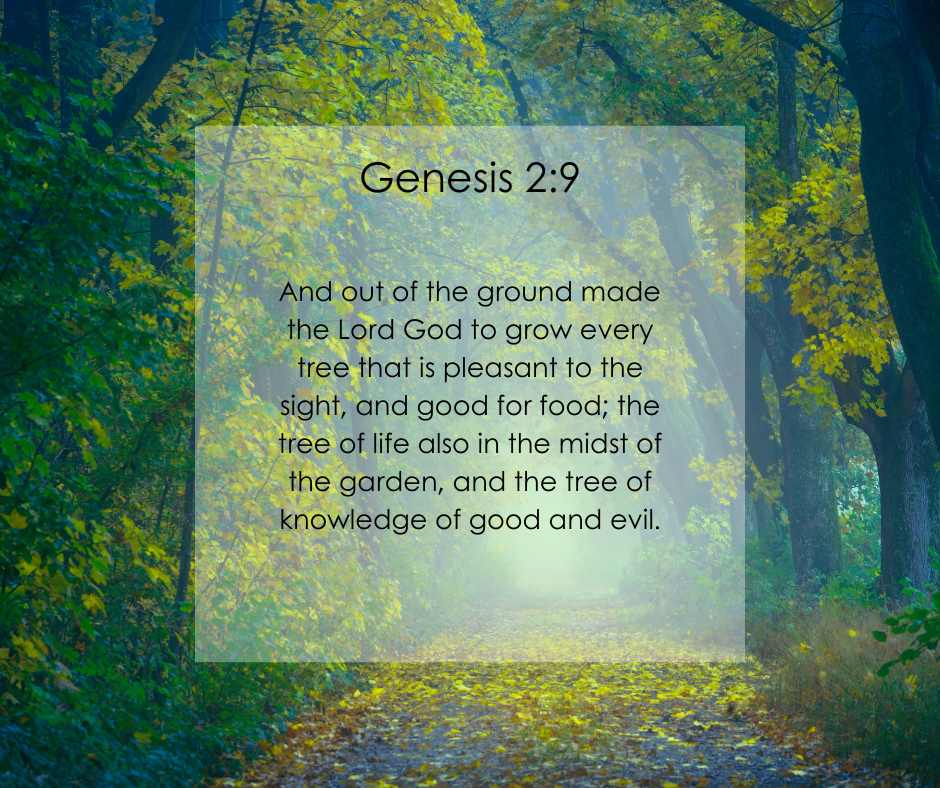
The Unification Church, established by Sun Myung Moon in the 20th century, offers a strikingly symbolic and heterodox interpretation of the Genesis creation account. Drawing from Moon’s Divine Principle, this interpretation reimagines the story of Adam and Eve not as a literal account of sin and death entering the world through disobedience, but as an allegory centered around a premature and illicit sexual relationship. According to this teaching, the Tree of Life symbolizes the ideal, sinless man—originally intended to be Adam, but ultimately realized in Sun Myung Moon himself. The Tree of the Knowledge of Good and Evil, on the other hand, represents Eve, and her fall is attributed to an inappropriate and untimely relationship with the archangel Lucifer.
Within this framework, the “fruit” that Eve consumed is interpreted not as literal, but as a metaphor for a sexual act that occurred before she was properly united with Adam. This premature union is said to have corrupted the human lineage at its root, bringing spiritual death and disorder into human history. The Fall, then, is not primarily about rebellion against God’s command, but about the corruption of the ideal human family structure through unlawful intimacy. Redemption, according to the Unification Church, comes not through Christ’s atoning sacrifice, but through the restoration of the family unit, moral purification, and alignment with divine principles of love and marriage—culminating in the “True Parents” established through Sun Myung Moon and his wife (2002).
While the Unification Church presents this reinterpretation as a fresh revelation of deep spiritual truths, it radically distorts the biblical account, undermines the Gospel, and redefines essential doctrines such as sin, salvation, and the identity of Christ.
The Fall Was Disobedience, Not Illicit Sexuality
The Unification Church’s symbolic reading of Genesis 2-3 departs significantly from the plain teaching of Scripture. According to the Bible, the Fall was not about a forbidden sexual act but about a direct act of rebellion against a clear command from God. The narrative in Genesis 2:16–17 records God’s instruction:
“And the Lord God commanded the man, saying, Of every tree of the garden thou mayest freely eat: But of the tree of the knowledge of good and evil, thou shalt not eat of it: for in the day that thou eatest thereof thou shalt surely die.”
This was not a metaphor for intimacy or family dynamics. It was a direct test of obedience. Adam and Eve’s choice to disregard God’s Word was the first sin. This act introduced both spiritual and physical death into the human race.
Paul affirms the historical and theological weight of this event in Romans 5:12: “Wherefore, as by one man sin entered into the world, and death by sin; and so death passed upon all men, for that all have sinned.” The apostle does not trace the origin of sin to a corrupted lineage or family structure but to a specific, historical disobedience by Adam. Similarly, 1 Corinthians 15:22 teaches: “For as in Adam all die, even so in Christ shall all be made alive.”
This parallel between Adam and Christ is foundational to the Gospel. Adam is a real, historical figure whose sin brought death; Christ is the second Adam whose obedience brings life. To redefine Adam’s sin as a sexual transgression, or to interpret Christ as merely a model of familial purity rather than the atoning Savior, is to dismantle the biblical doctrine of salvation.
Furthermore, Scripture is clear that salvation comes by grace through faith in Jesus Christ—not through human efforts to restore family lineage. Ephesians 2:8–9 declares: “For by grace are ye saved through faith; and that not of yourselves: it is the gift of God: Not of works, lest any man should boast.” The Unification Church’s emphasis on moral and familial purification as the means of salvation replaces the Gospel with a form of works-based righteousness.
Finally, the identity of Jesus Christ is fundamentally misrepresented in Unification theology. While the Church may use Christian terminology, it does not affirm the biblical teaching that Christ is the eternal Son of God, the second person of the Trinity, who took on flesh to bear the sins of the world (John 1:1–14; Colossians 2:9; Hebrews 1:3). Instead, Jesus is often viewed as a failed messianic figure whose mission was left incomplete until fulfilled by Sun Myung Moon—a claim that is not only theologically unfounded but blasphemous.
Conclusion: The Fall and Redemption—God’s Way, Not Man’s
The Unification Church’s interpretation of Genesis reflects a profound misunderstanding of the nature of sin, the identity of Christ, and the means of salvation. While it rightly recognizes the importance of family and moral integrity, it wrongly places these values at the center of redemptive history. Scripture teaches that the Fall was a real, historical act of disobedience, and that redemption is found not through moral reformation or symbolic reinterpretations, but through the shed blood of Jesus Christ—the true and only Savior.
Christ alone restores what was lost in Eden. He is not a symbol of restored humanity but the incarnate Son of God, crucified for sin and risen in glory. As He says in John 14:6: “I am the way, the truth, and the life: no man cometh unto the Father, but by me.”
All symbolic reinterpretations of Genesis must be tested by this truth. The Fall was real, sin is serious, and only the true Christ—not a human substitute—can bring us back to the Tree of Life (Revelation 2:7).