
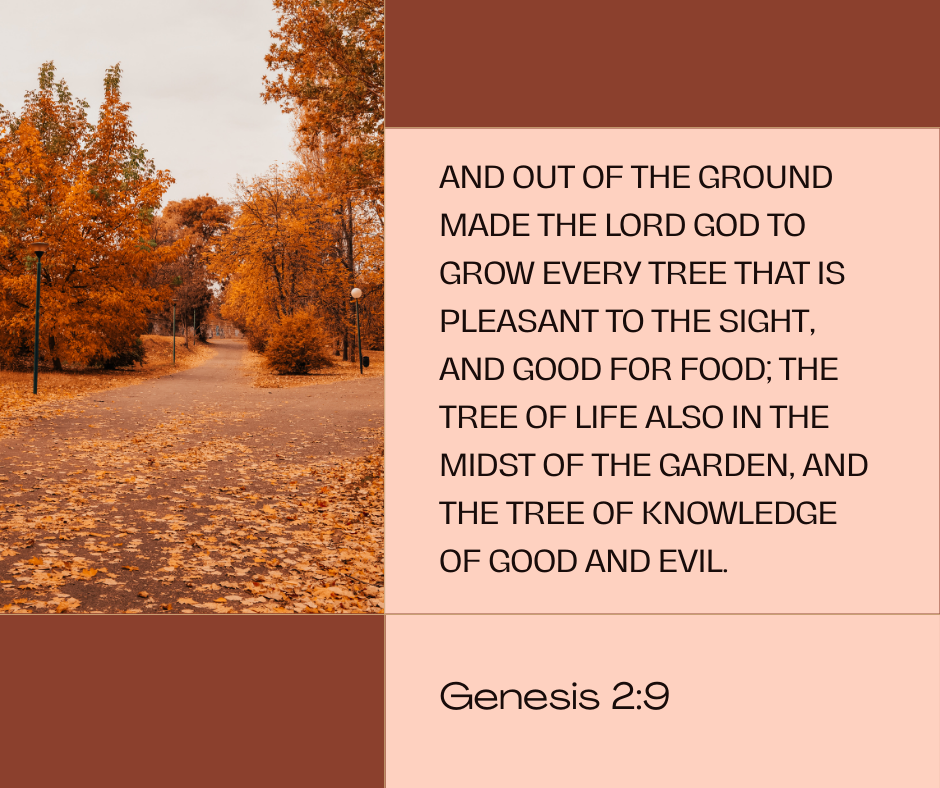
Among Swedenborgians—adherents of the teachings of 18th-century Christian mystic Emanuel Swedenborg—the Genesis narrative is not read as literal history but as a divinely inspired allegory filled with symbolic meaning. In Swedenborg’s theological system, the Garden of Eden, the trees, and the Fall all correspond to internal spiritual states and cosmic principles rather than real people and historical events.
In this symbolic framework, the Tree of Life represents divine love, or charity, which Swedenborg saw as the highest of all spiritual qualities and the essential ingredient of a genuine relationship with God. It is not merely an object in a garden, but a spiritual state of being in harmony with God’s love. The Tree of Knowledge of Good and Evil, in contrast, symbolizes faith—or more specifically, knowledge or truth—disconnected from love. According to Swedenborg, when faith or intellectual understanding is divorced from charity, it results in what he called “cold reasoning,” a kind of spiritual arrogance that leads not to truth but to confusion, self-centeredness, and moral decline.
The Fall, therefore, is not the introduction of sin into the world through a historical act of disobedience, but rather a metaphorical turning point: the soul’s descent from a state of inner harmony (love and wisdom united) into a fragmented state where knowledge is pursued apart from love. This detachment, according to Swedenborg, is the true meaning of the original sin—a fall from spiritual unity into dualism, where intellect dominates and love fades.
This spiritualized interpretation, though coherent within Swedenborg’s elaborate system of correspondences, conflicts with the plain reading of Scripture and the foundational doctrines of Christianity.
The Fall Was Historical, Not Merely Symbolic
While Swedenborg’s symbolic interpretation elevates important spiritual themes—such as the need for love and the dangers of empty intellectualism—it ultimately redefines the nature of sin, the reality of the Fall, and the need for redemption. The Bible does not portray the events of Genesis 2–3 as metaphorical representations of internal states, but as a historical narrative of mankind’s first disobedience against God.
Genesis 2:17 records God’s explicit command to Adam: “But of the tree of the knowledge of good and evil, thou shalt not eat of it: for in the day that thou eatest thereof thou shalt surely die.”
This command implies a real choice, with real consequences. The act of eating was not symbolic of disunity between love and wisdom—it was an act of rebellion. When Adam and Eve transgressed God’s command, the result was the introduction of death—both spiritual and physical—into human existence.
Paul affirms the historical nature of the Fall in Romans 5:12: “Wherefore, as by one man sin entered into the world, and death by sin; and so death passed upon all men, for that all have sinned.”
If Adam’s fall was merely symbolic of a spiritual imbalance, Paul’s entire argument regarding the need for salvation collapses. The doctrine of original sin, the need for atonement, and the centrality of Christ’s redemptive work all presuppose a literal Fall. Paul further explains in 1 Corinthians 15:22: “For as in Adam all die, even so in Christ shall all be made alive.”
Swedenborg’s theology also redefines faith. In Scripture, faith is not merely abstract knowledge or mental assent, but a living trust in God’s promises—especially the saving work of Jesus Christ. According to Hebrews 11:6: “But without faith it is impossible to please him: for he that cometh to God must believe that he is, and that he is a rewarder of them that diligently seek him.”
While Swedenborg is right to warn against a sterile, loveless religion, Scripture never pits faith against love; rather, it presents both as essential and complementary (Galatians 5:6).
Finally, Scripture warns against reshaping God’s Word into abstract philosophy. Colossians 2:8 cautions: “Beware lest any man spoil you through philosophy and vain deceit, after the tradition of men, after the rudiments of the world, and not after Christ.”
God’s revelation is not veiled mysticism to be decoded, but a clear testimony of His work in history and a call to faith and obedience.
Faith and Love, Grounded in Truth
Swedenborg’s spiritualized reading of Genesis underscores important concerns about the dangers of cold intellectualism and legalistic religion. However, by turning the Fall into a symbolic imbalance between love and wisdom, his interpretation minimizes the gravity of sin, rejects the historicity of Scripture, and redefines both faith and redemption.
The Bible teaches that both faith and love must be grounded in truth—not in human philosophy, but in the revealed Word of God. The Fall was a real event that introduced death and sin into the world, and Christ is the real Savior who conquered that death through His resurrection. The Tree of Life is not a metaphor for moral sentiment, but a promise fulfilled in Jesus Christ, who offers eternal life to those who come to Him in repentance and faith.
As Christ declares in Revelation 2:7: “To him that overcometh will I give to eat of the tree of life, which is in the midst of the paradise of God.”
Only through Him is the unity of love and wisdom—of grace and truth—fully restored.