
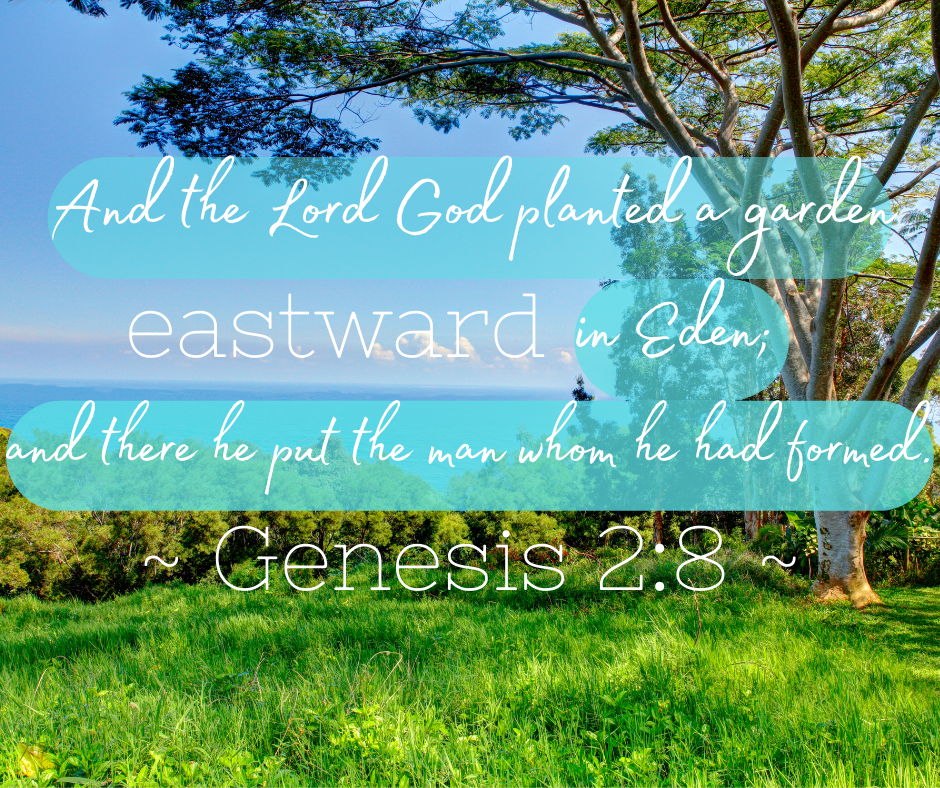
The seemingly simple phrase “eastward in Eden” has generated a breadth of interpretation throughout Jewish and Christian history, encompassing geographical, symbolic, and temporal dimensions. A close examination reveals that this directional reference is more than a mere compass point—it serves theological and literary purposes within the creation narrative.
Symbolic and Theological Significance
Early Jewish commentary, particularly Genesis Rabbah (3rd–5th centuries CE), interpreted the placement of the Garden “eastward” symbolically. In rabbinic tradition, the east—associated with the rising sun—represented beginnings, illumination, and the origin of divine activity. Thus, “eastward” signified not only a location but also the dawning of God’s purpose for creation and humanity. From a theological standpoint, the east becomes emblematic of life, order, and sacred encounter—a motif that continues throughout Scripture (cf. Ezekiel 43:1–4; Matthew 24:27).
Early Christian theologians also echoed such symbolic interpretations. Origen of Alexandria saw the east as a figure of spiritual ascent and divine presence, suggesting the Garden’s eastern placement pointed toward man’s original orientation toward God (McGuckin, 2004). Similarly, John Cassian viewed “eastward” allegorically as a call to return to the light of Christ, who is likened to the “dayspring from on high” (Luke 1:78) (1985).
Geographical Orientation
From a more literal standpoint, Henry M. Morris proposes that the term “eastward” describes a spatial relationship between Adam’s creation site and the Garden. He argues, “Apparently, Adam was created somewhere to the west of Eden, and then placed in the Garden which had been specially prepared for him ‘eastward’” (1976, p. 87). In this view, God first formed man from the dust in one location, and then deliberately moved him to another—a prepared place of blessing and responsibility.
Kenneth A. Mathews also reads the term geographically, suggesting that the narrative assumes a Canaanite frame of reference. “The account assumes that the Hebrew reading is situated in Canaan since the location of the garden is described directionally in the ‘east’ with respect to Canaan” (1996, p. 201). This would place the Garden somewhere in Mesopotamia, aligning with the rivers named in Genesis 2:10–14—particularly the Euphrates and Tigris.
The linkage between Eden and Mesopotamia was also affirmed by many early Christian writers, such as Ephrem the Syrian, who located Eden to the east of Armenia. His view, though geographical, also carries a temporal consideration: he argued that Eden was already planted on the third day, highlighting its place in God’s preparatory acts (Oden, 2001). We’ll consider this view next.
Temporal Considerations: “Before” or “Earlier”
Some scholars note that the Hebrew term miqqedem, translated “eastward,” can also carry a temporal connotation—“from of old” or “in the beginning.” This opens the possibility that Genesis 2:8 might not be referring solely to spatial orientation but also to the timing of the Garden’s planting. Under this reading, the verse could be understood as, “God had planted a garden earlier in Eden.”
Early Christian theologians such as Augustine supported this idea, reading verse 8 as a narrative flashback to the third day of creation, when God caused vegetation to spring forth (Genesis 1:11–13) (Taylor, 1982). This retrospective reading fits with the literary pattern often found in Genesis, where a general overview is followed by a more detailed account.
Grammatical Considerations and Sequential Action
However, Gordon J. Wenham offers a counterpoint rooted in Hebrew grammar. He contends that the waw-consecutive verb form in Genesis 2:8—“And the Lord God planted…”—indicates sequence rather than retrospection. “A pluperfect sense, ‘had planted,’ though possible, is unlikely,” he writes (1987, p. 61). For Wenham, the garden is planted after Adam is created, supporting a straightforward, chronological reading.
Still, Wenham does acknowledge the lexical flexibility of miqqedem. He notes, “‘In the east’ does sometimes mean ‘in ancient times’ (e.g., Isa 45:21; 46:10), and though this interpretation was followed by many of the early translations, the context and [Genesis] 11:2 make it unlikely here” (1987, p. 61). Thus, while the phrase can bear a temporal meaning, its usage in Genesis 2:8 likely maintains a directional force, grounded in narrative flow and geography.
Theological Reflections on “Eastward”
Beyond grammatical and geographical debates, the theological resonance of “eastward” continues throughout Scripture. After Adam and Eve’s expulsion from Eden, they journey eastward (Genesis 3:24). Likewise, Cain’s exile sends him further east to the land of Nod (Genesis 4:16). The building of the Tower of Babel also begins with a movement eastward (Genesis 11:2). In each case, movement eastward symbolizes increasing distance from God’s presence and original blessing.
Conversely, in prophetic and eschatological visions, the east becomes the direction of restoration and divine return. In Ezekiel, the glory of the Lord returns to the temple from the east (Ezekiel 43:2). In the New Testament, Jesus refers to His second coming as appearing like lightning from the east (Matthew 24:27). This reestablishes the east not only as a place of beginning but also of hope and restoration.
Conclusion
The phrase “eastward in Eden” in Genesis 2:8 holds layered significance—geographical, chronological, and symbolic. While many scholars affirm a literal and sequential reading of the passage, historical and theological traditions have recognized deeper meanings embedded in the text. Whether pointing to the site of divine planting, the chronology of creation, or the broader symbolism of divine beginnings, “eastward” reflects the richness of biblical language and God’s intentionality in the formation of His sacred space. As with much of Genesis, what seems simple on the surface reveals profound truths about God’s design, direction, and desire for communion with mankind.