
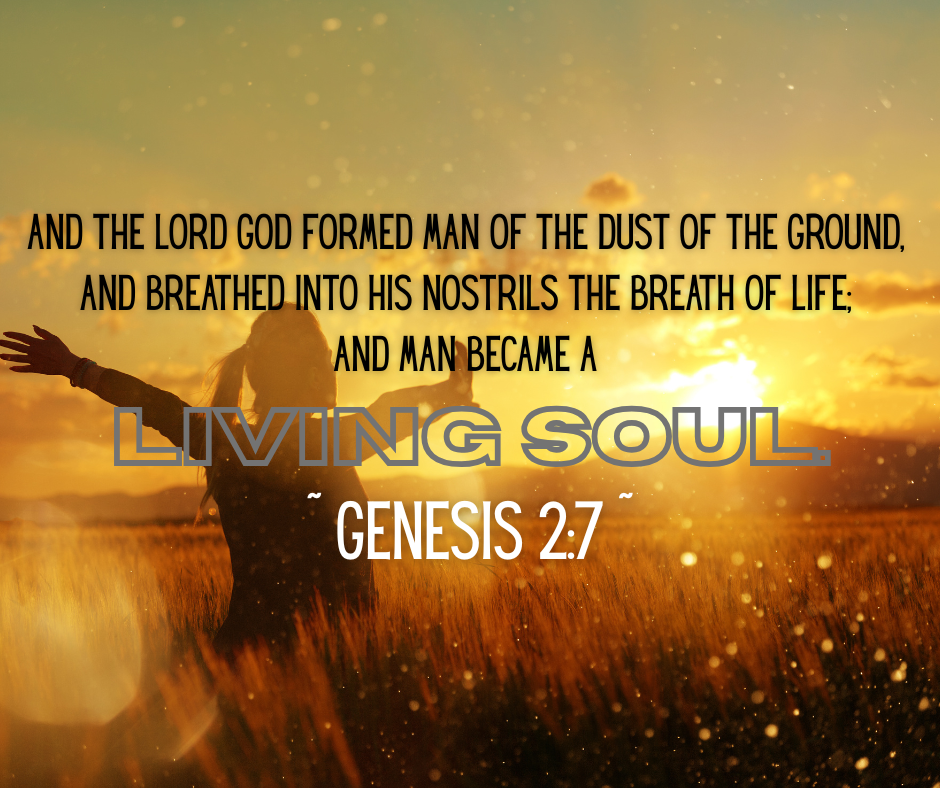
Some mystical Jewish traditions, particularly within Kabbalistic literature, interpret passages such as Genesis 2:7 as referring not to a singular, unified human soul, but to the infusion of nefesh—a basic, foundational level of the soul. According to this esoteric framework, the human soul consists of five ascending levels, each representing a deeper spiritual reality and a closer connection to God. These levels are taught as distinct yet interrelated components of the human being (Miller, n.d.).
The Five Levels of the Soul in Kabbalah[1]
- Nefesh (נפש)
This is considered the “animal soul,” responsible for basic bodily and emotional functions. It animates the physical body and is thought to reside in the blood, reflecting Leviticus 17:11: “For the life of the flesh is in the blood.” - Ruach (רוח)
Often translated “spirit,” ruach governs emotions, will, character, and moral virtues. It is considered the seat of personality and decision-making. - Neshamah (נשמה)
This is regarded as the divine soul—the intellectual and spiritual essence that connects man to higher truths. It is said to enter man at a later stage of spiritual maturity. - Chayah (חיה)
This level is described as “living essence,” associated with awareness of the divine. It transcends intellect and emotion and is rarely accessible, even to the righteous. - Yechidah (יחידה)
The highest and most transcendent level, yechidah means “singularity” or “oneness.” It is believed to be the part of the soul that is always in union with God, regardless of sin or disobedience, and represents the divine spark or essence within every person.
Mystical Misreading of Genesis 2:7
Kabbalistic interpretations apply these soul levels to Genesis 2:7. Mystics claim that this “breath of life” (neshamah chayim) hints at multiple soul layers entering the human body at creation.
However, this interpretation reads speculative theology into the text rather than drawing meaning from it. A faithful reading, in line with sound hermeneutics and biblical context, affirms that the soul is a unified, God-given life force, not a ladder of esoteric spiritual energies.
A Biblical Understanding of the Soul
The Bible teaches that man is a living soul, created by God, consisting of both material and immaterial parts—body and spirit—unified in purpose and identity. There is no biblical support for the soul being layered or divided into mystical levels. Scripture emphasizes man’s direct relationship with God, based not on secret knowledge or internal divine sparks, but on faith, obedience, and grace.
1. The Soul Is a Living Being, Not a Mystical Construct
Genesis 2:7 does not say that man received a nefesh as merely one part of a complex soul system, but that he became a living soul (nephesh chayyah in Hebrew). This phrase is also used in Genesis 1:20, 21, and 24 to describe animals. It simply indicates that man became a living, conscious being—not that he contains multiple soul components.
2. Spirit and Soul Are Distinct but Unified
Hebrews 4:12 says, “For the word of God is quick, and powerful… dividing asunder of soul and spirit…” indicating a distinction between the soul (psyche) and the spirit (pneuma), but not layering them. Soul refers to the inner self, while spirit denotes the breath or life-force from God. Both are part of man’s spiritual nature, but they are never presented in Scripture as progressive levels or mystical spheres.
3. God’s Spirit Gives Life—Not Mystical Essence
Job 33:4 declares, “The Spirit of God hath made me, and the breath of the Almighty hath given me life.” This confirms that human life originates from God’s creative act, not from an impersonal, mystical life-energy ascending through esoteric pathways. Man is dependent on God, not infused with a divine spark that is always connected to God regardless of sin, as Kabbalah teaches.
4. No Scriptural Support for Chayah and Yechidah
The levels chayah and yechidah are not found in the Bible in relation to the human soul. These terms are the inventions of mystical Judaism, appearing centuries after the completion of the Old Testament canon. Nowhere do the prophets, the psalmists, or the apostles refer to man having a “yechidah” that maintains union with God despite man’s spiritual condition. Such ideas contradict the biblical doctrine of sin and separation from God (Isaiah 59:2; Romans 3:23).
5. Union with God Comes Through Redemption, Not Mysticism
The ultimate goal of the soul in Kabbalistic teaching is devekut—a state of mystical cleaving or union with God (Citron, 2021). However, this concept ignores the fall of man and the need for a Savior. Scripture teaches that man is dead in trespasses and sins (Ephesians 2:1) and that reconciliation with God comes only through the finished work of Christ: “For there is one God, and one mediator between God and men, the man Christ Jesus” (1 Timothy 2:5).
Mysticism promises union without repentance, transformation without atonement. But the Bible teaches that only through the new birth can man enter into true fellowship with God: “Marvel not that I said unto thee, Ye must be born again” (John 3:7).
Conclusion: Truth, Not Tradition
Kabbalistic soul doctrines, though elaborate and intellectually stimulating, are extra-biblical constructions rooted in mystical speculation rather than divine revelation. They present a distorted view of human nature, salvation, and man’s relationship with God. By adding complex metaphysical systems to the plain truth of Scripture, they obscure the gospel message of grace through faith.
God’s Word is sufficient to instruct us on who we are, how we were created, and how we are redeemed. The Bible presents the soul not as a ladder of mystical levels, but as a living, breathing reality made by God, fallen through sin, and redeemable only through Jesus Christ.
“The law of the LORD is perfect, converting the soul: the testimony of the LORD is sure, making wise the simple” (Psalm 19:7).
[1] Adapted from Moshe Miller’s article “Neshamah: Levels of Soul Consciousness,” available here: https://www.chabad.org/kabbalah/article_cdo/aid/380651/jewish/Neshamah-Levels-of-Soul-Consciousness.htm
NICE !
Thanks!