
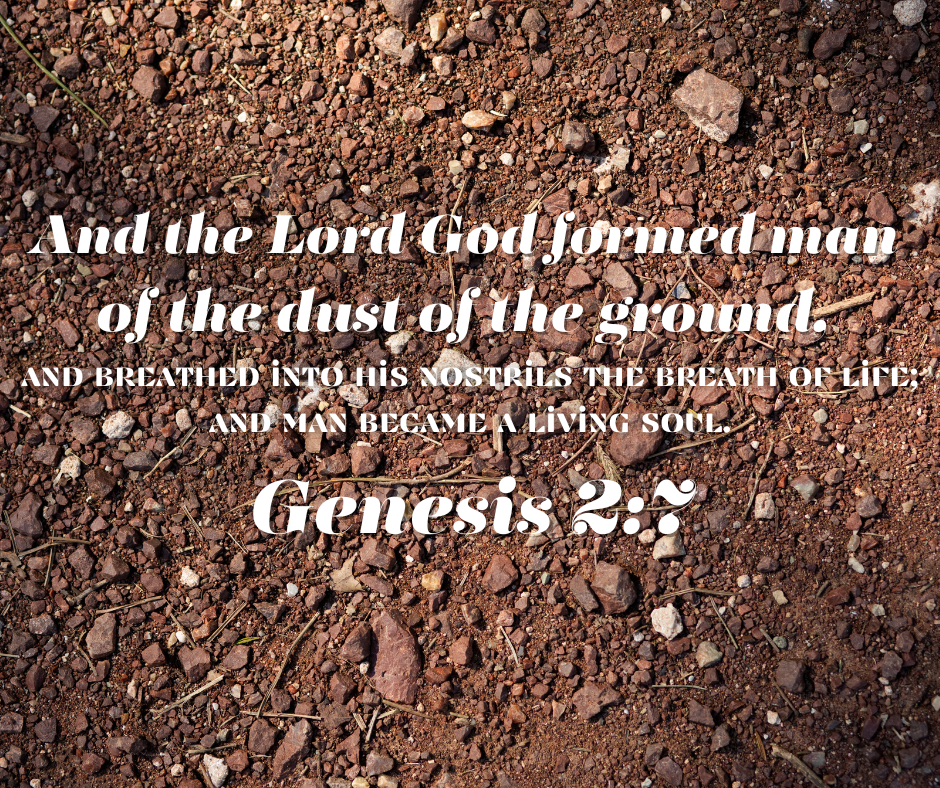
Genesis 2:7 introduces not only the physical creation of man but also invites reflection on the significance of the material from which he was formed. While the biblical text does not elaborate on the origin of this dust, various Jewish traditions offer symbolic interpretations that enrich our understanding of the creation narrative.
According to some Midrashim, God gathered dust from all four corners of the earth to form Adam. This notion, while not found directly in the text of Genesis, carries deep theological symbolism. The idea is that Adam, as the first man, represented all humanity—not bound to any single land or nation. He was formed from a universal soil, signifying that he belonged everywhere and yet nowhere in particular. This interpretation suggests that humanity, while having a shared earthly origin, also bears a spiritual calling that transcends geography and ethnicity.
The revered medieval Jewish commentator Rashi (1040–1105) embraced this view. In his commentary on Genesis 2:7, he writes: “He took his dust from all over the earth—north, south, east, and west—so that the whole earth might be a place suitable for him to die in and to be buried” (Ginzberg, 2011). Rashi’s interpretation emphasizes the grace of God even in man’s mortality. By forming Adam from earth taken from every region, God ensured that no matter where man might die, the ground would be prepared to receive him. In this, Rashi sees a tender provision—God making a way for the earth itself to welcome man in death, as it did in life.
While this view arises from Jewish tradition, it resonates with biblical themes that Christians can affirm. First, it highlights the unity of the human race. As Paul writes in Acts 17:26, “[God] hath made of one blood all nations of men for to dwell on all the face of the earth.” Regardless of race, nation, or language, every person shares a common origin in Adam and thus a common dignity as part of God’s creation.
Second, the idea of Adam being formed from dust gathered from everywhere subtly prefigures mankind’s universal accountability before God. Wherever human beings go, they are not autonomous or rootless; they carry with them the imprint of their Creator. The soil underfoot is not neutral—it is dust that belongs to the God who formed man from it. As Psalm 24:1 declares, “The earth is the LORD’s, and the fulness thereof; the world, and they that dwell therein.”
Lastly, this interpretation provides a sober reminder of man’s frailty and mortality. The dust from which Adam was formed becomes, in Genesis 3:19, the dust to which he will return: “For dust thou art, and unto dust shalt thou return.” But for Christians, this truth is not the end of the story. While the body returns to dust, the soul awaits resurrection. Through Christ, the Second Adam, who also came in a body of earth, we have the hope of eternal life and future restoration. As Paul writes in 1 Corinthians 15:47–49: “The first man is of the earth, earthy: the second man is the Lord from heaven… And as we have borne the image of the earthy, we shall also bear the image of the heavenly.”
In summary, while the biblical text does not explicitly state that Adam was formed from dust gathered from all parts of the earth, this Midrashic tradition, supported by Rashi, offers a meaningful reflection on the universality, humility, and spiritual calling of mankind. From the dust of the earth, God formed a man who would represent all people. And from that same earth, God would later send His Son in human form to redeem those He first created.
Thank you, Br. Tharp, for all of your engaging articles. They’re also enlightening.
God bless your work.
Thank you, Pastor Bugtong. I’m grateful that my articles have been a blessing to you, just as your words of encouragement have been a blessing to me.