
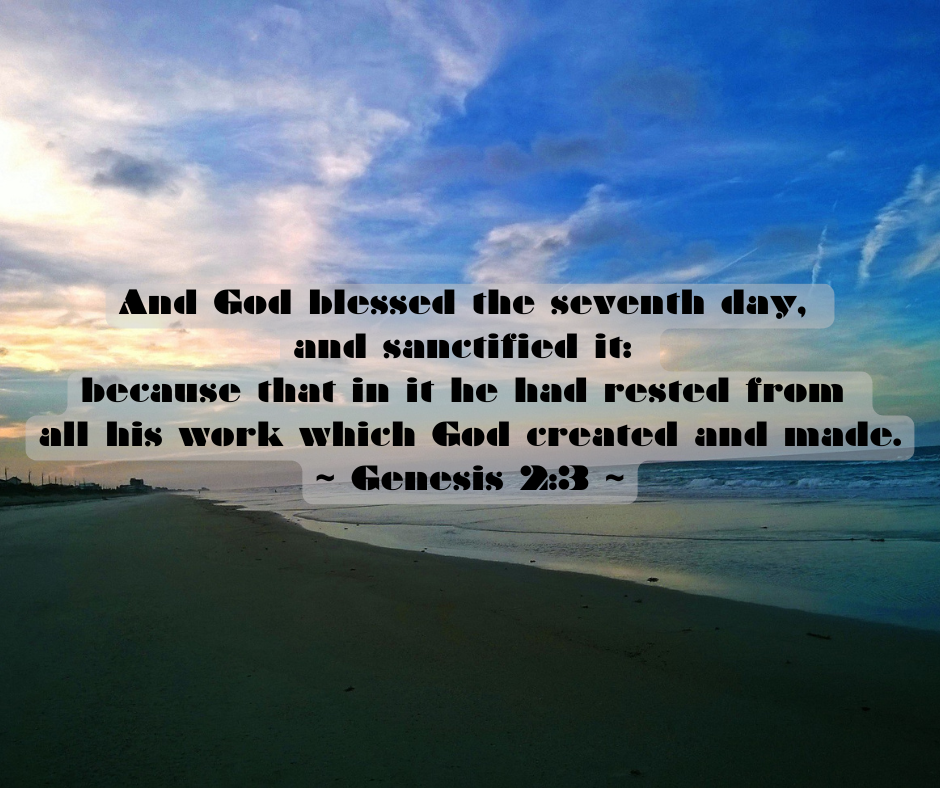
The concept of Sabbath rest is deeply rooted in Scripture, representing not only a day of physical rest but also a profound spiritual reality. Today, believers enter into that Sabbath rest spiritually, as expressed in Hebrews 4:8-10, while also anticipating the fullness of its restoration in the life to come (Ross, 1985, p. 30). This spiritual rest is an invitation to experience peace and renewal, grounded in the assurance of God’s completed work. It is a divine gift that calls believers to pause from the anxieties and labors of life and to trust in God’s sovereignty and provision.
The Christian Sabbath, or the Lord’s Day, which we observe as a seventh day of rest, serves as a celebration of the finished work of God the Son, commemorating the redemption accomplished through His sacrifice (Henry, 1997, p. 3). It is a time to pause, reflect, and honor the profound victory that grants us freedom from the burdens of sin and weariness. Just as God rested after His perfect work of creation, we too are called to rest in the assurance that His plans are complete, and His purposes will be fulfilled.
Moreover, the observance of the Sabbath is more than just a cessation from labor; it is an intentional setting aside of time for God, an acknowledgment that all time belongs to Him (Psalm 74:16). In doing so, believers resist the tyranny of urgency and reclaim the stability and equilibrium that God established when He ordered the cosmos (Habakuk 2:20) (Walton, 2001, p. 147). It is a declaration that God reigns, affirming that this world is His creation and that every moment of our lives is His gift (Walton, 2001, p. 158).
An Invitation to All
However, this sacred rest is not meant to be enjoyed in isolation. As Christians, we are called not only to experience this rest for ourselves but also to invite others to participate in it. Jesus Himself extends the invitation when He says, “Come to me, all you who are weary and burdened, and I will give you rest” (Matthew 11:28). Just as we have found peace and redemption through Christ, we are compelled to share this message with others, inviting them to experience the transformative power of God’s rest.
The Sabbath rest ultimately points to the Gospel message. Human beings, burdened by sin and separated from God, are in desperate need of redemption and reconciliation. In our own efforts, we strive and labor to find purpose, meaning, and forgiveness, yet every human endeavor falls short of God’s holy standard (Romans 3:23). The weight of sin becomes an unbearable burden, leaving our souls restless and weary.
But God, in His infinite love and mercy, made a way for humanity to enter into true rest. Through the sacrificial death and triumphant resurrection of Jesus Christ, the penalty of sin was paid in full (Romans 6:23). The work of redemption was finished on the cross, as Jesus declared, “It is finished” (John 19:30). This finished work is the foundation of our Sabbath rest—a rest that frees us from the bondage of sin and grants us peace with God (Romans 5:1).
To enter this rest, one must come to Christ in faith, acknowledging personal sin and confessing Jesus as Lord and Savior (Romans 10:9-10). It is not by works or human effort that we attain this rest, but solely through the grace of God (Ephesians 2:8-9). When we surrender our burdens to Him and accept His invitation, we experience the profound peace that only He can provide.
A Living Testimony
As believers, it is our calling to live out this rest daily, demonstrating to the world that our lives are anchored in the unshakable peace of God. Our joy and contentment, even amid trials, become a testimony of the rest we have found in Christ. In a restless world consumed by fear and uncertainty, we are called to be living witnesses of God’s sustaining grace.
Moreover, we must actively invite others into this rest by sharing the Gospel with compassion and conviction. As Christ’s ambassadors, we bear the message of reconciliation and point others to the One who offers eternal peace. Our invitation to rest is not just an invitation to physical reprieve but to spiritual restoration and reconciliation with God.
Therefore, Sabbath rest is not merely a ritual or a tradition but an enduring promise and an act of worship. It is an opportunity to realign our hearts with God’s purposes, to celebrate the redemption He has provided, and to trust that, in His sovereignty, all things are held together. In embracing this sacred rest, we find a foretaste of the eternal peace that awaits in His presence—and we are compelled to extend that invitation to a world longing for true rest.