
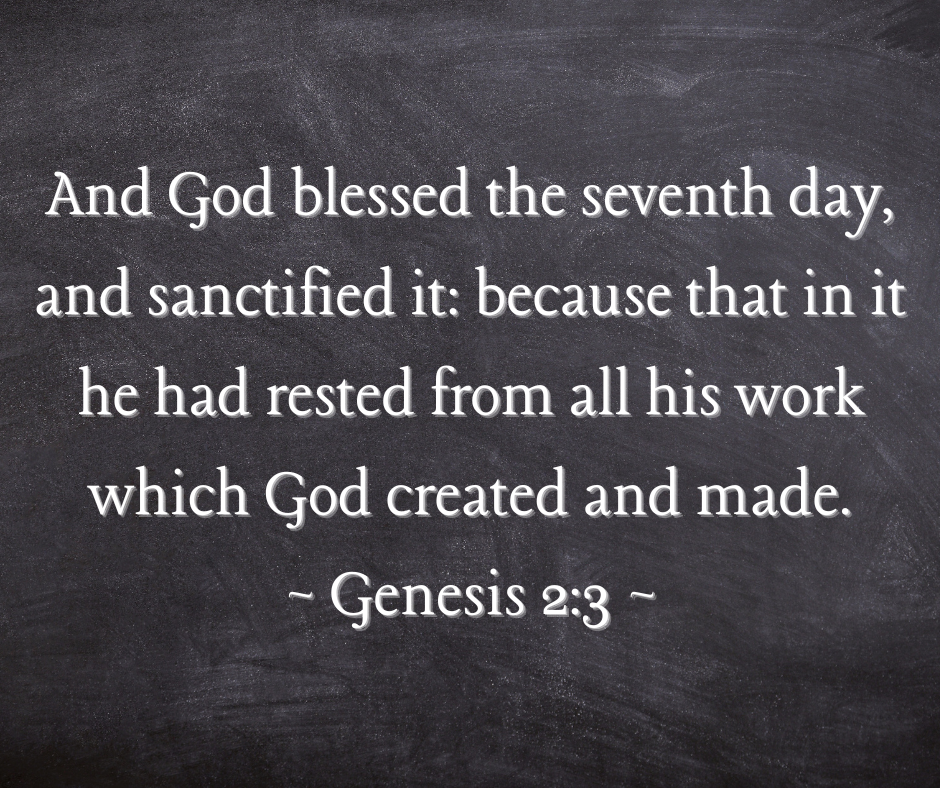
Some worldviews suggest that God’s rest in Genesis 2:2-3 symbolizes cosmic balance rather than a distinct moment of cessation. This interpretation aligns with religious and philosophical traditions that emphasize divine rest as a state of harmony rather than a completed act. However, a careful examination of the biblical text reveals that God’s rest is not about equilibrium but about the completion of creation. Furthermore, it establishes a pattern for human rest, foreshadows Christ’s redemptive work, and demonstrates God’s sovereignty over creation.
This study will examine the cosmic balance interpretation through various religious and philosophical lenses, evaluate its problems, and demonstrate why the biblical view of God’s completed rest is superior.
The Concept of Divine Rest as Cosmic Balance
Many non-Christian worldviews interpret divine rest not as a cessation of activity but as the establishment of equilibrium in the universe. This concept appears in various religious traditions:
Hinduism – Cycles of Creation and Dissolution
In Hinduism, creation unfolds in vast cycles known as Yugas, governed by the deity Brahma. The universe undergoes alternating periods of activity and rest (Pralaya), but this rest is not an absolute cessation. Instead, it represents a temporary phase of cosmic balance before the next cycle of creation begins (Zimmer & Campbell, 2020, pp. 56-60).
This idea contrasts sharply with the biblical account, where God’s creative work reaches a definite conclusion rather than continuing in an endless cycle.
Buddhism – Nirvana as Ultimate Balance
Buddhism does not emphasize a creator deity, yet it presents Nirvana as the ultimate state—a condition of perfect balance, free from suffering and attachment. In this view, rest is not a stoppage of action but an achievement of harmony (Harvey, 2013, pp. 68-72).
While this concept of balance shares similarities with the idea of divine peace, it is fundamentally different from the biblical view of rest as the completion of a creative act.
Taoism – Wu Wei and the Natural Flow
Taoism promotes wu wei, or effortless action, where individuals align themselves with the natural flow of the Tao (the fundamental principle governing the universe). In this perspective, rest is not the cessation of activity but a harmonious state where everything functions properly (Laozi, 1997, pp. 41-45).
However, this philosophy of alignment does not reflect the biblical concept of rest, which is not merely the absence of struggle but the completion of God’s divine work.
Spiritism and the Interpretation of God’s Rest
Spiritism, particularly as influenced by Allan Kardec, provides a similar interpretation of Genesis 2:2-3. Spiritists generally perceive reality as an ongoing process of spiritual evolution, redefining God’s rest as the universe reaching a state of balance rather than a definitive end to divine action (Kardec, 2007, pp. 101-105).
Key Aspects of the Spiritist Perspective:
- Divine Action Is Continuous – God never truly “stops” working but instead establishes universal equilibrium, allowing natural and spiritual laws to function autonomously.
- Pantheistic Tendencies – Some Spiritists view God as an all-encompassing force, meaning that “rest” signifies the stabilization of divine energy rather than the completion of a specific creative task.
- Deistic Parallels – Some Spiritists, similar to Deists, believe that God set up the universe to function independently, suggesting that divine rest refers to the self-sustaining nature of creation rather than divine inactivity.
While this perspective attempts to harmonize Genesis with an ongoing cosmic process, it ultimately misinterprets the biblical account by replacing God’s completed creative work with an abstract notion of balance.
Problems with the Cosmic Balance Interpretation
Although the idea of God’s rest as cosmic balance may seem philosophically appealing, it ultimately fails to align with biblical revelation. Below are three critical flaws in this interpretation:
1. Genesis Presents a Clear Completion, Not Just Balance
The text explicitly states: “On the seventh day God ended his work which he had made; and he rested on the seventh day from all his work which he had made” (Genesis 2:2). The Hebrew word for “rest” (shabath) means to cease, stop, or complete, not merely to maintain equilibrium. This directly contradicts the idea that divine action continues in an open-ended cosmic cycle.
The passage clearly indicates that God’s creative work was finished, not that He merely transitioned into a state of balance.
2. God’s Rest Sets a Pattern for Humanity
The biblical Sabbath is directly tied to God’s rest in Genesis: “Remember the sabbath day, to keep it holy… For in six days the Lord made heaven and earth, the sea, and all that in them is, and rested the seventh day: wherefore the Lord blessed the sabbath day, and hallowed it” (Exodus 20:8,11).
If God’s rest were only symbolic of cosmic balance, there would be no reason for Him to command a literal day of rest for humans. The biblical pattern is clear:
- God worked for six days and ceased on the seventh
- Mankind is to follow this same rhythm of work and rest
The cosmic balance interpretation is inconsistent with this divinely established pattern.
3. God’s Sovereignty Contradicts Pantheistic and Deistic Assumptions
The cosmic balance interpretation often leans toward pantheism or deism, both of which contradict biblical theology:
- Pantheism (God is the universe) implies that divine rest is merely the stabilization of universal energies. This conflicts with Scripture, which teaches that God is distinct from His creation:
- “In the beginning God created the heaven and the earth” (Genesis 1:1).
- “To whom then will ye liken me, or shall I be equal? saith the Holy One” (Isaiah 40:25).
- Deism (God creates but does not intervene) suggests that God wound up the universe and left it to function on its own. However, Scripture affirms God’s ongoing involvement in creation:
- “For by him were all things created… and by him all things consist“ (Colossians 1:16-17).
- “Upholding all things by the word of his power” (Hebrews 1:3).
The Bible does not depict God as passively maintaining balance but as actively governing the universe while distinguishing between His completed creative work and His ongoing providence.
Conclusion: Defending the Biblical View
While other worldviews attempt to reinterpret Genesis 2:2-3 as an expression of cosmic balance, these views ultimately contradict biblical revelation. The Bible presents God’s rest as a distinct event, marking the completion of creation, establishing the Sabbath pattern, and foreshadowing Christ’s redemptive rest.
God’s rest is not an abstract cosmic equilibrium but a concrete divine act that:
- Concludes the creative work (Genesis 2:2)
- Establishes the foundation for the Sabbath (Exodus 20:11)
- Foreshadows the eternal rest in Christ (Hebrews 4:9-10)
Ultimately, Genesis 2:2-3 teaches that God completed His work, not that He merely shifted into a balanced state—a truth that shapes biblical theology, human worship, and the hope of eternal rest in Christ.