
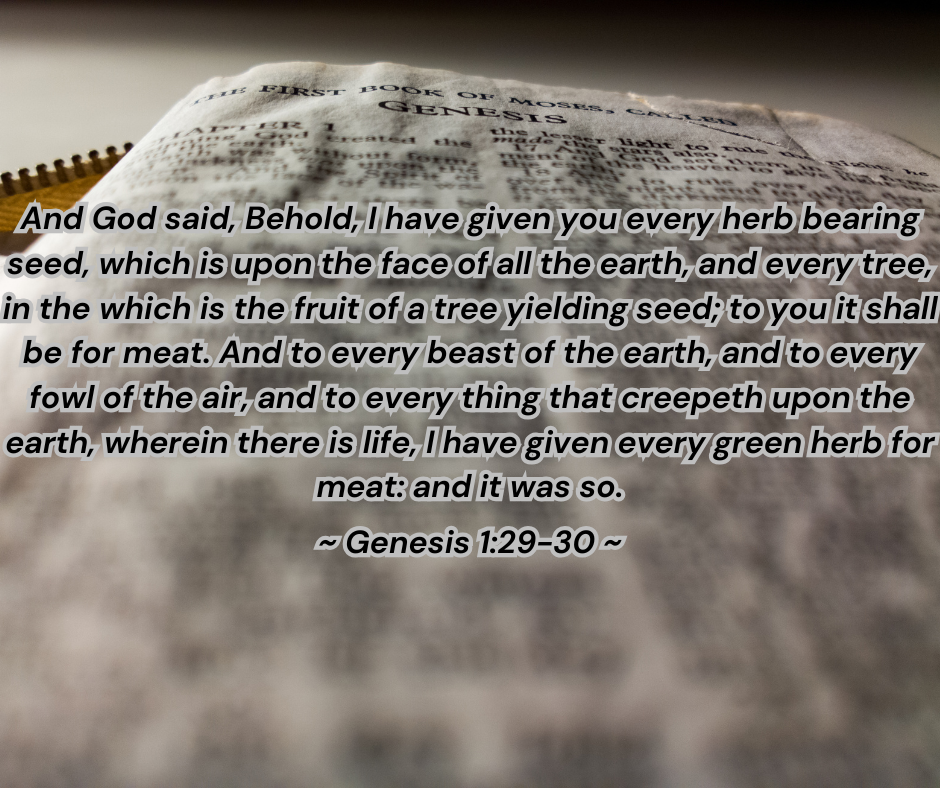
Scholars from various theological traditions have interpreted this passage in different ways, often prioritizing allegory over its historical reality. Let us now examine the perspectives of several influential theologians and assess their interpretations in light of Scripture.
Walter Brueggemann: Genesis as Theological Poetry
Old Testament scholar Walter Brueggemann interprets Genesis 1:29-30 as theological poetry, arguing that the passage is not primarily concerned with dietary laws but rather with God’s generosity in providing for all creatures. He writes: “The text is not primarily about dietary laws but about a world where God generously supplies life to all creatures” (Genesis: Interpretation: A Bible Commentary for Teaching and Preaching, 1982, p. 33).
Brueggemann’s interpretation aligns with Mainline Protestant theology, which often prioritizes theological themes over a strictly literal and historical reading. He sees the passage as emphasizing God’s provision and the interdependence of all living things rather than making a definitive statement about the diet of early humanity.
While Brueggemann correctly recognizes the theological richness of Genesis 1, his allegorical approach risks undermining its historical reality. Genesis is not merely a poetic reflection on creation—it is a historical account of God’s sovereign work. The structure of Genesis, with its clear chronological progression and genealogies, supports its classification as historical narrative rather than theological metaphor. While it certainly conveys profound spiritual truths, these truths are grounded in real events that took place in space and time.
Phyllis Trible: A Feminist Theological Reading
Feminist theologian Phyllis Trible, also within the Mainline Protestant tradition, takes a similarly allegorical approach but with an added emphasis on themes of equality, peace, and ecological ethics. She sees Genesis 1:29-30 as a portrayal of God’s harmonious and nonviolent creation, where both humans and animals peacefully coexist. She argues that the exclusive provision of plants for food symbolizes God’s care for all creatures and points to an ideal of environmental stewardship.
Trible further connects this passage to contemporary concerns about ecological responsibility, suggesting that humanity’s original diet before sin entered the world serves as a theological model for sustainable and ethical living (God and the Rhetoric of Sexuality, 1978, pp. 90-91).
While it is true that Genesis presents a world of harmony before the Fall, Trible’s theological emphasis on ecology and pacifism risks distorting the text’s primary message. Genesis 1:29-30 is not merely a symbolic call to environmentalism—it is a historical record of God’s provision in the original creation. Furthermore, while environmental stewardship is a biblical principle (Genesis 2:15), it should not be extracted at the expense of the passage’s historical context and meaning.
Mary Baker Eddy: A Christian Science Interpretation
A more extreme allegorization of Genesis 1:29-30 is found in the teachings of Mary Baker Eddy, the founder of Christian Science. Eddy viewed these verses as entirely symbolic, interpreting the reference to “herbs” and “fruit” not as literal sustenance but as representations of spiritual nourishment. For her, God’s provision in creation was not about physical food but about divine ideas that sustain the human spirit. This reflects Christian Science’s emphasis on spiritual reality over physical reality.
While it is true that God provides both materially and spiritually, Eddy’s interpretation detaches the passage from its intended meaning. The text clearly speaks of physical food given to humans and animals—not abstract spiritual nourishment. Such a reading disregards the plain meaning of the text and imposes a Gnostic-like separation between spiritual and physical realities, a concept foreign to biblical theology.
The Dangers of Over-Allegorizing Genesis
While Genesis 1:29-30 contains deep theological significance, it is not mere poetry or allegory—it is historical revelation. Over-allegorizing the passage diminishes its authority, replacing God’s intended meaning with subjective human interpretations. This trend is evident in both Mainline Protestant allegorical readings (such as Brueggemann and Trible) and more extreme interpretations (such as Mary Baker Eddy’s Christian Science view).
A faithful reading of Genesis 1:29-30 must balance its theological richness with its historical reality. While theological reflection is valuable, it must not replace the historical truth of Scripture. Genesis is God’s inspired record of the origins of the universe, and its message must be understood on its own terms rather than being reshaped to fit modern theological trends.