
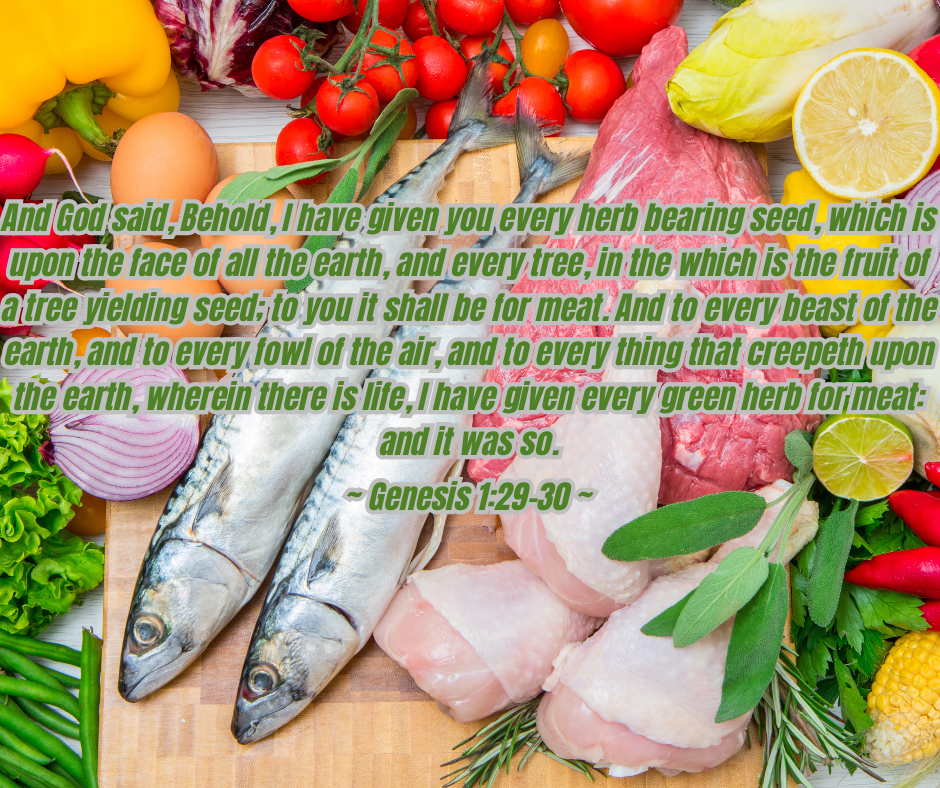
Throughout history, religious traditions have debated the ethics and spiritual significance of diet. Some early Christian groups and Jewish scholars interpreted Genesis 1:29-30 as evidence that God’s original design for humanity was a plant-based diet. They viewed vegetarianism as a reflection of the innocence of Eden and an anticipation of the future restoration of creation.
This article explores the historical development of religious vegetarianism, examining the views of early Christian ascetics, Jewish scholars, and modern theologians. It also considers the broader biblical teaching on eating meat and whether Christians should adopt a vegetarian lifestyle today.
Early Christian Views on Vegetarianism
By the 2nd and 3rd centuries, some Christian groups promoted vegetarianism as a return to Edenic purity. These groups believed that abstaining from meat reflected holiness and prepared believers for the restored creation in the New Heaven and New Earth (Revelation 21-22).
The Encratites (2nd Century)
One of the most notable early Christian sects that promoted vegetarianism was the Encratites. This ascetic movement rejected marriage, wine, and meat, seeing them as indulgences that led to sin. They viewed a vegetarian diet as a form of spiritual discipline that purified the body and soul.
Monastic Vegetarianism (3rd-4th Centuries)
By the 3rd and 4th centuries, monastic communities also embraced vegetarianism as part of their pursuit of holiness. Many early monastics believed that consuming meat was tied to fleshly desires, and by abstaining, they could better focus on prayer and fasting.
One of the most influential figures in early Christian monasticism, St. Anthony the Great (251–356 AD), promoted extreme self-discipline, fasting, and the rejection of worldly pleasures, including rich foods. His teachings inspired generations of monks to adopt plant-based diets as a form of self-denial and spiritual purification.
Jewish Perspectives on Vegetarianism
Jewish scholars and mystics have long debated the significance of Genesis 1:29-30, with many seeing it as evidence of God’s original ideal for humanity.
Maimonides (Rambam) – Ethical Pragmatism
The famous medieval Jewish philosopher Maimonides (1138–1204 AD) analyzed this passage through the lens of Aristotelian philosophy. He argued that God’s original intention was a peaceful, nonviolent world where no creature harmed another. However, as human corruption increased, divine laws adapted to regulate rather than eliminate problematic behaviors—hence, the introduction of kosher laws to control the consumption of meat (Leviticus 11).
Nachmanides (Ramban) – The Sacredness of Life
The 13th-century scholar Nachmanides (1194–1270 AD) emphasized the sacredness of life and argued that God originally forbade bloodshed. He believed that after the Flood, when humanity had become spiritually weakened, God permitted meat consumption as a concession. However, he suggested that vegetarianism remained the holier and more spiritually elevated state.
Jewish Mysticism and Kabbalah
Many Jewish mystics and Kabbalists taught that vegetarianism represented a higher spiritual state. They believed that in the Messianic age, humanity would return to a nonviolent diet, echoing the prophecy of Isaiah 11:6-9, where predators and prey live peacefully together.
Rabbi Abraham Isaac Kook (1865–1935) – Messianic Vegetarianism
The influential Jewish thinker Rabbi Kook strongly supported vegetarianism, arguing that meat consumption was a temporary concession due to human moral failings. He believed that in the Messianic era, humanity would return to the ideal plant-based diet of Genesis 1:29.
Even today, some Jewish scholars advocate Jewish vegetarianism and veganism, arguing that returning to a plant-based diet aligns with God’s original design.
The Bible’s Teaching on Eating Meat
The Bible provides a nuanced perspective on meat consumption, showing a progression from God’s original plant-based diet to divine permission for meat, and finally to Christian liberty in dietary choices.
Post-Flood Permission to Eat Meat
After the Flood, God expanded the human diet to include meat: “Every moving thing that liveth shall be meat for you; even as the green herb have I given you all things. But flesh with the life thereof, which is the blood thereof, shall ye not eat“ (Genesis 9:3-4).
While this marked a shift from the Edenic ideal, the prohibition against consuming blood emphasized that life still belonged to God.
Mosaic Law and Dietary Restrictions
Under the Law of Moses, Israelites were given strict dietary laws distinguishing clean and unclean animals. These laws may have served practical, health-related, and symbolic purposes, reinforcing Israel’s separation from pagan nations.
Christian Liberty in Eating Meat
In the New Testament, Christ declared all foods clean (Mark 7:18-19), and Peter’s vision in Acts 10 reinforced that dietary restrictions no longer bound Christians.
Paul addressed food choices in Romans 14:1-3, teaching that Christians have the freedom to eat or abstain from meat: “For one believeth that he may eat all things: another, who is weak, eateth herbs” (Romans 14:2). “For the kingdom of God is not meat and drink; but righteousness, and peace, and joy in the Holy Ghost” (Romans 14:17).
Should Christians Be Vegetarians?
The Bible neither commands vegetarianism nor forbids eating meat. Instead, it allows believers to choose based on conscience and faith.
While some argue that vegetarianism reflects God’s original design, the New Testament prioritizes spiritual transformation over dietary rules. 1 Timothy 4:3-5 warns against those who forbid foods that God has created to be received with thanksgiving.
Thus, Christians are free to eat meat or abstain—as long as their decision is made with a clear conscience and in love for others.
Conclusion
Throughout history, some Christians and Jews have embraced vegetarianism as a way to reflect God’s original design. While the Bible permits eating meat, it also emphasizes the sacredness of life and hints at a future restoration where harmony may be fully restored.
Ultimately, whether to eat meat or abstain is a personal conviction, with the guiding principle being love, faith, and respect for others in the body of Christ.