
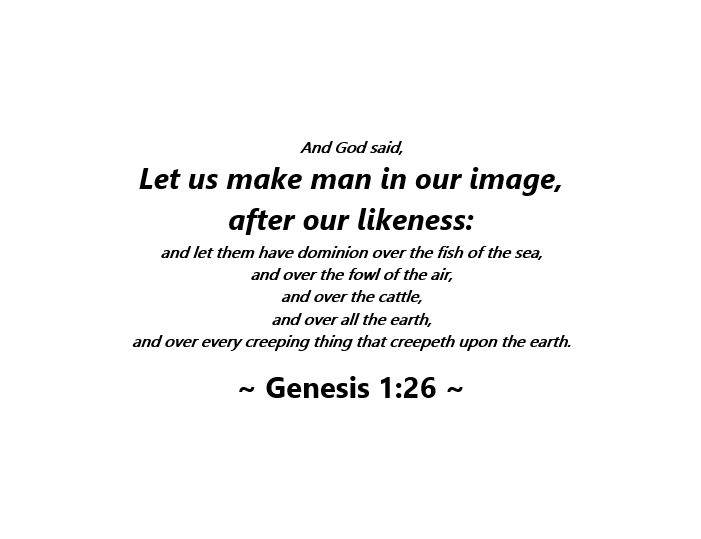
In Gnostic thought, Genesis 1:26 is understood through a lens that diverges significantly from the traditional Biblical interpretation. The Gnostics interpret the “image of God” not as a reflection of the Creator God described in Genesis but as a reflection of a higher, hidden God, often referred to as the Monad or the True God. Below are the key elements of the Gnostic interpretation.
Key Aspects of the Gnostic Interpretation
Dualism and the False Creator
A central tenet of Gnosticism is its dualistic worldview, which divides existence into two opposing realms: the spiritual (good) and the material (evil). According to this view, the material world is the creation of a flawed, ignorant, or malevolent being called the Demiurge. Gnostics identify the Demiurge with the Creator God of Genesis, whom they portray as an inferior entity that lacks the perfection of the transcendent True God.
- The Role of the Demiurge: The Demiurge, in his ignorance, creates a flawed material world and humanity. This being mistakenly believes himself to be the supreme deity.
- The Image of God: For Gnostics, the “image of God” referenced in Genesis does not point to the Demiurge but rather to the divine essence or spark implanted within humans by the higher True God. This essence connects humanity to the spiritual realm beyond the corrupted material world.
The Nature of the Image
Gnostics view the “image of God” as representing a spiritual connection to the transcendent realm, which is distinct from the material body. Unlike the Biblical view, which integrates humanity’s spiritual and physical aspects, Gnosticism separates the two and emphasizes the corrupt nature of the material:
- Divine Spark: This spark, a fragment of the True God’s light, is believed to be trapped within the human body and material existence.
- The Material World: The physical body and material world are seen as prisons created by the Demiurge. The divine spark yearns to return to its spiritual source, free from the material constraints.
Humanity’s Role
In Gnosticism, humanity’s ultimate purpose is to recognize and awaken the divine spark within. This process involves achieving gnosis—a form of esoteric knowledge or enlightenment that reveals the truth about the spiritual realm and the True God.
- The Path of Liberation: The soul, trapped by the material world, must transcend it by attaining knowledge of its divine origins.
- Salvation: Salvation is understood as escape from the physical realm rather than redemption of it. This differs sharply from the Biblical view, which sees creation and humanity as redeemable.
Critique of the Gnostic Interpretation
The Gnostic interpretation of Genesis 1:26 contradicts key Biblical teachings and introduces concepts foreign to the Christian worldview. Below is a critique of its main claims.
Rejection of Dualism
The radical dualism between the spiritual and material realms in Gnosticism is incompatible with the Biblical narrative. The Bible affirms the goodness of creation, as seen in Genesis 1:31: “And God saw every thing that he had made, and, behold, it was very good.” Far from being a prison, the material world is portrayed as the purposeful and good creation of a loving and holy God.
Misidentification of God
The Gnostic view misrepresents the Creator God as a flawed Demiurge. In contrast, the Bible consistently depicts God as all-powerful, holy, and wise:
- Scriptural Witness: Verses like Psalm 33:6-9 and Isaiah 44:24 affirm God’s supreme authority over creation. The suggestion that the Creator is a lesser or malevolent being has no basis in Scripture.
- Unity of God: The God of the Old and New Testaments is one and the same, as affirmed in passages like Deuteronomy 6:4 and Hebrews 13:8. The Gnostic division between the Demiurge and the True God distorts the Biblical doctrine of God’s nature.
The Nature of the Image
The Biblical view of the “image of God” (Genesis 1:26-28) emphasizes humanity’s unique role as God’s representatives on earth, reflecting His character, moral nature, and relational capacity. This image is not described as a “spark” trapped within the body but as a holistic quality integral to humanity’s spiritual and physical existence.
The Bible values the physical as well as the spiritual, seeing both as integral parts of human beings. This is underscored in the Christian hope of the resurrection, which involves the redemption of the body (1 Corinthians 15:42-44).
Salvation through Revelation
The Gnostic emphasis on secret knowledge as the path to salvation contradicts the Biblical teaching that salvation comes through faith in Jesus Christ. Ephesians 2:8-9 declares: “For by grace are ye saved through faith; and that not of yourselves: it is the gift of God: Not of works, lest any man should boast.” Biblical salvation is accessible to all through the proclamation of the Gospel (Romans 10:9-13), not limited to an elite group possessing esoteric knowledge.
Comparison of Gnostic and Biblical Interpretations
| Aspect | Gnostic Interpretation | Biblical Interpretation |
| View of God | Demiurge as creator; True God is transcendent and hidden | Creator God is the supreme, omnipotent, and holy being |
| Image of God | A divine spark from the higher God trapped in the body | Humanity reflects God’s character, authority, and role |
| Material World | Corrupt and created by the Demiurge | Created by God and declared “very good” |
| Human Purpose | To awaken the divine spark and escape the material realm | To steward creation and live in relationship with God |
| Path to Salvation | Gnosis (knowledge of the hidden God) | Faith in Christ and His redemptive work |
Summary of the Gnostic View
The Gnostic interpretation of Genesis 1:26 radically diverges from Biblical teaching by depicting the Creator God as a flawed Demiurge, viewing the material world as inherently corrupt, and redefining the image of God as a trapped divine spark. This perspective prioritizes secret knowledge and spiritual escape, neglecting the Biblical emphasis on God’s goodness, the inherent value of creation, and the accessibility of salvation through Christ.
By contrast, the Biblical understanding of the image of God portrays humanity as the crown of creation, called to reflect God’s nature and steward the earth. The Bible affirms the goodness of creation and the holistic nature of humanity as both spiritual and physical beings. Redemption, as presented in Scripture, involves the renewal of all creation through Jesus Christ, not escape from it. This interpretation aligns with the overarching Biblical narrative of creation, fall, and redemption.