
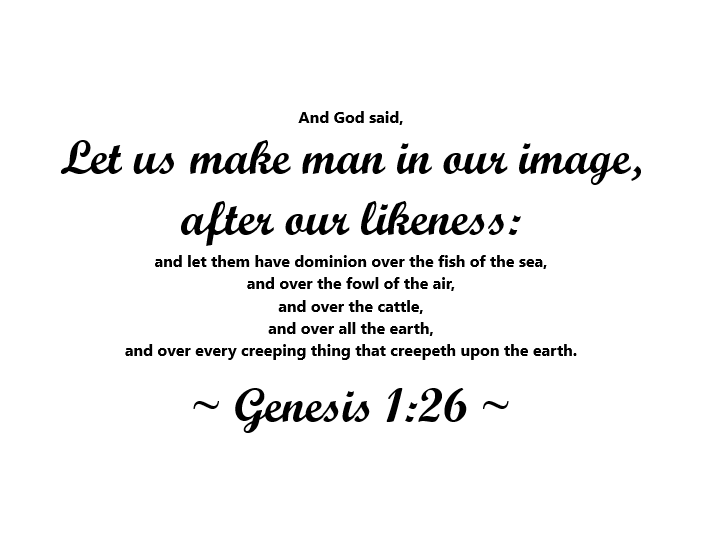
Unitarian Universalism (UU), as a pluralistic and theologically liberal tradition, interprets Genesis 1:26 in ways that differ significantly from Biblical Christian theology. These differences reflect UU principles, which prioritize individual interpretation, humanism, and ethical responsibility over traditional theological frameworks.
Key Aspects of the Unitarian Universalist Interpretation
Human-Centric Emphasis
UUs interpret the “image of God” metaphorically, seeing it as a representation of human dignity, creativity, and equality. They emphasize humanity’s intrinsic worth and potential rather than a connection to a divine Creator. The “image of God” is understood as a universal acknowledgment of human value and the capacity for growth, invention, and moral responsibility. By focusing on human agency and achievements, UUs shift the meaning from a God-centered theological truth to a secular or humanist affirmation.
Pluralism and Inclusivity
UU theology rejects specific doctrinal claims, including traditional understandings of God as Triune or personal. For UUs, the “image of God” can symbolize the interconnectedness of all people, irrespective of their religious or spiritual beliefs. This pluralistic approach allows for a wide range of interpretations, including atheistic or pantheistic readings, where the “image of God” may be a metaphor for humanity’s shared experience and inherent value.
Metaphorical Understanding of Scripture
UUs generally view Scripture as a collection of human reflections on spirituality, rather than divine revelation. Consequently, Genesis 1:26 is interpreted as a poetic expression of humanity’s moral and creative potential rather than a literal account of creation or a theological statement. This metaphorical lens enables UUs to engage with the text in ways that are flexible and non-dogmatic, accommodating diverse worldviews.
Rejection of Sin
UU theology rejects the concept of original sin, which is central to biblical Christian interpretations of the “image of God.” Instead of seeing humanity as fallen and in need of redemption, UUs emphasize humanity’s innate goodness and capacity for self-improvement. The “image of God” is thus viewed as untarnished and reflective of humanity’s ability to achieve justice, compassion, and personal growth through human effort rather than divine intervention.
Critique of the Unitarian Universalist View
While the UU interpretation offers an inclusive and humanistic perspective, it departs significantly from the original intent and theological depth of Genesis 1:26.
Human-Centric Emphasis Diminishes God’s Role
The UU interpretation’s focus on human dignity and potential neglects the foundational truth that humanity’s worth is derived from being created in the image of a sovereign God. Genesis 1:26 does not merely affirm human capabilities but establishes a unique relationship between humanity and its Creator. By removing God from the equation, the UU view reduces the “image of God” to a self-referential concept, contradicting the passage’s original theological intent.
Symbolism Undermines Biblical Authority
UU reliance on metaphor and rejection of Scripture’s divine authority diminishes the power and meaning of Genesis 1:26. The passage explicitly frames humanity’s creation as an intentional act of God’s will, emphasizing divine sovereignty and purpose. By treating the text as symbolic and non-binding, UUs risk stripping it of its foundational truths about humanity’s divine origin and purpose.
Rejection of Sin Contradicts the Biblical Narrative
The Bible consistently teaches that humanity was created in God’s image, fell into sin, and can only be redeemed through Christ (Romans 5:12-21). The UU rejection of original sin and humanity’s fallen nature ignores the Biblical narrative’s emphasis on the need for redemption. Without acknowledging sin, the UU view undermines the significance of Jesus Christ’s work of salvation and the restoration of the “image of God” through faith in Him (Colossians 3:10).
Pluralism Confuses the Biblical Message
The UU embrace of pluralism leads to a distortion of the Biblical message. Genesis 1:26 asserts that humanity was created by one God in His image, a truth that does not accommodate multi-theistic or atheistic interpretations. While inclusivity aligns with UU values, it dilutes the theological depth and exclusivity of the text, which is rooted in the nature and will of the Biblical God.
Comparison of the Unitarian Universalist and Biblical Interpretations
| Aspect | Biblical Interpretation | Unitarian Universalist Interpretation |
| Nature of the Image | Reflects God’s spiritual, moral, and relational attributes. | Symbolizes human dignity, creativity, and equality. |
| View of God | Personal, Triune, and sovereign Creator. | God may be symbolic, impersonal, or nonexistent. |
| Authority of Scripture | Scripture is divinely inspired and authoritative. | Scripture is human, symbolic, and non-binding. |
| Human Purpose | To glorify God and fulfill His will. | To promote justice, equality, and individual flourishing. |
| Fall and Redemption | The image is marred by sin, restored through Christ. | The image reflects innate goodness, not affected by sin. |
Summary of the Unitarian Universalist Interpretation
The Unitarian Universalist interpretation of Genesis 1:26 emphasizes human dignity, ethical responsibility, and inclusivity, offering a human-centered perspective on the passage. However, it diverges fundamentally from the original theological intent of the text, which underscores humanity’s unique relationship with God, the reality of sin, and the need for redemption through Christ. The UU view, while well-meaning, removes the divine foundation that gives Genesis 1:26 its true depth and significance.