
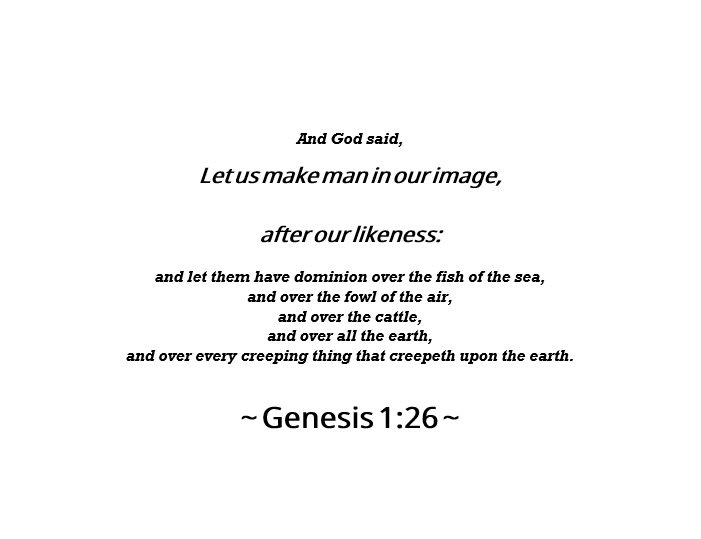
The Unification Church, founded by Sun Myung Moon in the mid-20th century, presents a theologically distinct interpretation of Genesis 1:26. This interpretation is a cornerstone of its broader doctrinal framework and focuses heavily on the concept of dual characteristics within God and the restoration of humanity to an ideal state of divine harmony.
Key Aspects of the Unification Church Interpretation
Dual Characteristics of God
The Unification Church teaches that God embodies both masculine and feminine characteristics, harmonized within His divine essence. This belief stems from their interpretation of Genesis 1:27: “So God created man in his own image, in the image of God created he him; male and female created he them.”
According to this view, God’s image inherently includes both genders, making the duality of masculine and feminine a foundational aspect of God’s nature and creation. These dual characteristics are reflected in creation, particularly in the relationship between men and women, which is seen as essential to achieving cosmic harmony, unity, and divine order. This theology elevates the balance of masculine and feminine as a universal principle.
While the Unification Church emphasizes gender-based duality within God’s image, the Bible teaches that God is Spirit (John 4:24) and transcendent, without gender. Male and female in creation are expressions of God’s design for humanity but not reflections of God’s own nature. Biblical Christianity interprets “image of God” as referring to spiritual, moral, and relational aspects, not gender-based characteristics.
God’s Physical and Spiritual Image
Unlike Biblical Christian theology, which portrays God as entirely spiritual and transcendent, the Unification Church posits that God’s image includes physical elements. Humanity is viewed as a “blueprint” of God, reflecting both His spiritual and physical attributes. This interpretation suggests that God’s nature may include physicality in some sense, allowing humanity’s physical form to mirror aspects of God.
The Bible consistently presents God as Spirit (John 4:24) and infinite, making the idea of physicality incompatible with His divine nature. Humanity’s creation in God’s image emphasizes non-physical qualities such as reason, creativity, morality, and relational capacity, aligning with God’s character.
Purpose of Humanity
The Unification Church describes humanity as the “children of God,” created to achieve spiritual maturity and unity with Him. This maturity involves aligning with God’s dual characteristics. The ultimate purpose of human life, according to Sun Myung Moon, is to establish “true families” that reflect the divine image. A “true family” is one in which husband, wife, and God achieve perfect unity, symbolizing God’s dual characteristics. This concept of “true families” underpins much of the Unification Church’s teaching, focusing on the relational and familial structure as a means of fulfilling God’s design.
Biblical Christianity sees the purpose of humanity as bringing glory to God (Isaiah 43:7), exercising stewardship over creation (Genesis 1:28), and living in fellowship with Him. While families are valued in the Bible, individual redemption and transformation through Christ are central to fulfilling humanity’s ultimate purpose.
Restoration of the Image
The Unification Church teaches that the Fall of Adam and Eve caused humanity to lose the original divine likeness. This loss, they argue, can only be restored through adherence to the teachings of Sun Myung Moon. Moon and his wife are regarded as the “True Parents,” divinely appointed to model God’s ideal image on earth. Restoration is achieved through spiritual growth, relational harmony, and the establishment of ideal families that align with God’s original plan.
Biblical Christianity teaches that the restoration of the divine image is accomplished through Jesus Christ. Christ, as the perfect image of God (Colossians 1:15), restores humanity to its intended purpose through faith, grace, and the sanctifying work of the Holy Spirit (2 Corinthians 3:18).
Role of Jesus
In the Unification Church, Jesus is viewed as a significant spiritual figure who began the process of humanity’s restoration but failed to complete it. They believe this mission is fulfilled by Sun Myung Moon, who is seen as the new Adam tasked with completing God’s work on earth. Christ’s role is redefined to fit within the framework of family restoration and relational harmony, aligning with the Church’s emphasis on dual characteristics and cosmic balance.
The Bible teaches that Jesus is uniquely divine and the complete fulfillment of God’s redemptive plan. His death and resurrection fully atone for sin, and no further work is necessary for salvation (Hebrews 10:14). Elevating Sun Myung Moon to a position of completing Christ’s work undermines the sufficiency of Jesus’ sacrifice and His identity as the eternal Son of God.
Salvation and Restoration
In the Unification Church, salvation is achieved through adherence to its teachings and the establishment of family relationships that reflect God’s dual characteristics. Sun Myung Moon and his wife are central to this process as “True Parents.” This theology places emphasis on human effort, relational harmony, and alignment with the principles of the Church to achieve salvation and restoration.
Salvation according to Scripture is by grace through faith in Jesus Christ, apart from works (Ephesians 2:8-9). The work of restoration is entirely the result of Christ’s redemptive act and the transformative power of the Holy Spirit.
Key Emphasis
The Unification Church emphasizes the union of masculine and feminine qualities in human relationships, family structures, and society, mirroring what they perceive to be God’s dual nature. Relational and familial harmony are central to their theology. This emphasis contrasts with biblical Christianity, which focuses on individual redemption and spiritual transformation through a relationship with Christ.
Comparison of the Unification Church and Biblical Interpretations
| Aspect | Unification Church Interpretation | Biblical Interpretation |
| Nature of God | God possesses dual characteristics of masculinity and femininity, harmonized within His nature. God may also have physical attributes. | God is Spirit (John 4:24), transcendent, and without physical form. The Trinity reflects relational unity in diversity. |
| Image of God | Includes both spiritual and physical aspects, emphasizing cosmic harmony and the dual nature of God. | Refers to spiritual, moral, and intellectual attributes unique to humanity, reflecting God’s character. |
| Purpose of Humanity | To establish “true families” that reflect God’s ideal, with perfected relationships between husband, wife, and God. | To glorify God, steward creation, and be conformed to the image of Christ (Romans 8:29). |
| Restoration of Image | Restored through spiritual maturity and alignment with the teachings of Sun Myung Moon as “True Parents.” | Restored through faith in Jesus Christ and sanctification by the Holy Spirit (2 Corinthians 3:18). |
| Role of Jesus | Jesus began the restoration process but did not complete it; Sun Myung Moon completes this mission. | Jesus is the perfect image of God (Colossians 1:15) and the sole means of salvation and restoration. |
| Salvation | Achieved by following the teachings of the Unification Church and perfecting family relationships to reflect God’s dual nature. | Achieved through grace, by faith in Jesus Christ, apart from works (Ephesians 2:8-9). |
| Key Emphasis | Union of masculine and feminine qualities in human relationships and society, mirroring God’s dual nature. | Spiritual and moral likeness to God, emphasizing individual transformation and redemption through Christ. |
Summary of the Unification View
The Unification Church’s theology departs from biblical teaching by redefining the nature of God, emphasizing relational dynamics, and shifting the focus of salvation from Christ to human effort and the teachings of Sun Myung Moon.