
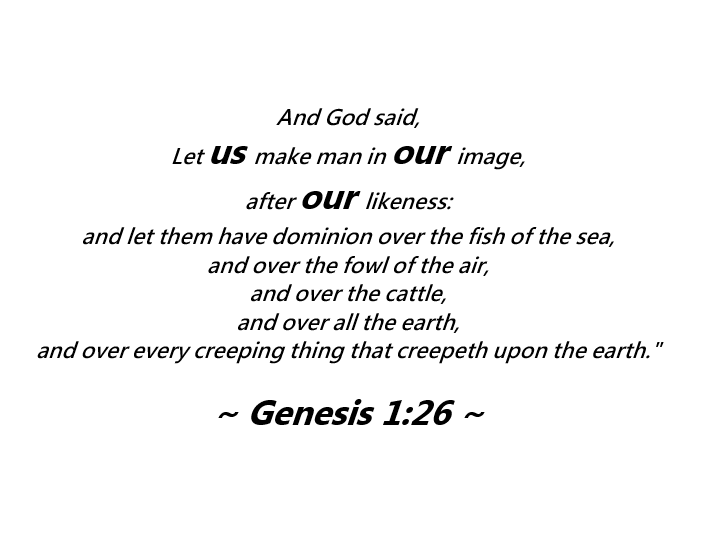
The self-deliberation interpretation of the plural pronouns in Genesis 1:26 emphasizes God’s sovereignty and deliberate planning, portraying the creation of humanity as an act of supreme majesty and intentionality. However, the plural pronouns suggest more than introspection—they point to a relational dialogue within the Godhead, reflecting the triune nature of God and His communal character.
The Sovereignty and Intentionality of God
The self-deliberation view underscores that God’s decision to create humanity was sovereign, deliberate, and self-sufficient. Genesis 1:26 reveals not only the intentionality of God but also the majesty and gravity of this creative act.
Unlike human planning, which may involve external consultation, God’s creative decision flows from His infinite wisdom and autonomy. As Isaiah 40:13-14 rhetorically proclaims:
“Who hath directed the Spirit of the Lord, or being his counsellor hath taught him? With whom took he counsel, and who instructed him, and taught him in the path of judgment, and taught him knowledge, and shewed to him the way of understanding?” These verses affirm God’s unparalleled wisdom and authority, reinforcing the idea that the creation of humanity was not influenced by external forces but arose from the divine will.
The plural pronouns serve as a literary device to elevate the significance of humanity’s creation. Humanity, unlike other aspects of creation, is uniquely made in the image and likeness of God, signifying a deeper connection and purpose.
Arguments Against a Mere Self-Deliberation View
While the self-deliberation view captures the majesty and intentionality of creation, it falls short in fully accounting for the relational language used in Genesis 1:26. God does not need to “reflect” in the human sense of introspection. His actions are always purposeful and informed by His infinite wisdom. The plural pronouns better reflect a divine dialogue within the Trinity. This is not solitary introspection but the cooperative and harmonious work of the triune God.
The plural pronouns highlight the complexity of God’s being—distinct Persons united in essence and purpose. While the Father, Son, and Spirit are distinct, they are one in will and action. This relational unity is mirrored in humanity’s creation as relational beings, capable of fellowship with God and others.
The relational dialogue within the Trinity has direct implications for humanity’s nature and purpose. Being created in the image of a relational God means that humans are designed for relationship—with God, with one another, and with creation. Just as God exists in eternal relationship, humans reflect this relational nature in their capacity for love, community, and stewardship.
The relational aspect of creation also points to God’s desire for humanity to live in covenant relationship with Him. This divine initiative unfolds throughout Scripture, culminating in Christ’s redemptive work.
Other biblical passages affirm the relational interpretation of the plural pronouns:
- Isaiah 6:8: “Whom shall I send, and who will go for us?” This passage uses similar plural language, suggesting a divine council within the Godhead.
- John 17:21-23: Jesus prays for believers to experience unity, modeled after the relational oneness of the Trinity. This unity reflects the divine relationship seen in Genesis 1:26.
- John 1:1-3 and Genesis 1:2: These passages confirm the involvement of the Son and Spirit in creation, showcasing the collaborative nature of the Trinity.
The plural pronouns in Genesis 1:26 are best understood as reflecting a relational dialogue within the Trinity, emphasizing the communal and intentional nature of God in creation. While the self-deliberation view highlights God’s sovereignty and deliberate planning, the relational interpretation captures the richness of God’s triune nature and His purpose for humanity. This understanding calls believers to marvel at the relational God who created them and invites them into fellowship with Him through Christ.