
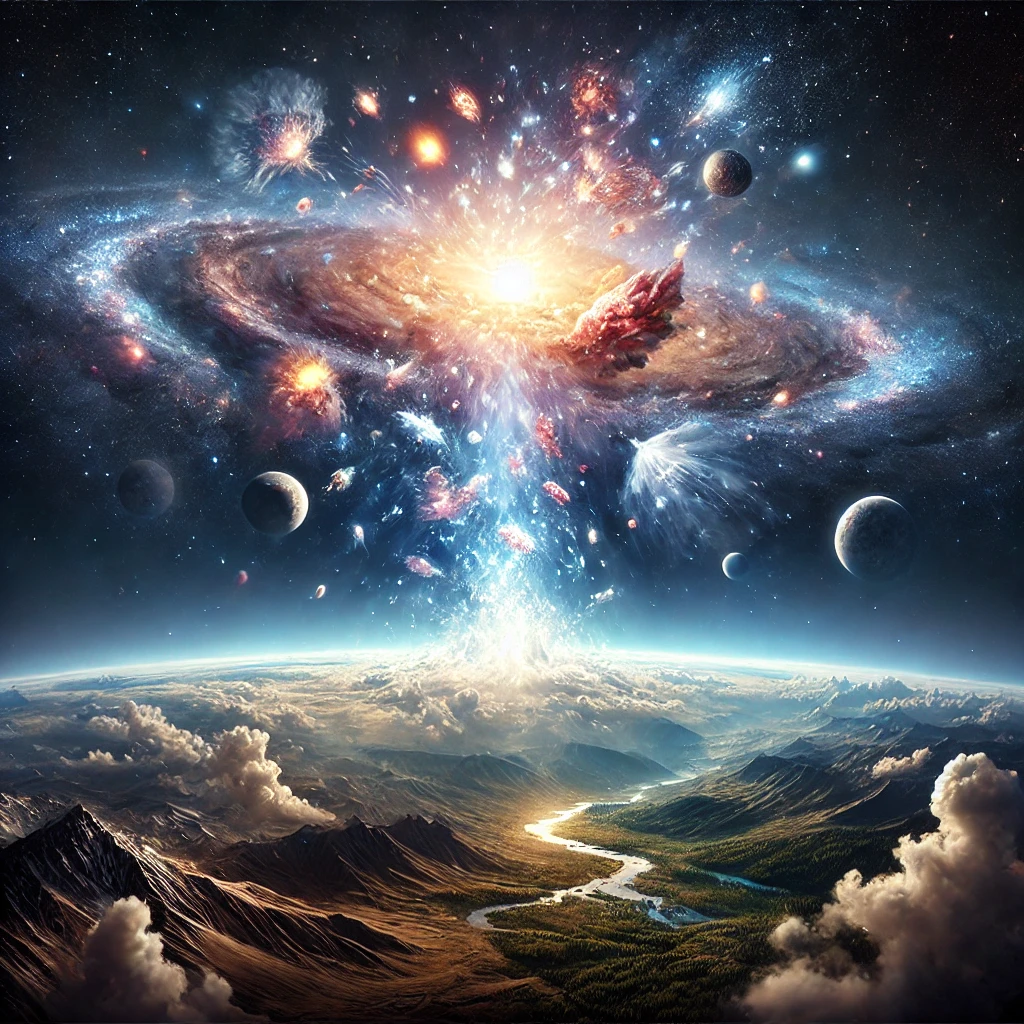
In the opening verse of Genesis, we encounter the Hebrew word bārā, translated as “created.” This verb carries profound significance in biblical theology. Scholars like Ross (1985) have observed that bārā is uniquely used with God as its subject (p. 28), underscoring a key theological truth: the act of creation described here is something only God can perform. While human beings are creative by nature—designing homes, crafting art, and making tools—our creativity is fundamentally different. We can only create from pre-existing materials. In contrast, God creates from nothing.
This concept of creation ex nihilo (Latin for “from nothing”) sets the biblical narrative apart from other ancient accounts of creation. Human artisans use materials already present in the world. In contrast, God’s creative act does not require any pre-existing matter. He brings into existence that which previously did not exist. As Morris (2001) noted, only God can “call into existence that which had no existence” (p. 39).
Creation Ex Nihilo: A Concept Unique to the Bible
The idea that God created the universe from nothing is a distinctive feature of the biblical worldview. In contrast, the creation myths of the polytheistic cultures surrounding ancient Israel often depicted their gods fashioning the universe from pre-existing matter. However, the Bible emphasizes that these gods are mere idols, devoid of power. As stated in 1 Chronicles 16:26, “For all the gods of the people are idols: but the Lord made the heavens.”
The author of Hebrews further highlights this divine creative power in Hebrews 11:3, saying, “through faith we understand that the worlds were framed by the word of God, so that things which are seen were not made of things which do appear.” This statement underscores a key distinction: God’s creation was not an act of manipulation or organization of pre-existing material. Rather, God spoke the universe into existence. The material world we see was created by the Word of God and not from things already visible or tangible.
This concept transcends human understanding. From a human perspective, it seems impossible to create something out of nothing. Our experience tells us that everything comes from something. We fashion objects from wood, stone, or metal, but none of us can summon something into existence without any materials. This is why Hebrews emphasizes that it is through faith that we comprehend God’s act of creation. It is beyond human reasoning, but God’s Word assures us of its truth.
Affirming God as the Source of All Things
The uniqueness of God’s creative act is foundational to the biblical understanding of the universe and everything within it. This idea, Mathews (1996) argues, is so distinct from other ancient accounts that we must conclude all things have their ultimate origin in God (p. 129). Creation ex nihilo affirms that God is the source of all existence—He alone made the heavens, the earth, and everything within them.
This truth is powerfully affirmed in the New Testament. The Gospel of John informs us that “All things were made by him; and without him was not any thing made that was made” (John 1:3). This passage emphasizes the total dependence of creation on God’s creative power. Similarly, the Apostles testified to this when they declared, “Lord, thou art God, which hast made heaven, and earth, and the sea, and all that in them is” (Acts 4:24). This profession is echoed by Paul and Barnabas in Acts 14:15, and again by Paul when he proclaimed, “God that made the world and all things therein” (Acts 17:24).
Conclusion
The biblical doctrine of creation affirms a foundational truth: only God can create from nothing. While human creativity reflects our being made in the image of God, it is limited by the materials at our disposal. God’s creative act, however, transcends these limitations, as He alone has the power to bring forth existence where there was once nothing. This divine ability underscores the uniqueness of God as the ultimate Creator and distinguishes the biblical account of creation from all others. The heavens, the earth, and all that is within them testify to God’s infinite power and wisdom, for they were made by His word alone.