
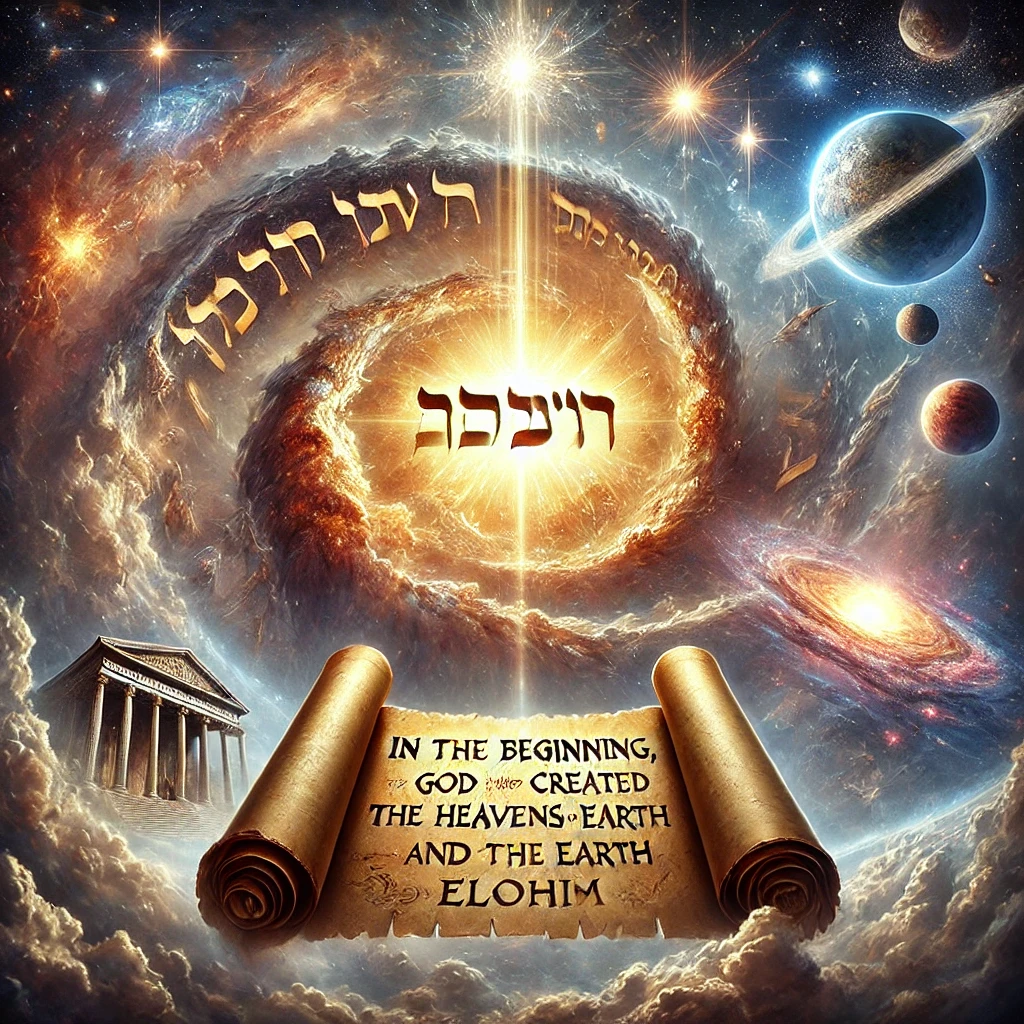
The opening verse of the Bible, Genesis 1:1, proclaims: “In the beginning, God created the heavens and the earth.” This foundational statement carries profound implications for both theology and our understanding of reality itself. One of the essential truths we encounter here is that God is the cause of the beginning. The universe, time, and all creation had a starting point, but God did not. He existed prior to the beginning of time, and He is the One who brought it into being. This understanding points us toward a critical attribute of God: His eternality.
God is Not Confined to Time
It is crucial to affirm that God is not subject to the limitations of time. Time, as we understand it, is part of the created order. God, on the other hand, exists outside of time because He is its Creator. This understanding leads to the conclusion that God has no beginning and no end; He is eternal.
Theologians have long emphasized this distinction between God and creation. While creation had a “beginning,” God does not. He is self-existent, uncaused, and independent of all that He has made. As humans, we experience time as linear — a sequence of moments moving from past to future — but God is not bound by this linearity. The fact that He exists outside of time should instill in us a deep reverence for His infinite nature.
Elohim: One God, Not Many
One of the more intricate discussions that arises from Genesis 1:1 involves the name of God used in the Hebrew text. The term “Elohim” is notable for being a plural form, which has led some to speculate that the early Israelites might have originally believed in a pantheon of gods, with monotheism emerging later in biblical history. However, this view is not supported by Scripture. The use of “Elohim” in Genesis 1:1 and throughout the Old Testament is consistently tied to the singular God of Israel.
Though “Elohim” is a plural noun in Hebrew, the verb “created” in this verse is singular, emphasizing that the action of creation was performed by one God, not many. The biblical text does not leave room for the idea of polytheism. Instead, passages like Isaiah 45:5 underscore that there is no other god beside the one true God. The ancient Israelites did not understand “Elohim” to mean a collection of gods, but rather the one, true, and living God. John J. Davis, a well-regarded Old Testament scholar, supports this interpretation, pointing to the grammatical structure of the sentence as proof of monotheism.
The Contextual Use of Elohim
It is also worth noting that the term “Elohim” can indeed refer to multiple gods in certain contexts. For instance, Psalm 96:5 states, “For all the gods [Elohim] of the nations are idols: but the Lord made the heavens.” Here, the term “Elohim” clearly refers to false gods — the idols worshiped by pagan nations. The distinction lies in the context. When referring to the God of Israel, Elohim is always understood as a singular noun, denoting the supreme, eternal Creator.
This nuance of language reinforces the importance of interpreting Scripture within its context. Words and phrases can carry different meanings depending on how and where they are used, and this is especially true in the case of the name “Elohim.” When speaking of the one true God, “Elohim” does not suggest multiplicity, but rather emphasizes God’s greatness, power, and majesty.
Why Use Elohim for God?
Given that the singular form “Eloah” (which is also used in Scripture, particularly in the book of Job) could have been used instead, some may wonder why the plural form “Elohim” was chosen to refer to the singular God in so many passages, including Genesis 1:1. First, it is important to note that Job is considered one of the oldest books of the Bible and predates the writing of Genesis. Therefore, the use of “Eloah” in Job is evidence against an early polytheism that evolved into monotheism. The Bible is consistent from start to finish in its affirmation of one God.
Second, Scripture teaches that every word is inspired by God (2 Timothy 3:16), so we trust that the choice of “Elohim” in Genesis 1:1 serves a purpose. Some scholars, like John J. Davis, suggest that the plural form is used to highlight God’s majesty and glory. This majestic plural is a linguistic tool that emphasizes the greatness of God — a greatness so vast that it transcends singular grammatical forms. Others, like Henry Morris, see this as an early hint of the doctrine of the Trinity — a teaching that would become more explicit as Scripture unfolds.
The Trinity in the Opening Verse
The concept of the Trinity, while not fully revealed in the Old Testament, is hinted at in verses like Genesis 1:1 through the use of “Elohim.” The New Testament provides further clarity on this mystery. In John 1:1, we learn that Jesus Christ was present “in the beginning.” “In the beginning was the Word, and the Word was with God, and the Word was God.” Here, the “Word” refers to Jesus, the second person of the Trinity, and we see that He was not only with God at the creation but was Himself God. The Holy Spirit, too, is present in Genesis 1:2, “hovering over the waters.”
Thus, while “Elohim” in Genesis 1:1 does not directly teach the Trinity, it leaves room for the fuller revelation of God’s triune nature, a truth that would be progressively unveiled throughout Scripture.
Conclusion: The Majesty and Mystery of God
The first verse of the Bible introduces us to the Creator, the eternal God who exists outside of time and is not bound by the limitations of His creation. The use of “Elohim” underscores both His majesty and power, and may also serve as a subtle hint of His triune nature, which would later be revealed in the doctrine of the Trinity. There is no suggestion in the Bible of a shift from polytheism to monotheism; from the very beginning, God has been understood as the one true God, Creator of heaven and earth.
This should deepen our awe and worship of God. He is eternal, unchanging, and all-powerful. From the first verse of Scripture to the last, we are called to know Him, worship Him, and stand in awe of His infinite greatness.