
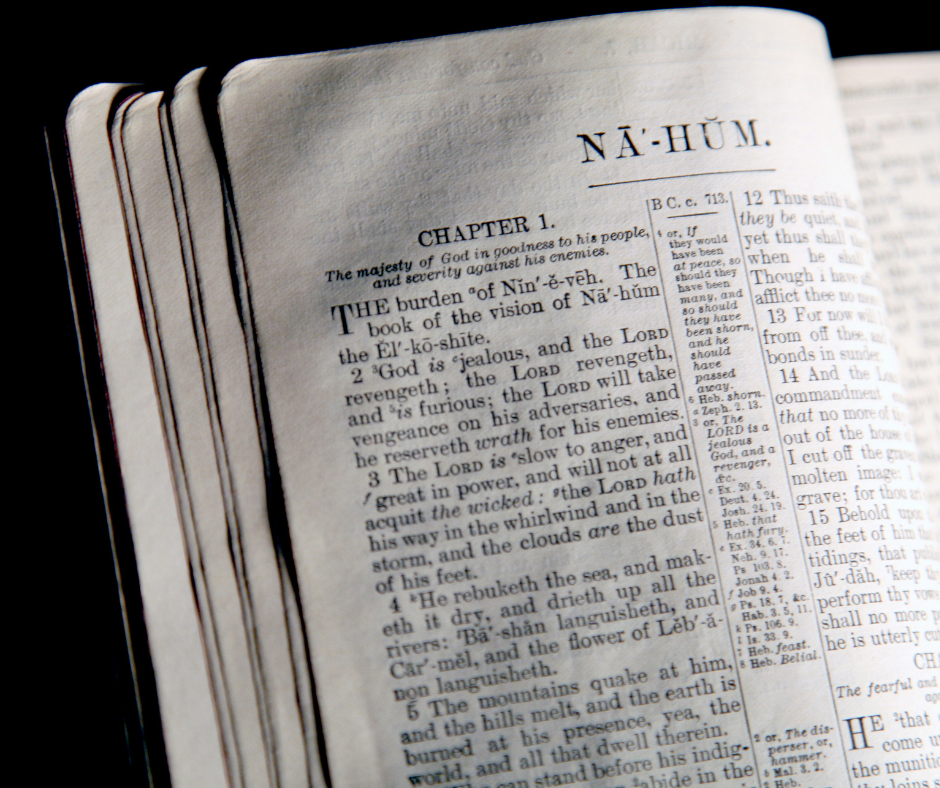
The book of Nahum is a vivid, poetic, and uncompromising proclamation of divine justice. It announces the fall of Nineveh—the proud capital of the Assyrian Empire—and in doing so, reveals the holiness, sovereignty, and vengeance of God against evil. Often called the “Book of the Burden of Nineveh,” Nahum stands as a sequel to Jonah. Where Jonah reveals God’s mercy toward a repentant city, Nahum reveals His justice toward a city that has returned to violence and arrogance. It is a book that exalts the moral order of the universe, assuring believers that though wickedness may prosper for a time, the Lord will not allow it to endure forever.
I. Authorship and Historical Setting
Nahum (“Comfort” or “Consolation”) was a prophet from Elkosh, perhaps a small village in Judah. His name fittingly reflects the nature of his message: a comfort to God’s oppressed people and a warning to their cruel oppressors. Beyond this, little is known of his life, but his words reveal a man of deep theological conviction and poetic skill.
The prophecy likely dates between 663 and 612 B.C. The earlier date is set by Nahum’s reference to the fall of No-Amon (Thebes) in Egypt (3:8–10), which occurred in 663 B.C., and the later by the destruction of Nineveh itself in 612 B.C. Thus, Nahum wrote sometime in the middle of the seventh century B.C., during the reign of Manasseh or Josiah.
This was a period of great distress for Judah. The Assyrian Empire, having dominated the Near East for over a century, had conquered Israel (the northern kingdom) in 722 B.C. and subjected Judah to vassalage and humiliation. Assyria’s cruelty was infamous: its kings boasted of massacres, enslavement, and terror as instruments of control. Nineveh, the empire’s glittering capital, represented the height of human pride and violence. Yet, amid this darkness, Nahum’s message shines as a declaration that God’s justice would prevail: the oppressor would be destroyed and the faithful would find comfort in the Lord’s righteous reign.
II. Structure and Literary Design
Nahum is one of the most beautifully structured prophetic books, combining artistry with theological force. Its three chapters form a tightly woven prophetic poem that moves from the declaration of divine character to the vivid depiction of Nineveh’s downfall:
- The Majesty and Justice of God (Chapter 1)
- The book opens with a majestic theophany: a vision of God as a jealous, avenging, and sovereign Lord.
- He is slow to anger yet great in power, and He will not acquit the wicked (1:3).
- The chapter serves as both a psalm of praise and a prelude to judgment, contrasting the destruction of God’s enemies with the peace promised to His people: “The LORD is good, a strong hold in the day of trouble; and he knoweth them that trust in him” (1:7).
- The Siege and Destruction of Nineveh (Chapter 2)
- The prophet describes Nineveh’s impending fall in striking military imagery: chariots racing, shields gleaming red, walls breached, and the city plundered.
- The once-mighty empire is reduced to chaos, its wealth carried away, its people fleeing in terror.
- The language is both poetic and prophetic, emphasizing that the devastation is not merely the result of human warfare but of divine retribution: “Behold, I am against thee, saith the LORD of hosts” (2:13).
- The Reasons for Judgment and Its Finality (Chapter 3)
- Nahum details Nineveh’s sins: bloodshed, lies, sorcery, arrogance, and idolatry.
- The “bloody city” (3:1) that had enslaved nations will itself be shamed, stripped, and left desolate.
- The prophecy concludes with a note of finality: “There is no healing of thy bruise; thy wound is grievous” (3:19).
- The nations, once terrified by Assyria’s power, will rejoice at her fall: “All that hear the bruit of thee shall clap the hands over thee.”
III. Themes and Theology
Nahum is a study in the attributes of God revealed through judgment. Its themes are both sobering and strengthening, calling readers to reverence before the justice and sovereignty of the Lord.
- The Justice and Holiness of God:
Nahum affirms that God’s justice is neither arbitrary nor cruel. His wrath is the necessary response of holiness to sin. “The LORD is slow to anger” (1:3), yet when patience ends, His judgment is absolute and righteous. - The Sovereignty of God Over Nations:
The downfall of Nineveh demonstrates that no empire—no matter how powerful—can stand against the purposes of God. Nations rise and fall under His decree (cf. Daniel 2:21). - The Certainty of Judgment:
Assyria’s destruction was not theoretical but historical. The prophecy’s accuracy underscores that divine warnings are not empty threats. The moral order of the world is upheld by a God who acts. - The Comfort of the Righteous:
For Judah, Nahum’s message was not merely about vengeance but about deliverance. “Behold upon the mountains the feet of him that bringeth good tidings, that publisheth peace!” (1:15). God’s justice against evil is the foundation of His people’s hope. - The Danger of Pride and Cruelty:
Nineveh’s arrogance, cruelty, and self-deification stand as warnings to every generation. The same sins that destroyed Assyria—pride, violence, deceit—remain the downfall of nations and individuals who defy God’s authority.
IV. Historical and Apologetic Considerations
Archaeological discoveries have confirmed Nahum’s prophecy with striking accuracy. Excavations at Nineveh reveal evidence of a violent destruction consistent with the Babylonian-Median conquest of 612 B.C.: massive fires, toppled walls, and widespread devastation. Once considered impregnable, Nineveh vanished beneath the sands of history, just as Nahum foretold: “Nineveh is laid waste: who will bemoan her?” (3:7).
Nahum’s oracles also correct any misconception that God is indifferent to evil. His destruction of Nineveh, long delayed since Jonah’s time, shows that divine patience is not permissiveness. God’s mercy and justice are not contradictory but complementary. He is merciful in warning and just in fulfilling His word.
V. Christological Significance
While Nahum does not mention the Messiah directly, it contributes profoundly to the biblical revelation of God’s character, a revelation ultimately fulfilled in Christ. The divine attributes displayed in Nahum—justice, wrath, and steadfast love—find perfect harmony in the person of Jesus.
At the cross, God’s wrath against sin and His mercy toward sinners meet in perfect balance. The same Lord who judged Nineveh bore judgment on behalf of His people. The “good tidings” of Nahum 1:15 anticipate the gospel itself: the announcement of peace through the victory of God over evil. Christ, the ultimate conqueror, defeats not earthly empires but the greater tyranny of sin and death.
VI. Practical and Devotional Application
Nahum calls believers to trust the righteousness of God in times of injustice and oppression. It assures the faithful that evil will not reign forever, and that God’s timing, though mysterious, is always perfect. In an age when moral relativism blurs distinctions between right and wrong, Nahum reminds us that divine justice is absolute and inescapable.
The book also warns against pride, self-reliance, and cruelty. Nations and individuals alike are accountable to the Lord of hosts. True security lies not in fortresses or wealth but in humility before God and faith in His Word. For those who trust Him, Nahum’s stern message becomes a source of deep comfort: “The LORD is good, a strong hold in the day of trouble; and he knoweth them that trust in him” (1:7).
VII. Conclusion
The prophecy of Nahum is both terrifying and consoling: a thunderclap of judgment and a whisper of hope. It declares that the moral universe is not chaotic: God reigns, and He will vindicate His righteousness. Nineveh’s ruins stand as a monument to the truth that no power can withstand His justice.
For the believer, Nahum offers this enduring assurance: the same God who brings down the proud also lifts up the humble. The Lord’s vengeance against evil is the foundation of everlasting peace for His people. The book closes, not in despair, but in triumph: the wicked fall and the righteous rest secure in the justice of their Redeemer.