
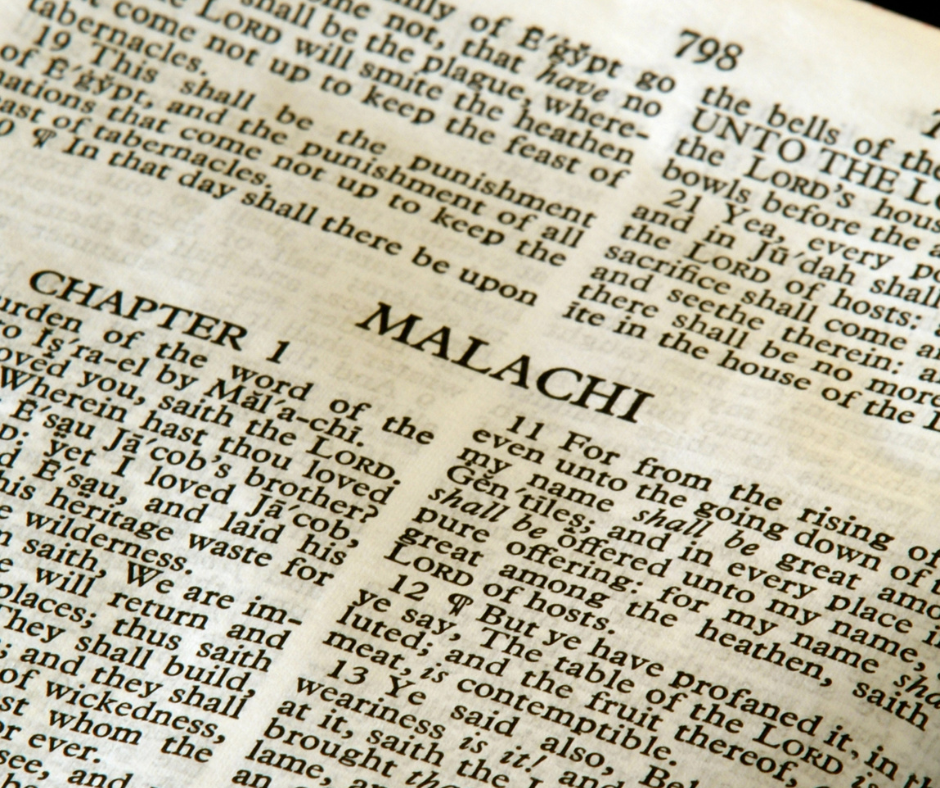
The book of Malachi stands as the final prophetic voice of the Old Testament, a closing word from God before four centuries of silence. Set after the return from Babylonian exile, Malachi confronts a community that has grown spiritually lethargic, morally compromised, and theologically confused. Though the temple has been rebuilt and sacrifices have resumed, the people’s hearts are distant from the Lord. Their worship is half-hearted, their leaders are corrupt, their marriages are unfaithful, and their hope has faded. Into this environment, Malachi delivers a sharp, gracious, and covenantal call: return to the LORD, for He has not stopped loving His people.
Malachi’s prophecy is dialogical and pastoral, structured as a series of disputations in which God accuses Israel of specific sins, Israel objects, and God answers with overwhelming clarity. This interactive style reveals a God who reasons with His people, exposing their blind spots while reaffirming His faithfulness. As the last book of the Old Testament, Malachi stands as a bridge between the prophetic witness of the old covenant and the dawning light of the new. Its promises anticipate John the Baptist, the Messiah, and the coming day of the LORD.
I. Authorship and Historical Setting
“Malachi” means “My Messenger,” and while some have suggested the name is a title rather than a personal name, the weight of Jewish and Christian tradition views Malachi as a prophet. He ministered sometime between 460 and 430 B.C., during or shortly after the time of Nehemiah. The nation had returned from exile, the temple was restored (516 B.C.), and the city walls had been rebuilt. Yet the spiritual revival that marked the early years of the return had cooled.
Malachi’s context aligns closely with Nehemiah 13:
- Priests were offering defective sacrifices.
- Marriages with pagan women were common.
- Tithing and temple support had fallen into neglect.
- Sabbath observance was compromised.
- Leaders lacked integrity, and worship had become routine.
Against this backdrop, Malachi exposes sin, calls for renewal, and reawakens the people’s expectation of God’s coming work.
II. Structure and Literary Design
The book is arranged around six disputations, dialogues between God and His people. Each follows a pattern: divine claim, human objection, and divine rebuttal. This format underscores the relational nature of God’s covenant dealings.
- God’s Love Questioned (1:2–5)
- God declares, “I have loved you,” but Israel responds, “Wherein hast thou loved us?”
- God proves His love by contrasting Israel’s preservation with Edom’s judgment.
- Corrupt Priests and Defiled Worship (1:6–2:9)
- Priests are rebuked for offering polluted sacrifices and dishonoring God’s name.
- The covenant with Levi is upheld as a standard of faithful ministry.
- Unfaithful Marriages and Covenant Betrayal (2:10–16)
- The people are charged with marrying pagan wives and breaking covenant with their spouses.
- God declares, “I hate putting away,” revealing His heart for covenant fidelity.
- Justice Questioned and the Coming Messenger (2:17–3:5)
- The people accuse God of injustice.
- God promises to send His messenger to prepare the way and purify His people.
- Robbing God Through Neglected Tithes (3:6–12)
- Israel withholds tithes and offerings.
- God invites them to test His generosity: “Prove me now… and I will open the windows of heaven.”
- The Righteous and the Wicked Distinguished (3:13–4:6)
- The people claim it is vain to serve God.
- God affirms that He sees the righteous and promises a coming day when evil will be judged and the faithful vindicated.
The book closes with two great promises:
- The coming of Elijah, fulfilled in John the Baptist (Matthew 11:14; 17:10–13).
- The coming of the LORD Himself, who will bring both judgment and healing.
III. Themes and Theology
- God’s Covenant Faithfulness:
Despite Israel’s apathy, God remains steadfast: “I am the LORD, I change not” (3:6). His unchanging nature is the basis of their hope. - True Worship and Holy Living:
Malachi confronts hollow ritual and calls for sincerity, reverence, and obedience. God is not satisfied with leftovers. He demands the best. - The Role of the Priesthood:
Priests are accountable for teaching truth, modeling holiness, and guarding worship. Their corruption brought spiritual decay to the people. - Covenant Marriage:
Faithfulness in marriage reflects faithfulness to God. Malachi highlights marriage as a sacred covenant under God’s authority. - Divine Justice and Judgment:
Malachi assures the righteous that God sees and will act. The “day of the LORD” will burn like an oven for the wicked but shine like the sun for the faithful. - Messianic Expectation:
Malachi anticipates both the forerunner (John the Baptist) and the Messiah (Christ), linking Old Testament prophecy to New Testament fulfillment.
IV. Historical and Apologetic Considerations
Malachi fits the post-exilic setting precisely. Its concerns reflect the religious, social, and economic conditions documented in Ezra and Nehemiah. The prophetic anticipation of John the Baptist (Malachi 3:1; 4:5–6) finds precise fulfillment in the New Testament, strongly affirming the unity and divine inspiration of Scripture.
V. Christological Significance
Malachi’s prophecy points directly to Christ:
- Christ is the Messenger of the covenant who comes suddenly to His temple (3:1).
- He is the sun of righteousness who rises with healing in His wings (4:2).
- He brings both purification and judgment, distinguishing the righteous from the wicked.
- John the Baptist, the Elijah who was to come, prepares the world for Christ’s appearing.
Malachi sets the stage for the gospel: the arrival of the Messiah who would bring the covenant to its fulfillment.
VI. Practical and Devotional Application
Malachi’s message remains deeply relevant:
- God deserves wholehearted worship, not half-hearted religion.
- Spiritual apathy is dangerous and deceptive.
- God sees the motives of the heart.
- Covenant relationships—marriage, worship, giving, and service—matter deeply to God.
- Hope is grounded in God’s unchanging character and the certainty of Christ’s coming.
VII. Conclusion
Malachi closes the Old Testament with a powerful call to faithfulness and a promise of coming redemption. It exposes the spiritual complacency of God’s people yet offers hope rooted in God’s unchanging character. The book ends with anticipation: looking forward to the arrival of the forerunner and the Messiah Himself.
Between the final words of Malachi and the first words of Matthew lies 400 years of silence, but not abandonment. The God who speaks in Malachi is the God who breaks the silence through John the Baptist and fulfills His promises in Jesus Christ. Malachi’s message rings with enduring truth: Return to the LORD, for He remembers His covenant and is coming in glory.