
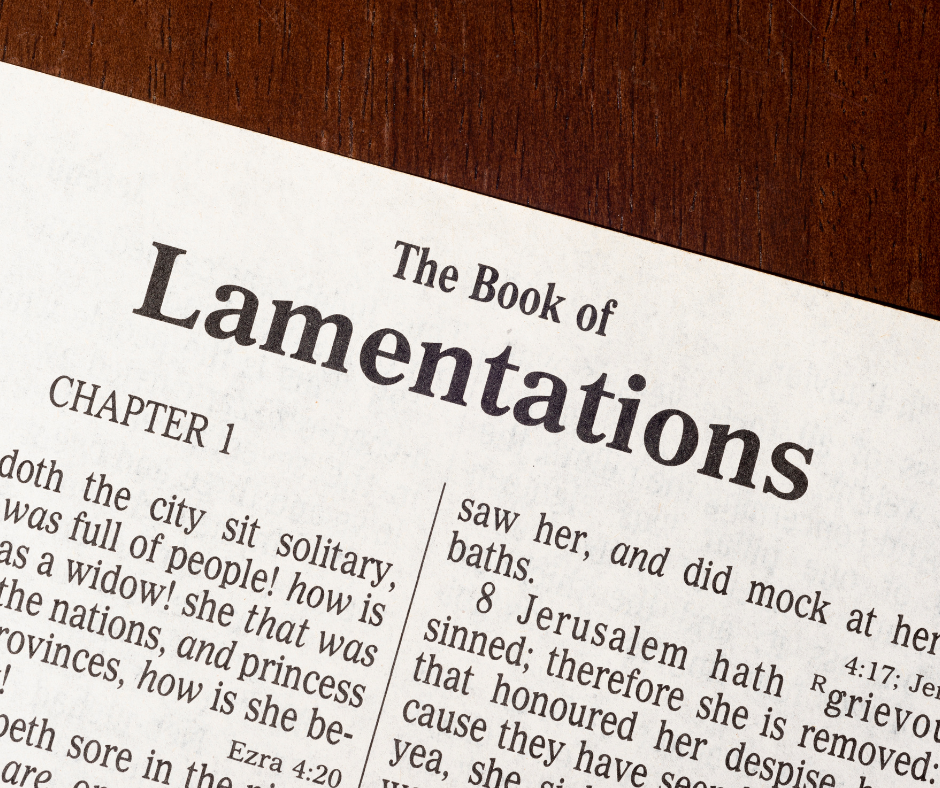
The book of Lamentations is the sobbing heart of Scripture, a series of funeral poems mourning the destruction of Jerusalem and the temple in 586 B.C. It stands as both a historical record of unimaginable loss and a timeless expression of faith amid suffering. Few books capture so vividly the tension between divine judgment and divine mercy. Through poetic grief and reverent lament, Lamentations teaches God’s people how to weep, how to repent, and how to hope again.
I. Authorship and Historical Setting
Although the book itself is anonymous, Jewish and Christian tradition have consistently attributed Lamentations to the prophet Jeremiah. The tone, language, and theological outlook align closely with his message in the book of Jeremiah. Both works mourn the fall of Jerusalem, interpret the disaster as God’s just judgment for covenant unfaithfulness, and express confidence that His compassion will yet prevail.
The historical setting is the aftermath of Babylon’s destruction of Jerusalem in 586 B.C., the darkest moment in Judah’s history. The city lay in ruins, its temple burned, its leaders executed or exiled, and its survivors starving or enslaved. From this desolation rises the voice of lament, a cry not of rebellion but of repentance and remembrance.
II. Structure and Literary Form
Lamentations consists of five poems, each corresponding to a chapter. Four of the five are written in Hebrew acrostic form, a poetic device in which each verse or stanza begins with successive letters of the Hebrew alphabet. This structure reflects order amid chaos, a deliberate act of worship in the midst of ruin. It suggests that grief, though overwhelming, can be disciplined into prayer.
- Chapter 1 – The Lonely City:
Jerusalem is personified as a widow bereaved and humiliated. Her desolation is the result of her own sin, yet her cry for comfort fills the air: “Is it nothing to you, all ye that pass by?” (1:12). - Chapter 2 – The Lord’s Anger:
The poem vividly describes God’s wrath as He brings judgment upon Zion. The devastation is not random; it is the execution of divine justice. Yet the poet’s tears show that righteous judgment still wounds the heart of faith. - Chapter 3 – The Prophet’s Lament and Hope:
The central poem shifts from communal grief to personal suffering. The speaker bears affliction yet clings to faith: “It is of the Lord’s mercies that we are not consumed… great is thy faithfulness” (3:22–23). This chapter forms the theological center of the book, where despair gives way to hope through trust in God’s covenant mercy. - Chapter 4 – The Horrors of the Siege:
The poet recalls the siege’s physical and moral collapse: the starvation, the cruelty, the loss of dignity. Even the nobility are reduced to beggars. Yet amid despair, the poet perceives that God’s wrath, though fierce, is not forever. - Chapter 5 – The Plea for Restoration:
This final prayer, though not acrostic, is intensely communal. It cries out for God to “turn thou us unto thee, O LORD, and we shall be turned; renew our days as of old” (5:21). The book ends unresolved, suspended between sorrow and hope, an invitation for ongoing repentance and faith.
III. Themes and Theology
Lamentations offers profound theological insight through its poetry of pain. Its central themes include:
- The Holiness and Justice of God:
The destruction of Jerusalem is not attributed to Babylon’s power but to God’s righteous judgment. Sin has consequences, and divine holiness cannot be ignored. - The Reality of Suffering:
The book gives voice to the anguish of loss: national, personal, and spiritual. It dignifies human grief, showing that lament is not unbelief but faith struggling to understand. - The Faithfulness and Mercy of God:
The great confession of 3:22–23 anchors the book’s theology: “His compassions fail not. They are new every morning: great is thy faithfulness.” Even amid wrath, God’s steadfast love endures. - The Call to Repentance and Restoration:
Every lament points toward repentance: turning back to God as the only source of renewal. Hope is found not in human rebuilding but in divine forgiveness. - The Pattern of Redemptive Suffering:
The suffering of Jerusalem foreshadows the sufferings of Christ, through whom ultimate restoration comes. In Him, the cry of dereliction (“Why hast thou forsaken me?”) becomes the doorway to redemption.
IV. Historical and Apologetic Considerations
The historical accuracy of Lamentations is confirmed by its vivid detail of Jerusalem’s fall, corresponding with accounts in 2 Kings 25 and Jeremiah 39–52. The poetic eyewitness tone reinforces its authenticity. The use of acrostic structure and intricate meter demonstrates that even in the deepest sorrow, God’s Word remains purposeful and ordered, a reflection of divine sovereignty even over suffering.
V. Christological Significance
Lamentations finds its ultimate fulfillment in the person and work of Jesus Christ. He is the Man of Sorrows who identifies fully with human grief (Isaiah 53:3). As Jerusalem’s walls crumbled, so too Christ’s body was broken for sin. His lament over Jerusalem (Matthew 23:37–39; Luke 19:41–44) echoes the book’s own weeping tone. The hope expressed in Lamentations 3 reaches its fulfillment in the cross and resurrection, where divine justice and mercy meet. Through Christ, the ruined city becomes the redeemed bride, and mourning turns to everlasting joy.
VI. Practical and Devotional Application
In an age that often silences grief, Lamentations teaches believers the sacred art of lament: how to bring sorrow, confusion, and repentance honestly before God. It reminds us that faith is not destroyed by suffering but refined through it. We learn to pray through tears, to remember God’s mercies in despair, and to find hope in His unchanging faithfulness. The book calls us to mourn for our sin and for a world still marred by it, yet to do so with confidence that the Lord’s compassion will not fail.
VII. Conclusion
Lamentations is more than a dirge. It is a doorway to renewal. It shows that even when God’s people experience ruin because of sin, His mercy remains the final word. The book moves from desolation to petition, from despair to the dawn of faith: “Thou, O LORD, remainest for ever; thy throne from generation to generation” (5:19).
Through its tears, Lamentations teaches that God’s faithfulness outlasts our failures, His mercy outshines our misery, and His promises endure beyond every ruin. For the believer, it becomes not merely the song of a fallen city, but the song of every heart that has been broken by sin and healed by grace.