
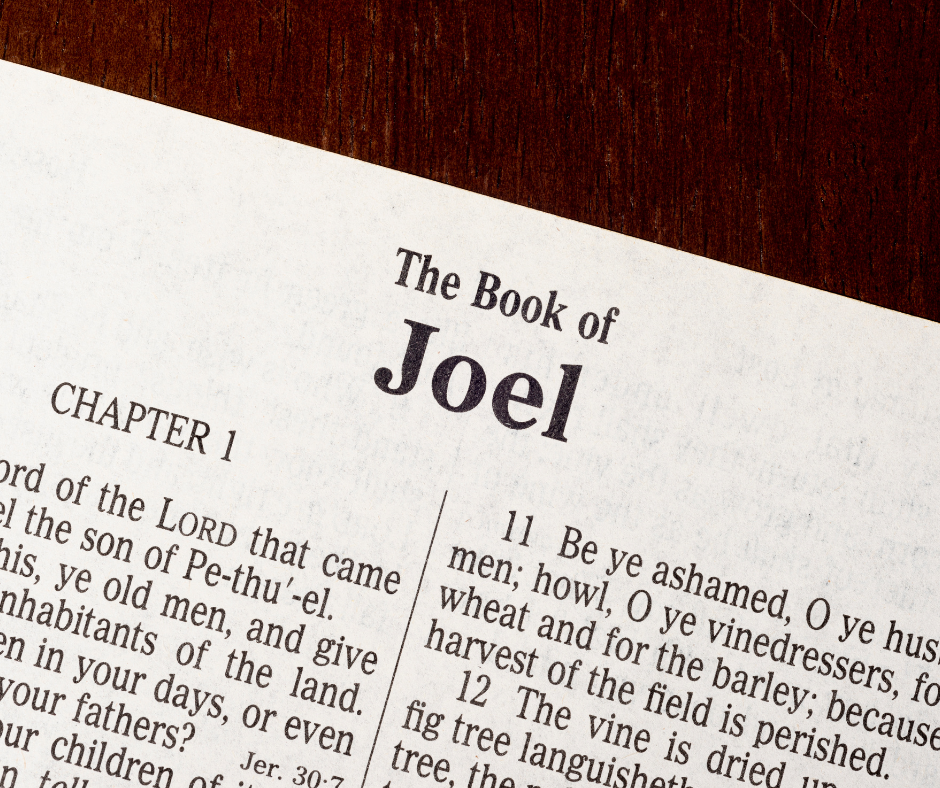
The book of Joel is a prophetic masterpiece of divine urgency, poetic intensity, and eschatological hope. Though brief—only three chapters—it speaks with eternal weight. Joel stands as both a warning and a promise: a warning of the devastating consequences of sin and a promise of restoration through repentance and the outpouring of God’s Spirit. It bridges the temporal and the eternal, moving from a literal locust plague in ancient Judah to the ultimate “day of the Lord,” when God will judge the nations and renew His people.
I. Authorship and Historical Setting
Joel, whose name means “Yahweh is God,” was a prophet of Judah. The book itself provides little biographical information; he is introduced only as “Joel the son of Pethuel” (1:1). Scholars differ on the precise date of his ministry. Some place it in the early ninth century B.C., during the reign of Joash (around 835–796 B.C.), making him a contemporary of Elijah and Elisha. Others suggest a post-exilic setting (after 500 B.C.).
The earlier date fits best with the internal evidence: the absence of mention of a king (suggesting a regency period under the priest Jehoiada), the emphasis on temple worship and priestly leadership, and the enemies named (Phoenicians, Philistines, Egyptians, and Edomites, nations prominent in earlier eras). Regardless of precise dating, Joel’s message transcends his century. His call to repentance and his vision of the outpoured Spirit make his prophecy timeless and universal.
II. Structure and Literary Design
Joel’s prophecy is carefully crafted and unfolds in three movements: judgment, repentance, and restoration. The book’s literary beauty lies in its rhythm of devastation and renewal, despair and hope:
- The Devastation of the Locust Plague (1:1–20)
- The book opens with a vivid description of an unprecedented locust invasion that ravaged Judah’s land. The catastrophe is both natural and symbolic, a visible sign of God’s judgment.
- Joel summons every class of society—elders, priests, farmers, and drunkards—to mourn and fast. “Alas for the day! for the day of the LORD is at hand” (1:15).
- The Call to Repentance and the Coming “Day of the LORD” (2:1–17)
- The prophet shifts from describing past devastation to warning of an even greater, future judgment: the “day of the LORD.”
- Yet divine mercy shines through: “Turn ye even to me with all your heart, and with fasting, and with weeping, and with mourning” (2:12).
- God calls not for ritual but for heart transformation: “Rend your heart, and not your garments” (2:13).
- The Promise of Restoration and the Outpouring of the Spirit (2:18–3:21)
- When the people repent, the Lord responds with compassion. He restores the land—grain, wine, and oil—and promises to dwell among His people again.
- The climax of the book comes in the prophecy of the outpouring of the Holy Spirit: “I will pour out my spirit upon all flesh” (2:28).
- The final chapter looks ahead to the end of the age: God will gather the nations for judgment in the “valley of Jehoshaphat,” and His kingdom will be established in everlasting peace and holiness.
III. Themes and Theology
Joel develops several profound theological themes that reveal both the severity of divine justice and the sweetness of divine grace:
- The Day of the LORD: This phrase—central to Joel’s message—appears five times in the book and recurs throughout prophetic literature. It encompasses both near and far fulfillments: the historical judgment upon Judah through natural disaster and the ultimate eschatological judgment at the end of the age.
- Repentance and Mercy: Joel’s call is deeply personal. True repentance must be inward, not merely ceremonial. God’s character is the foundation for hope: “He is gracious and merciful, slow to anger, and of great kindness” (2:13).
- The Sovereignty of God: The locusts, the armies, the rain, the nations: all move under the command of the Lord. The God of creation is also the Lord of history.
- The Outpouring of the Holy Spirit: Joel’s prophecy transcends the Old Covenant, foretelling the New Covenant age inaugurated at Pentecost. The Spirit’s coming democratizes divine presence—sons and daughters, young and old, servants and handmaids—all receive the same Spirit (2:28–29).
- Judgment and Restoration: The same God who judges sin restores the repentant. The land once laid waste becomes fruitful again, and the people who once trembled in fear rejoice in His presence.
- Universal Justice: Joel’s vision extends beyond Israel to the nations. The “valley of decision” (3:14) portrays the certainty of divine judgment upon all who oppose God’s purposes and persecute His people.
IV. Historical and Apologetic Considerations
Joel’s vivid description of locust devastation corresponds with known locust plagues in the Near East, natural events that could destroy entire economies within days. Yet Joel interprets the calamity theologically, not merely environmentally. It is a divine summons to repentance. Archaeological evidence and ancient inscriptions corroborate the impact of locust swarms in the region, confirming the realism of Joel’s imagery.
Some modern interpreters dismiss the eschatological sections as later additions or allegories. However, the seamless unity of the text, combined with the New Testament’s direct use of Joel’s prophecy (Acts 2:16–21; Romans 10:13), affirms its coherence and inspiration. The same God who governs nature also directs history, and the fulfillment of Joel’s words at Pentecost proves both the authenticity of his message and the continuity of God’s redemptive plan.
V. Christological Significance
The fulfillment of Joel 2:28–32 at Pentecost marks one of the clearest connections between the Old and New Testaments. Peter declared, “This is that which was spoken by the prophet Joel” (Acts 2:16). The Spirit’s outpouring inaugurated the church age, the beginning of God’s end-time work of salvation among all nations.
Christ is the center of Joel’s message. He is the One who baptizes with the Holy Spirit (Matthew 3:11), the Lord who brings both judgment and restoration. The “day of the LORD” ultimately points to His second coming, when He will judge the nations and establish His everlasting kingdom. The “valley of decision” prefigures the final separation of the righteous and the wicked (Matt. 25:31–46). In Christ, the God who once judged through locusts now offers new life through His Spirit.
VI. Practical and Devotional Application
Joel’s message remains urgently relevant. It calls God’s people to take sin seriously, to interpret calamity in light of God’s sovereignty, and to respond with heartfelt repentance. It reminds us that national and personal revival begins with returning to God with humility. In times of crisis—whether economic, environmental, or moral—the same invitation stands: “Turn ye even to me.”
For believers today, the promise of the Spirit’s outpouring assures us that God’s presence is no longer limited to prophets or priests. Every believer is indwelt by the Spirit, empowered to live in holiness and to bear witness to the gospel until Christ returns.
VII. Conclusion
The prophecy of Joel begins in disaster and ends in deliverance. It opens with a plague and concludes with a promise. Through vivid imagery and timeless truth, Joel reveals the unchanging character of God: righteous in judgment, merciful in forgiveness, and faithful in covenant love.
From the locust swarm that stripped Judah bare to the Spirit poured out upon all flesh, Joel’s message is clear: repentance leads to restoration, and the God who judges is also the God who saves. The book of Joel calls every generation to prepare for “the day of the LORD,” not with fear, but with faith, knowing that those who call upon His name “shall be delivered” (Joel 2:32).