
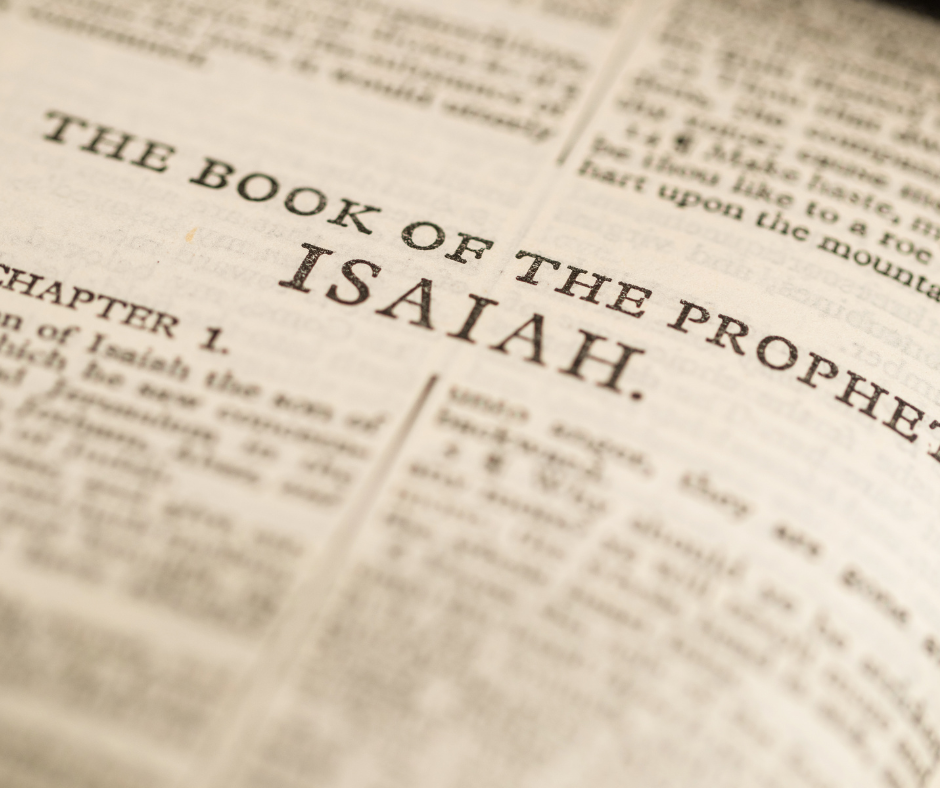
The book of Isaiah stands as one of the towering masterpieces of divine revelation, majestic in its language, comprehensive in its vision, and unmatched in its theological depth. Often called “the fifth Gospel,” Isaiah bridges the Old and New Testaments, presenting a sweeping panorama of God’s redemptive plan from Israel’s rebellion to the final renewal of creation. Its pages resound with both thunder and tenderness: the thunder of judgment upon sin and the tenderness of comfort for the repentant. Through Isaiah, the Lord reveals Himself as the Holy One of Israel, the Sovereign Ruler of history, and the Redeemer who will one day send His Servant, the Messiah, to save His people from their sins.
I. Authorship and Historical Setting
The opening verse identifies the prophet as “Isaiah the son of Amoz” (1:1), whose ministry spanned the reigns of four Judean kings—Uzziah, Jotham, Ahaz, and Hezekiah—roughly 740–680 B.C. This was a period of tremendous upheaval: Assyria’s military dominance threatened Judah’s security, moral decay weakened the nation’s spiritual foundation, and political alliances replaced trust in God. Isaiah, whose name means “The LORD is salvation,” was called to proclaim God’s message in this turbulent context.
Jewish and Christian tradition have consistently affirmed the unity and authorship of Isaiah as the work of a single prophet. Some modern critics have suggested multiple authors (“Deutero-Isaiah,” “Trito-Isaiah”) to explain the book’s range of historical references and prophetic precision. However, internal evidence, consistent literary style, theological unity, and explicit New Testament affirmation (e.g., Matthew 3:3; John 12:38–41) confirm Isaiah’s authorship of the entire work under divine inspiration. The God who reveals the future in this book is not constrained by time but declares “the end from the beginning” (46:10).
II. Structure and Literary Design
Isaiah’s message unfolds in two grand movements that mirror the themes of judgment and redemption, themes that dominate all of Scripture.
- Chapters 1–39: Judgment and the Sovereignty of God
- This section focuses primarily on God’s judgment against Judah, Israel, and the surrounding nations. The prophet warns that sin, pride, and unbelief will bring divine wrath. Yet amid warning, there are flashes of messianic hope: the virgin-born Immanuel (7:14), the divine child and eternal ruler (9:6–7), and the righteous King who will reign in justice (32:1).
- Historical interludes (chapters 36–39) recount Judah’s deliverance from Assyria under Hezekiah, serving as both a climax of faith and a prelude to coming Babylonian exile.
- Chapters 40–66: Comfort and the Salvation of God
- The tone shifts dramatically from judgment to consolation: “Comfort ye, comfort ye my people, saith your God” (40:1).
- These chapters reveal the Servant of the LORD—humble, righteous, and redemptive—culminating in the Suffering Servant of chapter 53, whose atoning sacrifice secures salvation for all nations.
- The book closes with a vision of new creation, where righteousness dwells and God’s glory fills the earth (65–66).
This twofold structure—judgment then salvation—parallels the entire biblical story, moving from the holiness of God offended by sin to the grace of God revealed in redemption.
III. The Message and Theology of Isaiah
The theological center of Isaiah is the character and sovereignty of God. The prophet’s vision in chapter 6 defines his entire ministry: “I saw also the Lord sitting upon a throne, high and lifted up” (6:1). Every message, warning, and promise flows from this revelation of God’s holiness.
Major themes include:
- The Holiness of God: Isaiah’s favorite title for the Lord—“the Holy One of Israel”—occurs 25 times in the book and only 6 elsewhere in the Old Testament. God’s holiness exposes sin, demands repentance, and guarantees both judgment and redemption.
- The Sinfulness and Injustice of Man: The prophet denounces hypocrisy, idolatry, and moral decay, calling the people to repentance and covenant fidelity.
- The Sovereignty of God in History: Nations rise and fall at His command. Assyria, Babylon, and Persia are but instruments in His hand, accomplishing His purposes of discipline and deliverance.
- The Messiah and the Servant of the Lord: Isaiah offers one of the clearest portraits of the coming Redeemer in all Scripture. He is the child born of a virgin (7:14), the Prince of Peace (9:6), the Branch of the LORD (11:1–5), and the Suffering Servant (53:1–12).
- Salvation by Grace: The book’s very name—Isaiah, “The LORD is salvation”—encapsulates its message. Salvation is not earned but provided by God through His covenant love.
- The Coming Kingdom of Peace and Glory: Isaiah envisions a day when the nations will stream to Zion, swords will become plowshares, and the earth will be filled with the knowledge of the Lord (2:2–4; 11:9).
IV. Literary Beauty and Prophetic Power
Isaiah’s writing combines the highest artistry of Hebrew poetry with prophetic passion. His style moves effortlessly from thunderous judgment to tender comfort, from vivid imagery to sublime simplicity. He writes with the conviction of a preacher, the precision of a theologian, and the heart of a poet. The imagery of light and darkness, the vine and vineyard, the road and the remnant, all communicate profound spiritual truths through unforgettable language.
V. Historical and Apologetic Considerations
Archaeological discoveries, such as the Great Isaiah Scroll from Qumran (dated around 150 B.C.), affirm the book’s remarkable preservation and unity. The precision of its messianic prophecies—fulfilled centuries later in the life, death, and resurrection of Christ—stands as a powerful witness to divine inspiration. No other ancient text so clearly predicts the details of the gospel: the virgin birth (7:14), the ministry of John the Baptist (40:3), the substitutionary death of Christ (53:4–6), and His resurrection and exaltation (53:10–12).
VI. Christological Significance
In the New Testament, Isaiah is quoted or alluded to more than any other prophet. Jesus Himself read from Isaiah in the synagogue of Nazareth and declared its fulfillment: “The Spirit of the Lord is upon me… He hath sent me to preach the gospel” (Luke 4:17–21; cf. Isaiah 61:1–2). The apostle John identifies Christ as the divine Lord whom Isaiah saw “high and lifted up” (John 12:41). The Servant Songs (Isaiah 42; 49; 50; 52–53) find their ultimate fulfillment in Jesus, the Suffering Servant who bore our iniquities and triumphed over death. In Him, Isaiah’s vision of a redeemed people and a renewed creation becomes reality.
VII. Practical and Devotional Application
Isaiah speaks with timeless relevance. It calls believers to holiness in a corrupt world, to trust God amid political instability, and to find comfort in His promises. The book reminds us that human power fades like grass, but “the word of our God shall stand forever” (40:8). It encourages weary hearts with the assurance that those who wait upon the Lord “shall renew their strength” (40:31). Above all, it leads us to worship the God who judges sin yet delights to save sinners.
VIII. Conclusion
The prophecy of Isaiah is a symphony of divine majesty and mercy. It begins with rebellion and ends with restoration; it opens with a sinful nation and closes with a new creation. Every note exalts the Holy One of Israel, who reigns over the nations and redeems His people through His Servant. To read Isaiah is to see history and eternity converge in the person of Jesus Christ: the child born, the Son given, the King who reigns forever.
In its soaring vision and unshakable hope, Isaiah proclaims the gospel in prophetic form: that the God who is holy and just is also gracious and saving, and that His glory shall one day fill the earth as the waters cover the sea.