
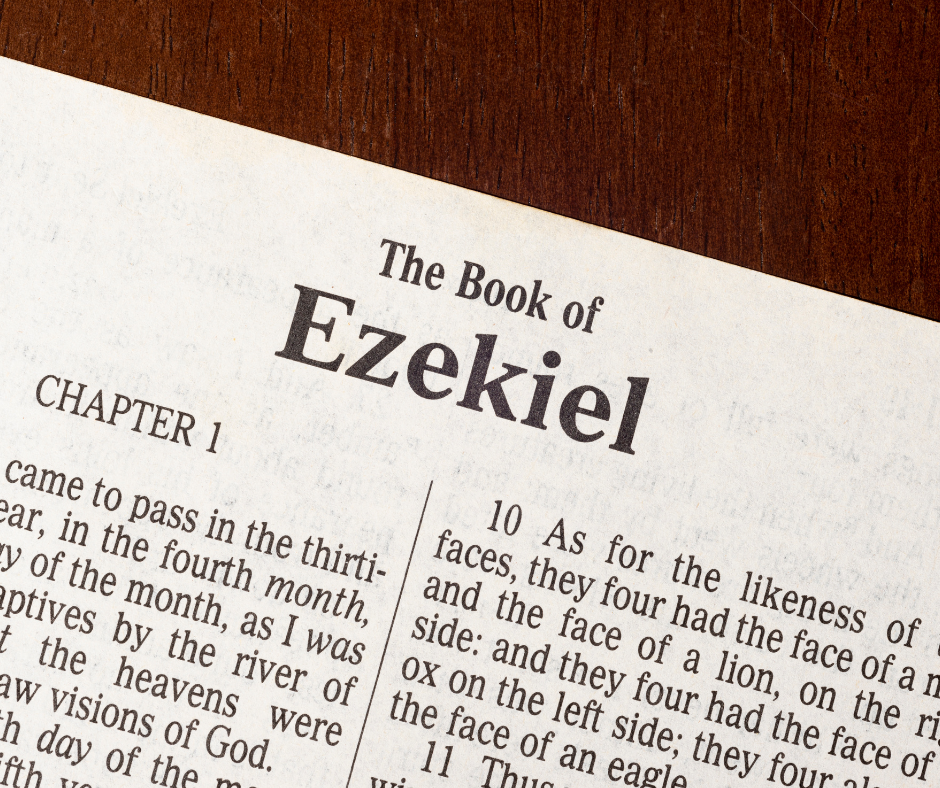
The book of Ezekiel is one of the most awe-inspiring and mysterious works in all of Scripture. It combines prophetic vision, priestly symbolism, and divine revelation in a way unlike any other book of the Bible. Through vivid imagery, symbolic actions, and overwhelming displays of God’s glory, Ezekiel declares that the Lord is sovereign over all creation, that His holiness cannot be compromised, and that His mercy will ultimately restore His people. Written during the darkest days of Israel’s exile, Ezekiel transforms despair into hope, showing that judgment is not the end of the story but the means through which God brings renewal and life.
I. Authorship and Historical Setting
Ezekiel, whose name means “God strengthens,” was both a prophet and a priest. He was among the captives taken to Babylon in 597 B.C., during the second deportation under King Jehoiachin (2 Kings 24:10–16). Five years later, in 593 B.C., God called him to his prophetic ministry while he was living by the River Chebar among the exiles (Ezekiel 1:1–3). His ministry spanned roughly twenty-two years (593–571 B.C.), overlapping with Jeremiah’s later years in Judah and preceding the post-exilic prophets like Haggai and Zechariah.
The people to whom Ezekiel ministered were disillusioned and spiritually broken. Jerusalem still stood for the first half of his ministry, but its moral decay was complete. When the city finally fell in 586 B.C., the exiles lost the last visible symbol of their national and religious identity: the Temple. In this context, Ezekiel was called to proclaim that God’s presence was not confined to Jerusalem, His holiness demanded judgment, and His glory would one day return to a renewed people and a restored temple.
II. Structure and Literary Design
The book of Ezekiel is highly structured, reflecting both prophetic inspiration and priestly order. It can be divided into three major sections that follow the theological movement from judgment to restoration:
- Judgment on Judah and Jerusalem (Chapters 1–24)
- Ezekiel’s ministry begins with an overwhelming vision of God’s glory (chapter 1) and his call to prophetic service (chapters 2–3).
- Through symbolic acts, parables, and visions, Ezekiel announces the coming destruction of Jerusalem because of idolatry, injustice, and hypocrisy.
- The prophet’s personal experiences—such as the loss of his wife (24:15–24)—symbolize God’s grief over His unfaithful people.
- Judgment on the Nations (Chapters 25–32)
- Having declared God’s judgment upon His own people, Ezekiel turns to the surrounding nations: Ammon, Moab, Edom, Philistia, Tyre, Sidon, and Egypt.
- These oracles reveal God’s universal sovereignty: He is not merely the God of Israel but the Lord over all nations.
- Restoration and Renewal (Chapters 33–48)
- With Jerusalem’s fall confirmed (chapter 33), Ezekiel’s message shifts from judgment to hope.
- God promises to shepherd His people (chapter 34), revive them by His Spirit (chapter 37), and defeat the enemies of His kingdom (chapters 38–39).
- The book concludes with a breathtaking vision of a restored temple and renewed land (chapters 40–48), symbolizing the final reconciliation between God and His people.
III. Themes and Theology
Ezekiel presents one of the most comprehensive theological portraits of God found in the Old Testament. Its major themes include:
- The Glory and Holiness of God: The opening vision of the divine chariot (1:4–28) introduces the central reality of the book: God’s glory. His presence is majestic, mobile, and sovereign. The departure of His glory from the Temple (10:18–19) symbolizes judgment; its return in chapter 43 signifies restoration.
- The Sovereignty of God: Every event—national collapse, exile, restoration—is under the control of the Lord. The repeated refrain “they shall know that I am the LORD” (used over sixty times) captures the book’s purpose: to reveal God’s absolute authority and covenant faithfulness.
- Individual Responsibility and Heart Renewal: Ezekiel emphasizes personal accountability: “The soul that sinneth, it shall die” (18:4). Yet this judgment is paired with hope: God will give His people “a new heart” and “a new spirit” (36:26).
- The Reality of Sin and the Necessity of Judgment: Idolatry, injustice, and spiritual adultery are portrayed in shocking realism (e.g., chapters 8, 16, 23). God’s judgment is severe, yet it flows from His holiness and His desire to purge sin.
- The Promise of Restoration: Out of judgment arises hope. The valley of dry bones (chapter 37) depicts Israel’s spiritual resurrection through the Spirit of God. The new Davidic shepherd (34:23–24) and the new temple (40–48) point to the coming kingdom of peace and righteousness.
IV. Symbolism and Imagery
Ezekiel is renowned for its symbolic richness and prophetic drama. The prophet’s actions—lying on his side, eating defiled food, shaving his head, packing his belongings—are divine object lessons that make visible the message of judgment and hope. The visions, from the wheels within wheels (chapter 1) to the river flowing from the temple (47:1–12), employ vivid imagery to express spiritual realities that transcend human comprehension.
These symbols are not arbitrary or mystical for their own sake. Each serves to reveal God’s holiness, the depth of human sin, and the certainty of divine redemption. The language of priestly purity, sacrificial worship, and divine presence underscores that Ezekiel’s ultimate concern is theological: the restoration of communion between God and His people.
V. Historical and Apologetic Considerations
Critics have long debated Ezekiel’s authorship and chronology due to its complex visions and temple descriptions. Yet the book’s internal coherence, precise dating (over a dozen time references), and consistent theological voice affirm its integrity as the work of a single inspired prophet. Archaeological evidence—from Babylonian records confirming the exile to parallels in ancient temple architecture—corroborates the book’s historical authenticity.
VI. Christological Significance
Ezekiel points powerfully to Jesus Christ as the ultimate fulfillment of its visions and promises.
- He is the Good Shepherd who gathers His flock and lays down His life for the sheep (Ezekiel 34; John 10:11).
- He is the new David, reigning with justice and peace (Ezekiel 37:24; Luke 1:32–33).
- He is the true Temple where God dwells among men (Ezekiel 40–48; John 2:19–21).
- He is the life-giving Spirit who breathes new life into the valley of dry bones (Ezekiel 37:14; John 20:22).
In Christ, God’s glory that once departed from the Temple returns in full: “the Word was made flesh, and dwelt among us, and we beheld His glory” (John 1:14).
VII. Practical and Devotional Application
Though written to exiles in Babylon, Ezekiel speaks profoundly to believers today. It reminds us that God’s holiness demands repentance, that His sovereignty governs all nations, and that His Spirit alone can renew lifeless hearts. It calls us to worship a God who is both transcendent and present, whose glory cannot be confined, and whose promises never fail. The prophet’s faithfulness amid hardship challenges us to stand firm in a culture that often mirrors Israel’s rebellion. Above all, Ezekiel directs us to the hope of restoration, that God is able to bring life out of death and order out of chaos.
VIII. Conclusion
The prophecy of Ezekiel is a vision of glory lost and glory restored. It begins with God’s throne moving in judgment and ends with His presence returning in peace. The book’s closing words—“The LORD is there” (48:35)—capture its message in a single phrase. The God who departed because of sin will one day dwell again among His redeemed people forever.
Through its grandeur and mystery, Ezekiel teaches that the Holy One of Israel is faithful to His covenant, sovereign in His purposes, and glorious in His grace. Judgment is never His final word; restoration is. And that restoration finds its ultimate fulfillment in Jesus Christ: the true Shepherd, the true Temple, and the eternal dwelling of God with His people.