
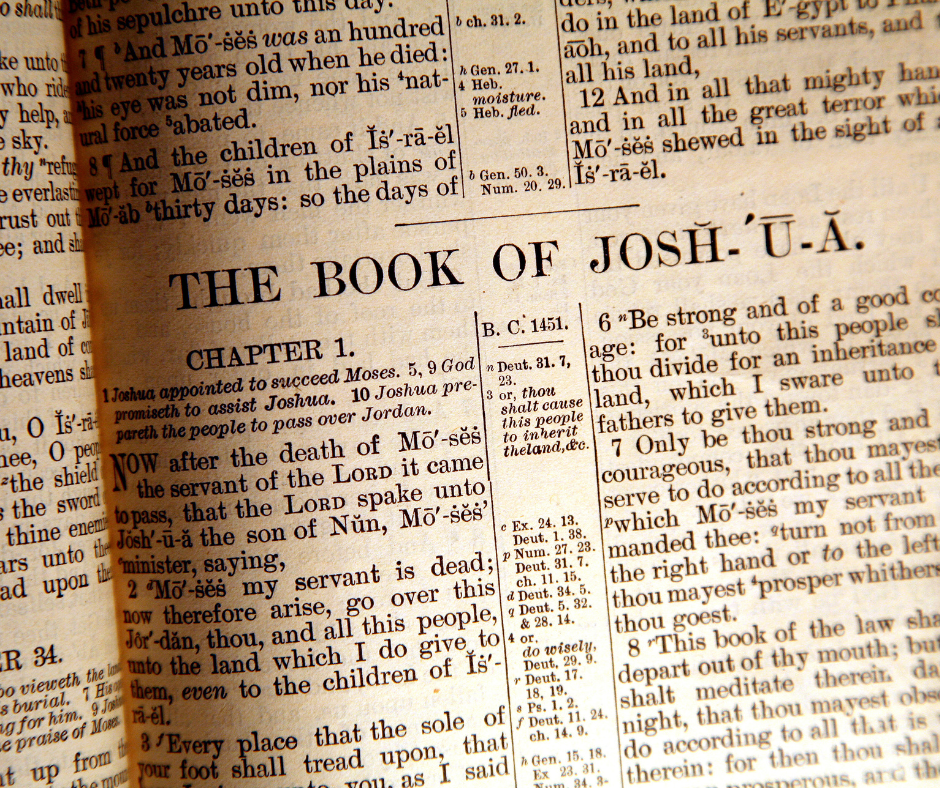
The book of Joshua stands as a monumental bridge in the biblical narrative: a transition from promise to fulfillment, and from wandering to possession. Where Deuteronomy ends with Moses viewing the Promised Land from afar, Joshua begins with the people of Israel crossing the Jordan and stepping into the inheritance sworn to Abraham, Isaac, and Jacob. It is a book of conquest and covenant, of divine faithfulness and human responsibility, of victories gained through obedience and lessons learned through failure.
At its heart, Joshua is not merely a military chronicle but a theological testimony: “There failed not ought of any good thing which the Lord had spoken unto the house of Israel; all came to pass” (Joshua 21:45). The book declares that God is faithful to His word, powerful to perform it, and righteous in judgment upon sin. Israel’s possession of the land flows not from their might but from God’s covenant mercy and sovereign power.
I. Authorship and Date
Though the book bears Joshua’s name and includes first-person references consistent with his authorship (cf. Joshua 5:1, 6:25), later editorial additions likely came from inspired scribes or prophets, possibly including Eleazar or Phinehas, to record Joshua’s death and subsequent events. The book’s internal evidence and early Hebrew tradition consistently point to Joshua, the servant of Moses and leader of Israel’s armies, as its primary author under divine inspiration. Its composition likely occurred in the late 14th or early 13th century B.C., soon after the conquest period.
II. Structure and Themes
The book divides naturally into three major sections:
- Conquest (Chapters 1–12): Israel’s military campaigns in Canaan—Jericho, Ai, the southern and northern coalitions—demonstrate that victory belongs to the Lord, not to human strategy.
- Division (Chapters. 13–22): The allotment of the land among the tribes reveals God’s meticulous faithfulness and calls His people to contentment and stewardship.
- Covenant Renewal (Chapters 23–24): Joshua’s farewell addresses summon Israel to continued faithfulness: “Choose you this day whom ye will serve… but as for me and my house, we will serve the Lord” (24:15).
Throughout these sections, recurring motifs anchor the narrative: divine promise, courageous faith, the holiness of God, and the call to complete obedience. The ark of the covenant, the memorial stones, and the altar at Shechem all testify to God’s presence and Israel’s duty to remember His works.
III. Theological Significance
From a theological standpoint, Joshua reveals the harmony of God’s grace and judgment. The fall of Jericho and the destruction of Canaanite idolatry demonstrate His holiness, while the preservation of Rahab illustrates His mercy extended to faith wherever it is found. The conquest typifies the believer’s spiritual inheritance in Christ: what was promised must still be possessed through faith and obedience. The book thus foreshadows the greater “Joshua”—Jesus Christ—who brings His people into their eternal rest (Hebrews 4:8–10).
IV. Historical and Apologetic Context
Modern critics have often questioned the historicity of the conquest, yet archaeological and textual evidence, properly understood, aligns with the biblical record. The theology of Joshua resists any interpretation that treats it as mere legend. It records actual history through which God worked redemptively to establish His covenant nation in the land promised to their fathers.
V. Practical and Devotional Relevance
For believers today, Joshua offers more than ancient warfare. It offers a portrait of victorious faith. The same God who parted the Jordan and toppled Jericho’s walls still calls His people to trust Him against overwhelming odds. The book teaches that faith must act, obedience must endure, and holiness must prevail if we are to live in the fullness of God’s promises.
In sum, Joshua is a book of transition, triumph, and testimony. It proclaims that God’s promises never fail, His commands are never optional, and His presence is never absent. As we study its pages, we are invited to cross our own “Jordan,” to trust the living God, and to take hold of all that He has promised in Christ, the true and greater Joshua who leads His people into everlasting rest and victory.