
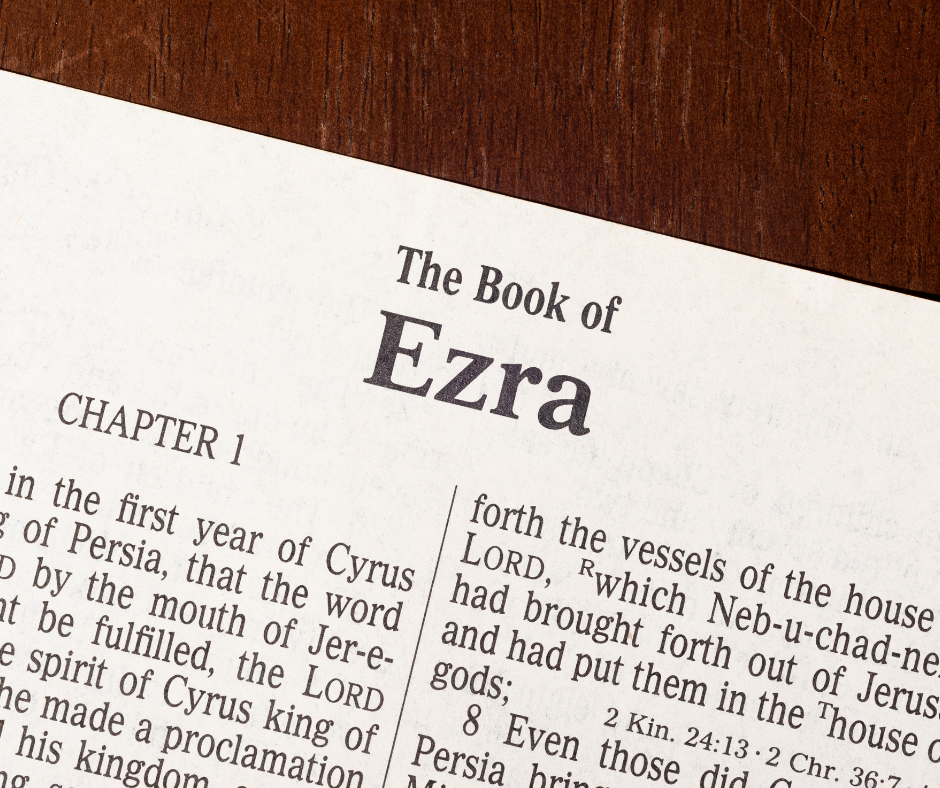
The book of Ezra opens a new chapter in Israel’s sacred history—the story of restoration after ruin. Where 2 Chronicles ends with exile and a foreign king’s decree, Ezra begins with that very decree being fulfilled. God moves the heart of Cyrus, king of Persia, to allow the Jews to return to Jerusalem and rebuild the house of the Lord. Thus, the book stands as a testimony that divine promises do not perish in exile. Even when God’s people are scattered and humbled, His covenant purposes march on. Ezra is a book about renewal: the restoration of worship, the reformation of life, and the faithfulness of God who keeps His word across generations.
I. Historical Setting
The events of Ezra span roughly a century, from 538 B.C. (the decree of Cyrus) to about 458 B.C. (Ezra’s mission under Artaxerxes). The book divides naturally into two major returns: the first led by Zerubbabel (chapters 1–6), and the second led by Ezra (chapters 7–10). Between these two returns lies a gap of nearly sixty years, during which the events of Esther occur in Persia. The people of Judah, once captives under Babylon, now live under Persian rule, a vast empire that permitted local autonomy and the restoration of temples as acts of political and religious goodwill. Yet the return to Jerusalem was not merely a political act; it was a divine calling. God was rebuilding not just walls and altars, but a people devoted to His covenant.
II. Authorship and Date
Jewish tradition identifies Ezra the scribe and priest as the author of both Ezra and Nehemiah, as well as the final compiler of 1–2 Chronicles. The literary and theological unity among these books supports this view. Ezra likely wrote during the late fifth century B.C., combining personal memoirs (“I, Ezra…”) with official Persian documents and genealogical records. His writing reflects a precise knowledge of Mosaic law, Levitical practice, and the Persian administration, confirming his dual role as priest and historian.
III. Structure and Content
Ezra unfolds in two major movements:
- The First Return and Temple Reconstruction (Chapters 1–6)
- The Decree of Cyrus (1:1–11): God stirs the Persian king to commission the rebuilding of the Temple, fulfilling Jeremiah’s prophecy (Jeremiah 25:11–12; 29:10).
- The Return Under Zerubbabel (2:1–70): Detailed genealogies affirm the continuity of God’s covenant people.
- Rebuilding the Altar and Laying the Temple Foundation (3:1–13): Worship is restored even before the walls are raised.
- Opposition and Delay (4:1–24): The enemies of Judah hinder progress, yet God’s prophets Haggai and Zechariah reignite the work.
- Completion and Dedication (5:1–6:22): The Temple is finished and dedicated with joy, marking a new era of worship in Jerusalem.
- The Second Return and Spiritual Reformation (Chapters 7–10)
- Ezra’s Arrival and Mission (7:1–28): Ezra is commissioned by Artaxerxes to teach the Law and establish righteous order among the people.
- Ezra’s Prayer and Reform (8:1–10:44): Upon discovering widespread intermarriage with pagan nations, Ezra leads the people in confession and covenant renewal, restoring the purity of worship and obedience to the Law.
IV. Themes and Theology
At its heart, Ezra is a book about God’s faithfulness to restore what sin and judgment have destroyed. Several key theological themes dominate the narrative:
- The Sovereignty of God: The book opens with the phrase “the LORD stirred up the spirit of Cyrus king of Persia” (1:1). History’s great empires move at the command of the God who rules over kings and nations.
- The Continuity of the Covenant People: Genealogies and temple records affirm that God’s covenant line endures despite exile. The remnant is not a new people but the continuation of Abraham’s seed.
- The Centrality of Worship and the Word: The rebuilding of the Temple and the public reading of the Law (cf. Nehemiah 8) signify that true restoration begins with renewed worship and obedience to Scripture.
- The Necessity of Holiness: Ezra’s grief over mixed marriages underscores the danger of compromise and the call to moral and spiritual separation unto God.
- The Power of Repentance and Grace: Even in sin, God’s mercy invites confession and renewal. The book closes not in despair but in repentance, signaling the ongoing work of grace among His people.
V. Historical and Apologetic Considerations
Ezra has been confirmed in its historical reliability through archaeological discoveries, including the Cyrus Cylinder, which records Cyrus’s policy of repatriating exiled peoples and restoring their temples. The administrative titles, Persian edicts, and political details correspond accurately to fifth-century realities. Yet Ezra is far more than a historical chronicle. It is theology in motion, showing how God’s promises shape the course of nations and the hearts of His people.
VI. Christological Significance
Ezra points forward to Christ, the true Restorer of God’s dwelling among men. The rebuilt Temple anticipates the greater temple of Christ’s body (John 2:19–21) and the indwelling of the Spirit in the Church (1 Corinthians 3:16). As Ezra reestablished the covenant community through the Word, so Christ establishes His people by the new covenant written on their hearts. The name “Ezra,” meaning “help,” finds its ultimate fulfillment in Jesus, the One who restores worship in spirit and truth.
VII. Practical and Devotional Application
For believers today, Ezra speaks to every season of renewal. It reminds us that revival begins not with human effort but with hearts stirred by God. It challenges us to rebuild the “temples” of our own lives—homes, churches, and communities—on the foundation of obedience and holiness. It also offers hope that no ruin is too great for God to restore. Where there is confession and faithfulness to His Word, God delights to bring beauty from ashes.
VIII. Conclusion
In summary, Ezra is a book of restoration, reformation, and relentless grace. It begins with a Persian decree and ends with a people humbled before their God. From start to finish, it proclaims that the Lord of heaven keeps covenant and shows mercy to those who return to Him. For the exiles of Judah and for the exiles of every age, Ezra testifies that God still rebuilds what sin has torn down, and that every true revival begins when His Word and worship are restored to the center of His people’s hearts.