
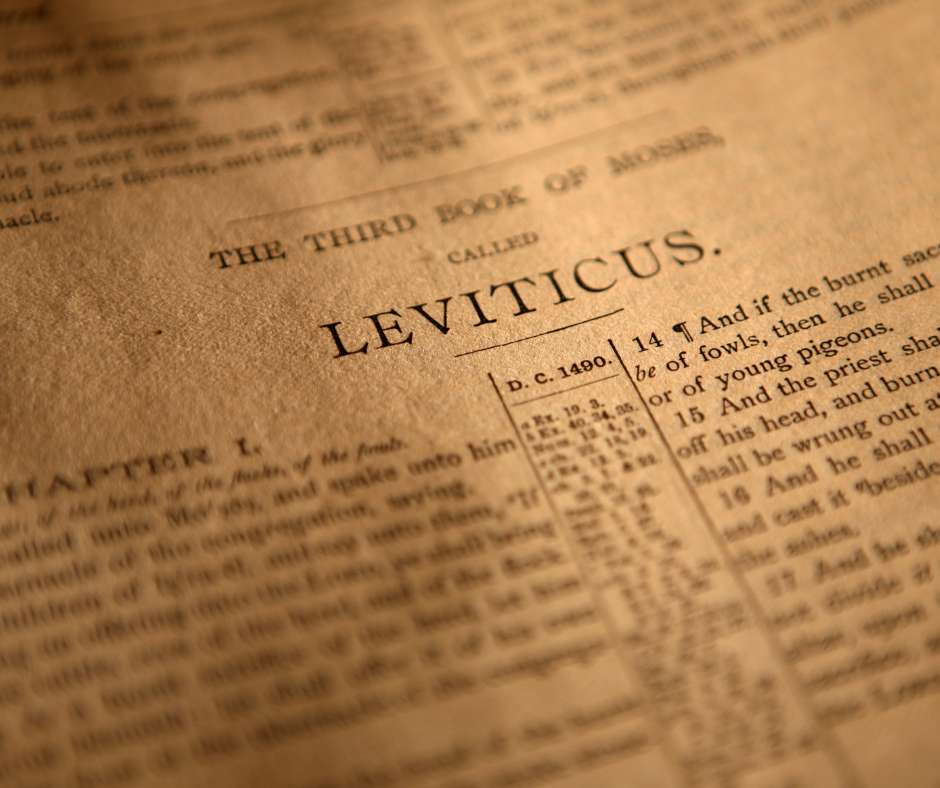
The book of Leviticus stands at the very heart of the Pentateuch, both literally and theologically. If Genesis reveals the beginning of all things, and Exodus records God’s redemption of His people from bondage, then Leviticus explains how the redeemed may live in fellowship with a holy God. It is a book that sets forth God’s requirements for holiness, His provision for atonement, and His call for His people to be distinct from the nations.
Leviticus may at first seem to modern readers like a collection of ancient rituals and laws, yet its message is timeless: God is holy, and those who belong to Him must approach Him on His terms, not their own.
“Ye shall be holy: for I the LORD your God am holy” (Leviticus 19:2).
I. Authorship and Setting
Like the other books of the Pentateuch, Moses is the inspired author of Leviticus. The internal evidence repeatedly states that “the LORD spake unto Moses” (Leviticus 1:1; 4:1; 6:1, etc.), showing that the laws and ordinances came directly from God.
The events of Leviticus occur at Mount Sinai, following the completion of the tabernacle at the end of Exodus. God’s glory had filled the tabernacle (Exodus 40:34–35), but now He instructs His people how they may worship Him and maintain fellowship with Him in purity. The book therefore continues seamlessly from Exodus, revealing not movement but communion, the redeemed now learning to walk with their Redeemer.
II. Purpose and Message
The purpose of Leviticus is twofold:
- To reveal the holiness of God.
Every offering, law, and ritual emphasizes that the God of Israel is pure, perfect, and separate from all uncleanness and sin. - To teach the way of access to God through sacrifice and obedience.
Sinful man can approach a holy God only by means of atonement: by the shedding of blood and the ministry of a mediator.
These two truths form the foundation for all biblical theology. Leviticus is, in essence, the Gospel in shadow, the picture book of redemption that finds its ultimate fulfillment in the person and work of Jesus Christ, the true High Priest and final sacrifice.
“For the life of the flesh is in the blood: and I have given it to you upon the altar to make an atonement for your souls: for it is the blood that maketh an atonement for the soul” (Leviticus 17:11).
III. Structure and Outline
Leviticus can be divided into two major sections:
- The Way to God (Chapters 1–16): Access through Sacrifice and Atonement
- The Five Offerings: Burnt, Meal, Peace, Sin, and Trespass (Chapters 1–7)
- The Consecration of the Priests (Chapters 8–10)
- Laws of Purity (Chapters 11–15)
- The Day of Atonement (Chapter 16): the central chapter, portraying reconciliation between God and His people through the shedding of blood.
- The Walk with God (Chapters 17–27): Fellowship through Holiness and Obedience
- The Sanctity of Blood and Moral Purity (Chapters 17–20)
- The Holiness of the Priesthood (Chapters 21–22)
- The Sacred Feasts and Seasons (Chapters 23–25)
- Blessings for Obedience and Curses for Disobedience (Chapter 26)
- The Laws of Vows and Dedication (Chapter 27)
IV. Major Themes
1. The Holiness of God
Leviticus reveals the absolute moral and spiritual perfection of God. Nothing unclean may come into His presence. Every regulation of the law reflects His unchanging holiness and the separation between the sacred and the profane.
2. The Necessity of Atonement
The sacrificial system teaches that sin brings death and that atonement requires the substitutionary death of an innocent victim. This foreshadows the ultimate sacrifice of Christ, “who his own self bare our sins in his own body on the tree” (1 Peter 2:24).
3. The Priesthood and Mediation
The priests served as mediators between God and Israel. Their ministry points forward to the priesthood of Christ, our great High Priest, “who ever liveth to make intercession” (Hebrews 7:25).
4. The Call to Holiness
Leviticus repeatedly calls God’s people to reflect His holiness in every area of life: worship, family, morality, and community. Holiness is not optional but the natural result of belonging to a holy God.
5. The Presence of God Among His People
The tabernacle was the visible sign that God dwelt in the midst of Israel. Leviticus teaches how His presence could be maintained without consuming them in judgment. This anticipates the indwelling presence of the Holy Spirit in believers and the promise of God dwelling eternally with His redeemed people.
V. Theological and Practical Significance
Though its sacrifices and ceremonies have been fulfilled in Christ, Leviticus remains vital for understanding the Gospel. It teaches that God’s holiness demands satisfaction, that sin cannot be ignored, and that reconciliation requires the shedding of blood. The book points us to the cross, where every offering and priestly act finds its fulfillment.
For the believer, Leviticus calls us to live as a holy people in an unholy world. Peter directly quotes it when he writes: “Because it is written, Be ye holy; for I am holy” (1 Peter 1:16).
Thus, Leviticus is not merely an ancient code. It is the divine pattern for a redeemed people to live in covenant fellowship with their Redeemer.
VI. Summary
Leviticus is the book of sanctification. It teaches that those whom God redeems, He also calls to be holy. It bridges redemption and relationship, showing that salvation is not only deliverance from sin’s bondage (Exodus) but also consecration to God’s service and presence.
In its sacrifices, we see the shadow of the cross; in its priesthood, the picture of Christ; in its laws of purity, the call to holiness; and in its festivals, the joy of fellowship with God.
The God who redeemed Israel from Egypt now dwells among His people and teaches them to walk in holiness. That same God calls His church today to holiness through the blood of Jesus Christ, our perfect sacrifice and eternal High Priest.
The Way to God (Chapters 1-16)
The Walk with God (Chapters 17-27)
The Sanctity of Blood and Moral Purity (Chapters 17-20)
Holiness in Worship (Chapter 17)
Prohibition of Sacrifices Outside the Tabernacle (17:1–9)
Prohibition Against Eating Blood (17:10–14)
Regulations Concerning Dead Animals (17:15–16)
Holiness in Relationships (Chapter 18)
Prohibition of Pagan Imitation (18:1–5)
Laws Against Incest (18:6–18)
Prohibitions of Sexual Perversion (18:19–23)
Warning of the Land’s Defilement (18:24–30)
Holiness in Daily Life (Chapter 19)
The Call to Holiness (19:1–2)
Reverence for God and Family (19:3–4)
Social and Ethical Holiness (19:9–18)
Ceremonial and Cultural Separation (19:19–31)
Symbolic Distinctions in Nature and Life (19:19)
Sexual Purity and the Law of Atonement (19:20-22)
Reverence for God in the Fruit of the Land (19:23-25)
Rejection of Pagan Customs (19:26-28)
Moral and Spiritual Purity in Family and Worship (19:29-31)
Honor, Justice, and Integrity (19:32–37)
Holiness in Judgment (Chapter 20)
Penalties for Idolatry and Molech Worship (20:1–5)
Condemnation of Spiritism and Witchcraft (20:6)
The Call for Sanctification (20:7-8)
Judgments for Sexual Sins (20:9–21)
A Call to Separation and Obedience (20:22–26)
Final Admonition: Purity and the Priesthood (20:27)
Holiness in the Priesthood (Chapters 21-22)
Holiness of Priests (Chapter 21)
Holiness in Offerings (Chapter 22)
Sacred Times and Holy Seasons (Leviticus 23)
The Lamp, the Bread, and Blasphemy (Leviticus 24)
The Lampstand and Showbread (24:1-9)
The Blasphemer and the Law of Retribution (24:10-23)
The Sabbath Year and the Year of Jubilee (Leviticus 25)
The Sabbatical Year (25:1-7)
The Sabbatical Year (25:8-55)
Introduction to the Jubilee (25:8–12)
The Timing of the Jubilee (25:8–9)
Leviticus 25:8
Leviticus 25:9
The Proclamation of Liberty (25:10)
The Holy Nature of the Jubilee Year (25:11–12)
Leviticus 25:11
Leviticus 25:12
The Redemption of Property (25:13–28)
Return of Inheritances (25:13)
Leviticus 25:13
Fair Dealing in Land Transactions (25:14–17)
God’s Promise of Provision (25:18–22)
The Theological Foundation: Divine Ownership (25:23)
The Right of Redemption (25:24–28)
The Redemption of Houses (25:29–34)
Houses in Walled Cities (25:29–30)
Houses in Villages and Levitical Cities (25:31–34)
The Care of the Poor and the Law of Brotherhood (25:35–38)
Duty Toward the Impoverished Brother (25:35–36)
Divine Motivation (25:37–38)
The Law of Servitude and Redemption (25:39–55)
The Case of the Poor Israelite (25:39–43)
Servants from Among the Nations (25:44–46)
Redemption of Israelite Servants (25:47–52)
Theological Summary (25:53–55)
Covenant Blessings and Curses (Leviticus 26)
Blessings for Obedience (26:1-13)
The Foundation of Covenant Fidelity (26:1)
The Second Command of Covenant Loyalty (26:2)
he Covenant Blessings of Obedience (26:3–13)
The Condition of Blessing (26:3)
Material and Agricultural Blessings (26:4–5)
Security and Peace (26:6–8)
Fruitfulness and Abundance (26:9–10)
The Divine Presence (26:11–12)
The Redemption Motive (26:13)
Curses for Disobedience (26:14-39)
Promise of Restoration (26:40-46)
Dedication and Vows (Leviticus 27)