
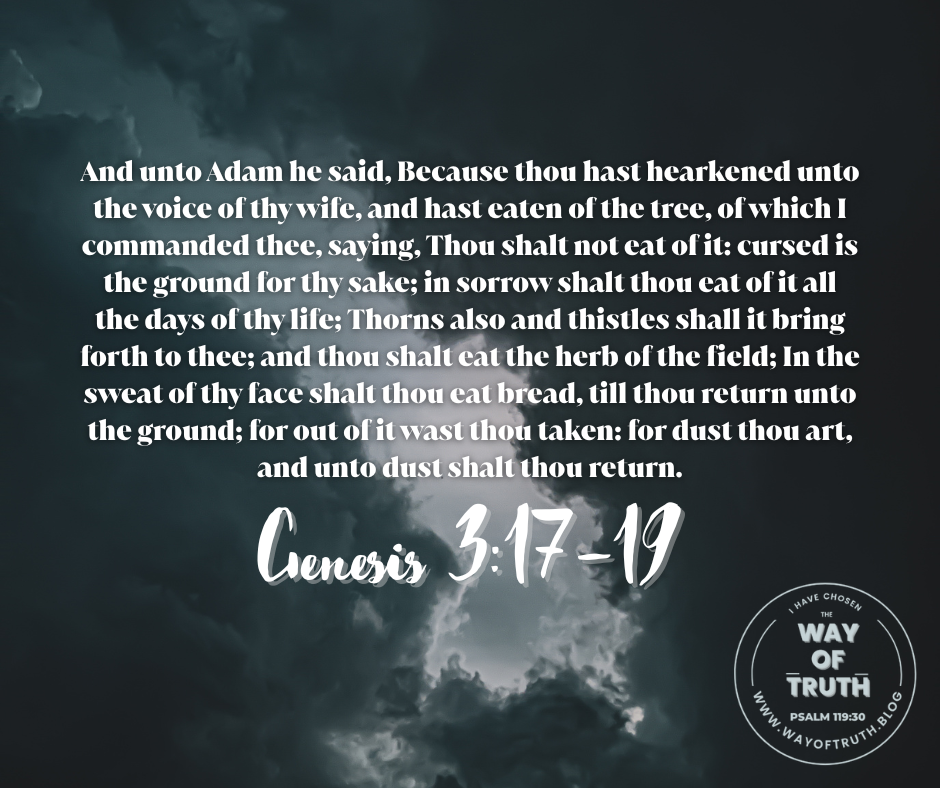
- I. The Voice of Judgment
- II. Reading the Verdict Line by Line
- III. The Curse, the Ground, and the God Who Judges Justly
- IV. When the Ground Speaks Against Its Critics
- A. “Cursed Is the Ground”: Against the Myth Theory
- B. “In Sorrow Shalt Thou Eat”: Against Naturalistic Reductionism
- C. “Dust Thou Art”: Responding to Moral Objections Against Death
- D. “Thorns and Thistles”: Responding to Environmental or Ecological Misreadings
- E. “Unto Dust Shalt Thou Return”: Against Cultic or Esoteric Distortions
- F. “Because Thou Hast… ”: Addressing the Skeptic’s Question of Responsibility
- V. Learning to Live by Sweat and by Grace
- A. Embracing Work as a Sacred Calling Under the Shadow of the Curse
- B. Cultivating Contentment and Gospel Hope Amid Life’s Hardships
- C. Facing Mortality with Sobriety and Gospel Confidence
- D. The Church as a Community Living Between the Curse and the New Creation
- E. The Call to Evangelistic Witness in a Groaning World
- VI. From Dust to Life
I. The Voice of Judgment
Genesis 3:17–19 brings the divine address to its final and most extensive movement. After confronting the serpent and the woman in the same order in which the fall unfolded, the LORD God now turns to the man. The narrative has progressed from deception (3:1–5), to transgression (3:6), to exposure (3:7–10), and finally to judgment (3:14–19). This section completes the judicial sequence begun in verse 14, forming a unified courtroom scene that defines humanity’s life outside Eden.
The focus of God’s words to Adam reflects his unique responsibility in the narrative. Whereas the serpent is judged for instigating deception and the woman for her role within that temptation, the man is addressed as the one who received the original command (2:16–17) and as the covenant representative whose disobedience affects the entire human race. The form of the judgment mirrors the form of the transgression: Adam listened to what he should not have heeded, ate what he should not have consumed, and now will struggle in the very ground from which he was taken.
Historically and culturally, the text corresponds to the ancient Near Eastern understanding of land, labor, and survival. Agricultural labor was the foundation of ancient life, and the fertility of the ground determined the wellbeing of families and communities. The tension between human effort and the resistance of the earth is a recognizable theme in ancient agrarian societies, attested in early Mesopotamian writings that lament the hardship of tilling soil and the unpredictability of crops. Genesis 3:17–19 provides the theological explanation for this universal experience by locating it within humanity’s earliest history and tying it to the broken relationship between humanity and the land.
Literarily, this passage serves as the conclusion to the Eden narrative. The language of “the ground” echoes Genesis 2:4-7, where Adam is formed from the dust, and anticipates the expulsion from the garden in 3:23–24. The verse set introduces themes of toil, frustration, and mortality that will shape the stories of Cain and Abel, Noah, and the patriarchs that follow. The structure of the judgment—beginning with the cause (“because thou hast…”) and ending with the consequence (“unto dust shalt thou return”)—is deliberate and formal, reinforcing the solemnity of God’s verdict.
In the broader sweep of Genesis, these verses mark the transition from humanity’s life in Eden to life in a world altered by disobedience. They explain the daily hardship that characterizes human existence, the struggle for provision, and the inevitability of death. Genesis 3:17–19 thus functions as a turning point in the book: from the original harmony of creation to the new reality of labor, frustration, and mortality that will define the human experience outside the garden.
II. Reading the Verdict Line by Line
Genesis 3:17–19 contains the longest and most detailed judgment speech in the chapter. Each clause is deliberate, and each phrase reverses some aspect of life in Eden.
A. “Because thou hast hearkened unto the voice of thy wife…”
The judgment begins with a causal statement: “Because thou hast hearkened unto the voice of thy wife, and hast eaten of the tree…” Adam’s sin is framed not simply as eating the forbidden fruit, but as listening to a voice other than God’s command (2:16–17). The issue is not that he listened to his wife but that he allowed her voice to override the divine word. In Hebrew narrative, “hearkening” to the wrong voice often signals covenant disloyalty (e.g., Deuteronomy 13:4; Jeremiah 7:24).
The phrase “the tree, of which I commanded thee, saying…” recalls the exact language of the earlier command. The LORD God repeats the essential elements of the prohibition, emphasizing Adam’s conscious disregard of a known command. The repetition serves a judicial function: the judge restates the law before pronouncing the sentence.
The sentence continues: “cursed is the ground for thy sake.” Unlike the serpent (3:14), Adam himself is not cursed; instead, the ground is cursed. This distinction is significant. Adam’s relationship to the soil is foundational to his identity, as he was formed from the “dust of the ground.” Now the substance from which he was formed and which he was commissioned to cultivate becomes resistant. The phrase “for thy sake” can mean “because of you” or “on account of you,” indicating causation rather than benefit. Adam’s disobedience alters the environment in which he will labor.
The concluding line of verse 17 states: “in sorrow shalt thou eat of it all the days of thy life.” The “sorrow” echoes the earlier word to the woman (3:16), linking the judgments through shared vocabulary while applying it to different spheres: childbearing for the woman, labor for the man. The eating that once symbolized abundance (2:16) now becomes a daily reminder of hardship. The phrase “all the days of thy life” extends the consequence indefinitely, framing it as a permanent condition of life outside Eden.
B. “Thorns also and thistles shall it bring forth to thee…”
Verse 18 elaborates on the nature of the ground’s resistance. “Thorns also and thistles shall it bring forth to thee.” The Hebrew verbs are in an imperfect form, indicating continual or repeated action. The ground will not simply produce undesirable plants once; it will do so habitually. “Thorns” and “thistles” appear elsewhere in Scripture as symbols of desolation, judgment, or barrenness (e.g., Isaiah 5:6; Hosea 10:8). Their presence reflects a reversal of Edenic order where only fruitful and pleasant vegetation existed (2:9).
The phrase “and thou shalt eat the herb of the field” marks a significant shift. Prior to the fall, Adam’s food consisted of trees planted by God (2:9, 16). Now he is relegated to eating “herbs,” which require cultivation and are associated with human labor rather than divine planting. This does not yet introduce post-flood dietary changes (9:3), but it does restrict the variety and ease of Adam’s provision. The vocabulary shift—from trees to field vegetation—reinforces the movement from divine generosity to human exertion.
Archaeological evidence from ancient Mesopotamia illuminates the significance of this shift. Early agricultural societies were acutely aware of the difficulty of controlling thorns and weeds, which competed with barley and einkorn wheat, the primary crops in ancient cultivation. Texts from Sumer and Akkad speak of “the cursed plants that choke the fields.” Genesis 3:18’s specific reference to thorns and thistles resonates with the lived reality of early agrarian life, grounding the text in recognizable historical experience while providing theological interpretation behind it.
C. “In the sweat of thy face shalt thou eat bread…”
The final verse intensifies the consequence: “In the sweat of thy face shalt thou eat bread.” The phrase “sweat of thy face” combines physical exertion with personal identity, suggesting toil that affects the whole person. “Bread” functions here as a general term for food, not necessarily baked bread, and points to the basic necessities of life. Survival will require strain; sustenance will come only through effort.
The verse concludes with a climactic reminder of mortality: “till thou return unto the ground; for out of it wast thou taken: for dust thou art, and unto dust shalt thou return.” The repetition of “ground” and “dust” draws the narrative back to Genesis 2:7, completing a literary arc. Adam’s origin and destiny are linked by God’s decree. Mortality was implicit in the initial command (2:17), but here it becomes explicit and unavoidable. Death is not described as annihilation but as a reversal of formation, returning the body to its material beginning.
The structure of verse 19 is chiastic:
- A: By sweat you will eat
- B: Until you return to the ground
- B’: Out of the ground you were taken
- A’: Dust you are, and to dust you will return
This pattern reinforces the inevitability of Adam’s end and the symmetry between his formation and dissolution. The verse sets the theological and narrative stage for later biblical reflections on human brevity (Psalm 90:3; Ecclesiastes 3:20) and anticipates future doctrines concerning resurrection and renewed creation.
III. The Curse, the Ground, and the God Who Judges Justly
Genesis 3:17–19 is one of the most theologically loaded passages in the early chapters of Scripture. As God pronounces judgment on Adam, He unveils truths that will shape the doctrines of labor, suffering, creation, anthropology, and death throughout the Bible. This section of the narrative reveals not only the consequences of disobedience but the theological contours of human life outside Eden. Every phrase carries moral and doctrinal weight. What begins as divine judgment becomes the groundwork for understanding humanity’s relationship to work, the environment, physical decay, and ultimate mortality.
A. Toil as the Signature of a Fallen World
Before the fall, work was a gift. Adam was placed in the garden “to dress it and to keep it” (Genesis 2:15). Labor was meaningful, joyful, and unburdened by frustration. Genesis 3:17–19 changes the texture of work, not its fundamental goodness. Work remains part of human identity, but it becomes marred by difficulty. The ground resists human effort, productivity requires struggle, and survival demands exertion.
Theologically, this teaches that the world is no longer a frictionless environment; it pushes back against human activity. The curse affects not only Adam’s experience of work but the created order itself. Human labor becomes a daily reminder of the disorder introduced by sin and the disruption of harmony between humanity and creation. Later Scripture reinforces this reality: Ecclesiastes mourns the frustration of labor; Paul describes creation as groaning under futility; Proverbs acknowledges the hardship of earning bread.
This passage forms the biblical doctrine of labor under the fall: work is valuable, but toil is inevitable; effort is dignified, but frustration is normal; provision comes through sweat, not ease.
B. When the Ground Groans
The phrase “cursed is the ground for thy sake” expands the consequences of sin beyond humanity to the created order. The ground, from which Adam was formed, now bears the imprint of judgment. This cosmic dimension of the curse becomes a key theme in Scripture: creation itself suffers because of humanity’s rebellion.
Romans 8:20 echoes this truth, teaching that creation was “made subject to vanity” because of human sin. Thorns and thistles become physical symbols of spiritual disorder. Natural difficulty—crop failure, drought, relentless weeds, environmental resistance—is not arbitrary but tied to humanity’s role as steward. When the steward falls, the stewardship collapses.
This teaches a foundational doctrine: sin is not merely personal; it is cosmic. The world’s brokenness reflects humanity’s fall. Disease, decay, and environmental struggle are not random but theological consequences of disobedience.
C. Dust Thou Art
Genesis 3:19 provides the Bible’s earliest explicit statement about human death: “unto dust shalt thou return.” Mortality is not portrayed as the natural cycle of life, as ancient pagan literature often claimed, but as the judicial result of sin. This doctrine reappears throughout Scripture—Psalm 90, Ecclesiastes 12, Job 34—each affirming that human physical death reflects alienation from the Creator who formed the body from the dust.
Anthropologically, this passage establishes that humans are simultaneously noble and frail: made in God’s image, yet materially transient. The language of dust communicates humility, dependence, and finitude. Mortality thus becomes both a theological reality and a moral warning. Humanity carries within its very physicality a reminder of divine judgment and the consequences of rebellion.
D. From Harmony to Hostility
Before the fall, Adam’s relationship with the ground was one of harmony: he tended the garden, and the garden responded fruitfully. After the fall, that relationship becomes strained. The man will work the ground, but the ground will resist him. This theological shift explains the biblical portrayal of land as both blessing and challenge throughout Israel’s story. The Promised Land is fertile, yet even it requires obedience for flourishing.
This passage also helps explain why Scripture often describes land restoration and agricultural abundance as signs of divine favor. Blessing reconnects humanity with its environment; judgment disrupts that connection.
IV. When the Ground Speaks Against Its Critics
Genesis 3:17–19 has received sustained criticism from skeptics, naturalists, and various modern ideological movements. Some dismiss it as ancient myth; others view it as unjust or incompatible with contemporary views of nature, work, or human identity. Yet when examined carefully, the text displays literary coherence, moral clarity, and theological insight far surpassing anything in the surrounding ancient world.
A. “Cursed Is the Ground”: Against the Myth Theory
Some scholars argue that Genesis 3 borrows from ancient Near Eastern myths explaining why agriculture is difficult or why humans die. However, the contrasts between Genesis and its cultural environment are profound.
Ancient myths often portray the gods as irritated with humanity’s noise, jealous of human progress, or attempting to limit human flourishing. In texts like the Atrahasis Epic, humanity is created to relieve the gods of labor, and agricultural hardship arises from divine annoyance rather than moral consequence. Death is explained as the gods’ strategy for population control. None of this resembles the theological sophistication of Genesis.
Genesis grounds agricultural difficulty not in divine caprice but in the moral fabric of creation. Humanity’s rebellion disrupts the harmony between people and land. The curse is judicial, not arbitrary; it flows from personal disobedience rather than the whims of volatile deities. There is one God, not a conflicted pantheon; justice, not jealousy, governs His actions. In short, Genesis subverts ancient mythology rather than borrowing from it.
B. “In Sorrow Shalt Thou Eat”: Against Naturalistic Reductionism
Naturalists often argue that Genesis 3:17–19 represents primitive attempts to explain environmental hardship. From this perspective, ancient people observed weeds, thorns, hard soil, and fatal illnesses, then created a story to account for them. But this interpretation does violence to the text’s character.
Genesis 3 is not explaining how thorns arose; it is explaining why work now bears existential strain. Weeds are not a biological puzzle solved by myth but a theological sign interpreted by revelation. The narrative is judicial, not etiological.
Moreover, the structure of the passage—legal pronouncement, moral rationale, and anthropological conclusion—matches covenantal judgment rather than folkloric explanation. Its canonical use throughout Scripture confirms this. The prophets appeal to the curse motif to explain Israel’s agricultural failures in times of covenant unfaithfulness. Paul interprets the futility of creation as the outworking of Adam’s sin, not an ancient misunderstanding of ecology.
Genesis does not compete with scientific explanation; it interprets the world science describes.
C. “Dust Thou Art”: Responding to Moral Objections Against Death
Some critics object to the idea that God “punishes” Adam and all humanity with mortality, viewing death as a natural or morally neutral aspect of life. But Genesis 3:19 presents death not as a biological necessity but as a theological reality tied to the human relationship with God.
Death in Genesis is fundamentally relational: separation from the God who is the source of life. It is also judicial: God had warned that disobedience would bring death long before Adam ever sinned. The passage’s moral logic is consistent and transparent; Adam chose independence from God, and death is the inevitable outworking of that separation. Far from being unjust, the judgment makes moral sense within the narrative world Scripture presents.
Furthermore, the portrayal of death as a return to dust underscores the creaturely dependence of humanity. The problem, according to the text, is not that God imposes mortality, but that humans presume immortality apart from Him. Death is not divine cruelty. It is divine truthfulness.
D. “Thorns and Thistles”: Responding to Environmental or Ecological Misreadings
Modern ecological movements sometimes reinterpret Genesis 3:17–19 as evidence of human alienation from nature in a purely sociological or psychological sense. Others argue that the text sanctions the idea that the natural world is inherently hostile and therefore something humans should exploit aggressively.
Neither reading does justice to the passage.
The curse on the ground does not teach that nature is evil or that it exists for careless domination. Rather, the text explains that human stewardship has been deeply complicated by sin. Work becomes more difficult, not destructive; the land resists cultivation, but it remains fundamentally good. Even after the fall, the earth continues to supply food, beauty, order, and provision.
To claim that Genesis justifies ecological abuse misunderstands both creation theology (Genesis 1–2) and the nature of the curse. Adam’s task remains one of cultivation, care, and responsible dominion, made harder by sin, but never removed.
The problem is not the earth; the problem is human rebellion.
E. “Unto Dust Shalt Thou Return”: Against Cultic or Esoteric Distortions
Throughout history, some cults and mystical groups have twisted Genesis 3:17–19 into support for fatalistic doctrines, reincarnation theories, or Gnostic contempt for the physical world. Others reinterpret the text allegorically, claiming the “ground” represents lower consciousness or that “dust” symbolizes an inferior spiritual state from which only secret knowledge can liberate a person.
Such readings collapse when confronted with the plain meaning of the text.
The ground in Genesis is literal soil. The curse affects actual agriculture. Sweat, bread, thorns, and mortality are concrete realities tied to Adam’s historical existence. Scripture consistently affirms the goodness of the created order and the dignity of the human body. The problem is not physicality but sin.
Genesis 3:17–19 cannot be spiritualized without severing it from the narrative arc of creation, fall, and redemption. To do so is to abandon the authority of Scripture and replace it with human speculation.
F. “Because Thou Hast… ”: Addressing the Skeptic’s Question of Responsibility
A final objection centers on Adam’s responsibility: some argue that the judgment is unduly harsh or that one man’s sin should not affect all humanity. But Genesis 3 presents Adam not merely as an individual but as the covenant representative of the human race. His actions have consequences for those he represents, a principle found throughout biblical covenants (e.g., Abraham, Moses, David).
Moreover, God’s judgment corresponds exactly to Adam’s disobedience. Adam misused the ground’s fruit; the ground now resists him. Adam reached for autonomy; he now experiences finitude. Adam ignored the divine voice; he now hears the sentence of divine justice. The punishment fits the offense.
The narrative’s moral coherence stands firm against such objections.
V. Learning to Live by Sweat and by Grace
Genesis 3:17–19 is not merely a record of judgment; it is a mirror held up to every human life. These verses explain why our days feel heavy, why our work exhausts us, why the world resists our efforts, and why death still casts a shadow over every generation. Yet they also reveal God’s mercy: His refusal to abandon humanity to despair and His intention to transform toil into a theater of sanctification.
A. Embracing Work as a Sacred Calling Under the Shadow of the Curse
Work is older than the fall. Adam cultivated Eden before sin entered the world. Genesis 3:17–19 does not punish Adam with work; it transforms the experience of work. The land that once cooperated now resists; the task that once brought delight now demands sweat; the soil that once yielded abundance now sprouts thorns. This is the world we inhabit.
For believers, this means that difficulty in work is not a sign of divine displeasure but a normal condition of a fallen world. Whether a person is laboring at a desk, in a field, in a kitchen, on a job site, or in a ministry, the struggle itself is not evidence of failure but a daily reminder that we are not yet home.
The Christian response is not cynicism or surrender but perseverance grounded in gospel hope. Because the curse is not God’s final word, work becomes an arena where patience is learned, character is cultivated, and God’s grace is displayed. Believers work faithfully not because the ground is easy, but because the God who cursed the ground walks with us in the difficulty.
B. Cultivating Contentment and Gospel Hope Amid Life’s Hardships
The thorns and thistles of Genesis 3:18 symbolize every frustration we encounter: broken relationships, unmet expectations, financial pressure, emotional weariness, and spiritual struggle. These are not random irritations; they are reminders that the world is groaning under the weight of sin.
Yet believers are not called to resentment. Scripture calls us to a deep, Spirit-enabled contentment that sees hardship as a teacher rather than an enemy. God often uses difficulty to loosen our grip on temporary comforts and fix our eyes on eternal realities. The sweat on Adam’s brow becomes a metaphor for the sanctifying pressure God uses to make His people more like Christ.
Hope grows as we remember that the curse is finite. The “sweat of thy face” is not the final horizon; resurrection is. Every ache, every tear, every weary sigh is preparing us for an eternal weight of glory beyond comprehension (2 Corinthians 4:17). The believer, therefore, endures hardship not with stoic resolve but with quiet joy rooted in the promise of ultimate restoration.
C. Facing Mortality with Sobriety and Gospel Confidence
“Dust thou art, and unto dust shalt thou return” is one of the most humbling statements in Scripture. It confronts us with our frailty, strips away illusions of autonomy, and awakens us to the brevity of life. Yet for believers, this truth is not a sentence of despair but a summons to wisdom.
To remember that we are dust is to remember that our lives belong to God. It calls us to steward our days well, to hold earthly possessions lightly, and to pursue Christ with urgency. Mortality becomes a teacher, not a tyrant. Death loses its sting once we belong to the risen Christ. The grave may claim our bodies for a season, but it cannot claim our souls, nor can it keep our bodies forever. Because Christ rose, dust is no longer destiny but a doorway to resurrection.
Believers therefore face death—not flippantly, not fearfully—but faithfully, trusting the God who reverses the curse in Christ.
D. The Church as a Community Living Between the Curse and the New Creation
Genesis 3:17–19 shapes the Church’s identity and mission. The Church is a community of people who live in a cursed world yet bear witness to a coming world where the curse is no more (Revelation 22:3). This shapes our worship, discipleship, and mission.
In worship, the Church acknowledges human frailty and God’s sufficiency. We gather as those who labor and are heavy laden, bringing our sweat and sorrow before the One who gives rest. Worship reminds us weekly that meaning does not come from productivity but from God’s presence.
In discipleship, the Church helps believers interpret the trials of life through the lens of Scripture. Pastors and teachers guide the flock in understanding how sanctification grows in the soil of hardship and how the Spirit works in weakness to magnify Christ.
In mission, the Church proclaims hope to a world exhausted by the effects of sin. Our message is not that we escape toil, but that we have a Redeemer who strengthens us in the midst of it. Evangelism becomes the announcement that the God who cursed the ground also sent a Savior who will one day restore it.
The Church thus becomes a living contradiction to despair: a people who know the world is broken yet refuse to believe it is hopeless.
E. The Call to Evangelistic Witness in a Groaning World
Genesis 3:17–19 provides a natural bridge to the gospel. The world’s frustration is not meaningless; it points to humanity’s separation from God. The difficulty of work, the pain of survival, the thorns of life, and the reality of death all testify that humanity needs rescue.
Believers therefore carry a message that speaks directly to the world’s deepest pain: the curse is real, but Christ has borne it. Evangelism becomes not an argument to win but a compassionate offer of hope. When Christians declare the gospel, they are telling the world that the story does not end in dust.
VI. From Dust to Life
If you don’t already know Jesus Christ as your Lord and Savior, the sobering words of Genesis 3:17–19 speak directly to your life today. They reveal that the world is not the way it was meant to be. The frustration of your work, the exhaustion of your responsibilities, the disappointments that weigh on your heart, and the inescapable reality of death itself all point to a deeper problem: humanity’s separation from God because of sin.
These verses describe the spiritual condition of every person apart from Christ. The ground resists you because your soul resists God. The thorns that pierce your days are reflections of the sin that pierces your heart. The sweat that marks your labor is a symbol of the burden you cannot lift on your own. And the haunting reality of death stands as a verdict upon all humanity: “dust thou art, and unto dust shalt thou return.”
Yet into this world of sweat, sorrow, and dust, God sends hope. The God who pronounced judgment also provided a Redeemer. Jesus Christ—the eternal Son of God—entered our cursed world to bear the curse in our place. Scripture declares that “Christ hath redeemed us from the curse of the law, being made a curse for us” (Galatians 3:13). On the cross, He took upon Himself the judgment we deserved. The thorns pressed into His brow were not an accident of Roman cruelty; they were a divine symbol that He was bearing the thorns of Genesis 3.
Through His suffering and death, Jesus bore the weight of our rebellion. Through His resurrection, He shattered the power of sin and conquered the grave that awaited us. The curse that Adam’s sin unleashed is undone by Christ’s obedience, and the dust of death is transformed into the seedbed of resurrection life.
And now He offers this salvation to you.
If you turn from your sin and trust in Him, He will forgive you fully and eternally. Your heart will be made new. You will no longer live under the shadow of the curse as a condemned sinner but under the grace of God as a redeemed child. The grave will no longer be your final home, for Christ promises, “I am the resurrection, and the life: he that believeth in me, though he were dead, yet shall he live” (John 11:25).
In Christ, your work finds meaning. Your sorrow finds comfort. Your struggles become instruments of grace. And your death becomes the doorway to everlasting life.
“Whosoever shall call upon the name of the Lord shall be saved” (Romans 10:13).
So come to Him. Call upon Him. Trust the Savior who bore your curse, conquered your death, and offers you eternal life. Lay down your weary burden at the feet of the One who said, “Come unto me, all ye that labour and are heavy laden, and I will give you rest” (Matthew 11:28).
The ground may still resist you. The thorns may still pierce. But if you belong to Christ, you walk with the One who overcame them all, and who will one day wipe every tear, lift every burden, and raise you from the dust into glory.