
- I. Covenant Obedience at the Threshold of Promise
- II. Obedience, Imitation, and Reverence: The Grammar of Covenant Life
- III. Covenant Allegiance, Ethical Formation, and Reverent Worship in the Life of God’s People
- IV. In Defense of Divine Devotion
- V. Faithful Hearts in Daily Practice
- VI. The Way of Obedience and the Gift of a New Heart
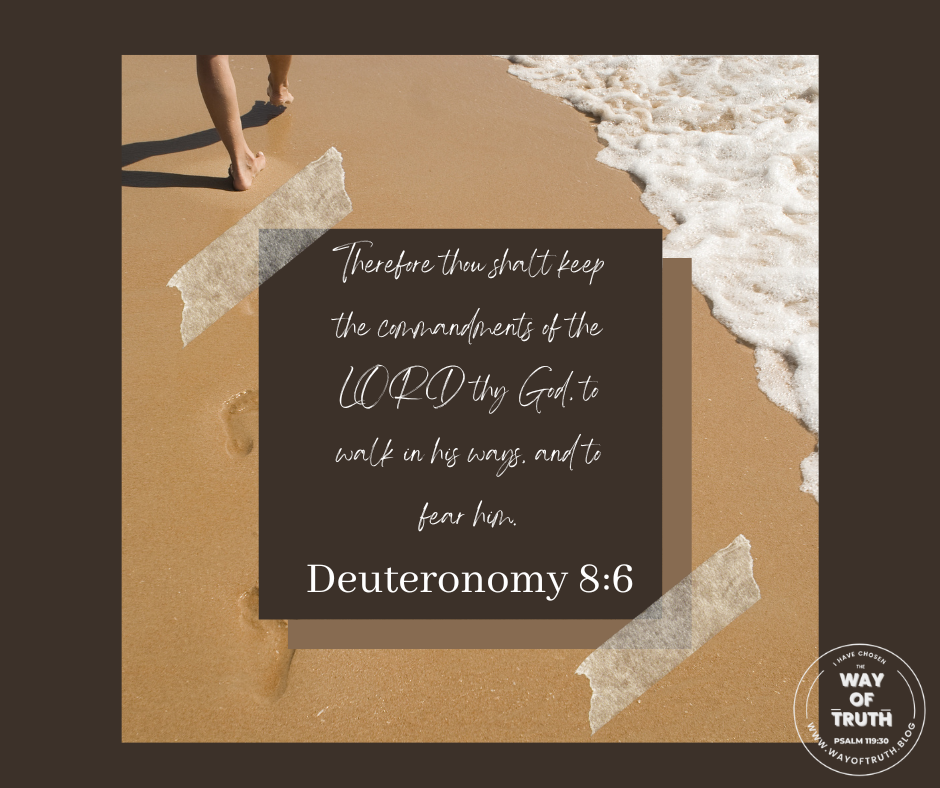
“Therefore thou shalt keep the commandments of the LORD thy God, to walk in his ways, and to fear him” (Deuteronomy 8:6).
I. Covenant Obedience at the Threshold of Promise
Deuteronomy 8:6 stands as a strategic hinge in Moses’ exhortation to a new generation of Israelites preparing to enter the Promised Land. The verse follows immediately after Moses’ theological interpretation of Israel’s wilderness experience (8:2–5), where he reveals that God’s discipline was paternal, purposeful, and deeply loving. Now, Moses moves from explanation to exhortation, pressing home the covenant implications of God’s fatherly care.
Historically, this moment unfolds on the plains of Moab in the late 15th century BC. Israel stands between wilderness memory and Canaan expectation. The covenant renewal discourse in Deuteronomy adopts the ancient Near Eastern treaty form, in which loyalty, obedience, and reverence toward the suzerain (king) are explicitly commanded as expressions of gratitude and fidelity. Yet the difference is striking: Israel’s “king” is not a tyrant but a redeeming Father who brought them out of bondage, guided them through the desert, and now prepares to bless them abundantly.
Literarily, Deuteronomy 8:6 serves as a summarizing imperative: because God disciplines His people for their good, they must walk in His ways with reverent fear. The verse holds together the triad of covenant faithfulness—obedience (“keep”), ethical imitation (“walk”), and reverent devotion (“fear”). In redemptive history, these commands anticipate the new covenant reality in which God writes His law on the heart, enabling His people to obey from an inward delight rather than external compulsion (Jeremiah 31:33; Ezekiel 36:26–27).
II. Obedience, Imitation, and Reverence: The Grammar of Covenant Life
Deuteronomy 8:6 distills covenant faithfulness into a threefold pattern of keeping, walking, and fearing, a progression that moves from the hands, to the path, to the heart. The verse is brief, but each phrase is densely packed with theological and linguistic significance, inviting Israel to interpret obedience not as a rigid legal exercise but as the lived expression of a relationship with the God who redeemed, sustained, and disciplined them.
A. Obedience Rooted in Recognition
The verse begins with the word “therefore,” which signals that this command rises organically from the truth Moses just declared. Israel must now respond to the revelation that their wilderness hardships were fatherly discipline, intended to shape their character and deepen their dependence (8:2–5). The obligation to obey is thus grounded in understanding, not in fear of punishment.
The verb “keep” carries a wide semantic range, including guarding, tending, preserving, and giving careful attention. It portrays obedience not as mechanical rule-following but as attentive stewardship. Israel is called to treat the commandments the way a watchman guards a city gate or a shepherd safeguards his flock: with alertness, intentionality, and affection. The Scriptures are to be preserved within the heart and enacted in life, valued as treasures entrusted to God’s people.
The relational dimension becomes explicit in the phrase “the LORD thy God.” The commands proceed from Yahweh, the covenant Redeemer whose steadfast love and saving acts have defined Israel’s identity. The possessive pronoun “thy” is not a grammatical nicety but a covenant declaration. Israel belongs to Him, and He belongs to them. Obedience, therefore, is the fruit of belonging: an act of loyalty and gratitude toward the One who called them out of bondage and formed them through discipline.
B. Conduct Shaped by Divine Character
The second phrase shifts from guarding God’s commandments to embodying God’s character. In Hebrew thought, to “walk” describes the totality of one’s manner of life: the choices, habits, relationships, and moral posture that mark a person’s path. This is not the occasional moral decision but the patterned rhythm of daily conduct.
The expression “his ways” refers not merely to written statutes but to the ways in which God Himself acts. Scripture consistently ties God’s “ways” to His revealed character: His justice, His compassion, His faithfulness, His purity, and His righteous judgments. Thus, the call to walk in God’s ways is a summons to moral imitation. Israel is to mirror God’s ethical qualities in their dealings with one another, with strangers, and with the nations.
This concept resonates throughout the Old Testament. God’s people were to “keep the way of the LORD” (Genesis 18:19), to learn His ways through His mighty acts (Psalm 103:7), and to practice justice, mercy, and humility because these reflect God’s own disposition (Micah 6:8). Walking in His ways means allowing divine character to inform human conduct so thoroughly that life becomes a reflection of the God who redeemed them.
This emphasis elevates biblical ethics beyond impersonal rule-keeping. It is not enough to hear the law; the people must embody the Lawgiver’s heart.
C. Reverence as the Heart’s Posture Before a Holy God
The closing phrase turns from outward behavior to inward devotion. The “fear of the LORD” is a central theme in Deuteronomy and throughout biblical wisdom literature. Far from describing dread or panic, it refers to a posture of reverent awe before the majesty, holiness, and sovereignty of God. It is the recognition of God’s absolute authority coupled with joyful submission to His will.
In Deuteronomy, fear and love are not competing affections but complementary responses to the same God. Fear acknowledges His greatness; love delights in His goodness. Together they produce devotion marked by humility, trust, and obedience. To fear Him is to give Him the highest regard in every aspect of life: to treat His Word as weighty, His judgments as right, and His presence as awesome.
The order of the triad is deliberate. Obedience (“keep”) describes the outward expression of covenant loyalty. Ethical imitation (“walk”) signifies the alignment of daily conduct with God’s moral nature. Reverence (“fear”) stands as the inward root that sustains both. Without fear of the Lord, obedience becomes hollow and imitation becomes selective. But when reverence fills the heart, the believer finds joy in God’s commands and consistency in God’s ways.
Thus, Deuteronomy 8:6 outlines a complete portrait of covenant faithfulness: watchful obedience, moral imitation, and reverent worship. It is a life shaped not by duty alone but by devotion to the God who calls His people to walk with Him in humble fidelity.
III. Covenant Allegiance, Ethical Formation, and Reverent Worship in the Life of God’s People
Deuteronomy 8:6 gathers three essential strands of theology—obedience, ethical imitation, and reverent fear—into a single, compact exhortation. These elements are not independent duties but interwoven threads that together form the fabric of faithful life before God. The verse reveals how Israel is to relate to the Lord in daily practice, how God shapes His people into His likeness, and how these foundations continue throughout the unfolding story of redemption.
A. Obedience as the Overflow of Covenant Relationship
The command to “keep the commandments of the LORD thy God” teaches that obedience is fundamentally relational. Israel is not responding to an impersonal lawgiver but to the God who redeemed them from Egypt, sustained them in the wilderness, and bound Himself to them in covenant love. The possessive “thy God” anchors the command in the security of belonging.
Obedience is therefore not a transaction by which Israel earns divine favor; it is the expression of a covenant bond already established by grace. This pattern is consistent throughout Scripture: God acts in salvation, and His people respond in obedience. In this sense, the law is not a ladder to reach God but a path to walk with Him. It defines how redeemed people live in the presence of their Redeemer.
B. Ethical Imitation as the Essence of Holiness
“To walk in his ways” unfolds the doctrine of sanctification through imitation. While obedience tells Israel what to do, walking in God’s ways reveals why. The law is not merely a list of commands; it is a reflection of a personal and holy God. Israel’s moral life is meant to echo the character of Yahweh Himself.
Biblical holiness is therefore deeply personal: to be holy is to be like the God who is holy. This is why Deuteronomy often grounds ethical commands in God’s nature: Israel is to show compassion because God is compassionate, pursue justice because God is just, and live faithfully because God is faithful. The law shapes the believer not simply into a rule-keeper but into a God-imitator, one whose life gradually conforms to the moral beauty of the One they serve.
This aspect of the verse provides a bridge into New Testament ethics, where Christ becomes the perfect model for imitation. The call to “walk even as he walked” (1 John 2:6) echoes the ancient summons to “walk in his ways.”
C. Reverent Fear as the Interior Posture of True Worship
The command “to fear him” reveals the interior disposition that animates obedience and imitation. The fear of the Lord is not anxiety but awe, a recognition of God’s holy majesty that humbles the heart and elevates worship. It is the awareness that God is infinitely great, morally perfect, and worthy of complete allegiance.
In the theology of Deuteronomy, fear and love are not opposites but two sides of the same devotion. Fear grounds the soul in humility; love lifts it in delight. Fear tempers obedience with reverence; love fills obedience with joy. When both operate together, the believer responds to God with whole-hearted fidelity.
Without this reverent fear, obedience quickly devolves into ritualism, and imitation becomes selective or superficial. But when the fear of the Lord settles deeply within a person, reverence becomes the wellspring of faithful living.
D. Divine Grace and Human Response: A Harmonious Tension
The commands in Deuteronomy 8:6 are addressed to human responsibility. Israel must keep, walk, and fear. Yet these commands come on the heels of God’s fatherly discipline (8:5), which shapes the very heart needed for obedience. This interplay reveals a rich theological balance: God initiates formation, but His people are called to respond.
Calvinist interpreters emphasize that genuine obedience is enabled by God’s sovereign grace. Their insight reflects later passages in which God promises to give His people a new heart and write His law within (Ezekiel 36:26–27).
Arminian interpreters rightly highlight human responsibility: Israel must choose to walk in God’s ways and reverently fear Him. The commands presume real accountability.
Deuteronomy itself holds these truths together in unity rather than tension. God shapes His people through discipline, and His people must align themselves with His revealed will. Grace does not negate effort; it motivates and sustains it. Responsibility does not diminish divine initiative; it fulfills it. Covenant life moves forward by a synergy in which God forms, and His people follow.
IV. In Defense of Divine Devotion
Deuteronomy 8:6 stands at the convergence of obedience, imitation, and reverence, realities frequently misunderstood or contested in modern discourse. This verse not only instructs Israel but also defends the moral coherence and spiritual beauty of biblical faith against the objections of skeptics, the distortions of theological error, and the alternatives offered by competing worldviews. Moses’ call to “keep,” “walk,” and “fear” is not an oppressive summons but a revelation of what it means to live under the wise, life-giving authority of a holy God.
A. Obedience as Oppression?
One of the most persistent objections raised against biblical religion is the idea that divine commands diminish human freedom. Modern culture tends to prize autonomy above all, and so a verse like Deuteronomy 8:6 can appear restrictive or even repressive. Yet Scripture’s vision of obedience is radically different from authoritarian control. The commands of God come from the One who redeemed His people, sustained them, and shaped them for their own good.
Obedience in Deuteronomy is not forced submission to a tyrant but joyful fidelity to a Father whose wisdom protects His children from disaster. To “keep the commandments of the LORD thy God” is to walk in patterns of life that promote flourishing, justice, community harmony, and personal integrity. Far from crushing the human spirit, obedience liberates it from the destructive tendencies of sin. The apologetic strength of the verse lies in its portrayal of commandments as gifts, not chains.
B. Antinomian Reductions of Grace
In another direction, some modern voices misuse the doctrine of grace to undermine the ongoing relevance of God’s moral commands. They argue—explicitly or implicitly—that because salvation is by grace alone, obedience no longer matters. Moses decisively challenges this misconception. God’s grace and God’s commands are not competitors; grace establishes the relationship in which obedience becomes meaningful.
The call to “walk in his ways” shows that redeemed people imitate the character of their Redeemer. To claim freedom from moral obligation is not the gospel but a distortion of it. True grace transforms the heart so that obedience is no longer a legal burden but a spiritual delight. Antinomianism collapses under the weight of Deuteronomy’s teaching, which intertwines redemption and righteousness as inseparable gifts of God.
C. Cultic and Authoritarian Distortions of “Fear”
Some groups misuse biblical language about “fearing God” to cultivate fear of human leaders or to justify manipulative systems of control. Deuteronomy 8:6 offers a corrective by defining fear as awe-filled reverence toward God alone. Biblical fear never results in servility toward men but in humble submission to God’s majesty.
Moses’s theology of fear is protective: when the heart reveres God rightly, it becomes resistant to human tyranny. The person who fears God will not fear manipulators, false teachers, or domineering authorities. Thus, this verse dismantles cultic misuse by directing fear exclusively toward the divine, not toward human structures or leaders.
D. A Response to Suffering Ethics
Critics sometimes raise the problem of suffering as an argument against divine goodness, suggesting that God’s commands to obedience and reverence are incompatible with human flourishing. But in Deuteronomy 8, obedience is framed within the context of fatherly discipline (8:5). The ethical call to “walk in his ways” arises precisely from a God who trains His people through hardship so they may enter blessing without pride or forgetfulness.
This connection provides a powerful apologetic response: the God who commands is the God who cares, instructs, and shapes His people through difficulty. Suffering, when interpreted rightly, reinforces the trustworthiness and wisdom of God’s ways. The discipline that precedes the command demonstrates that obedience is not arbitrary but purposeful.
E. Contrasting Biblical Covenant Ethics with Ancient Worldviews
In the ancient Near East, moral codes were often rooted in societal order or royal decree, but rarely in the character of the deity. Deuteronomy’s command to imitate God’s “ways” stands apart as a revelation of unparalleled depth. Israel’s ethics are grounded not in cultural convention but in divine example, not in fear of capricious gods but in relationship with a righteous Redeemer.
This distinctiveness strengthens the apologetic value of the passage. Biblical morality is coherent because it flows from a consistent, holy, and personal God. Other worldviews—ancient or modern—struggle to offer a moral system with comparable grounding. By rooting ethics in God Himself, Scripture presents a vision of righteousness that is stable, transcendent, and morally compelling.
F. A Witness Against Secular Autonomy
Finally, Deuteronomy 8:6 challenges modern secular assumptions about self-defined morality. The command to “fear him” contradicts the idea that humans can determine right and wrong independently. If God is holy and sovereign, then moral authority does not originate within us but above us. The verse thereby confronts the illusion of moral self-sufficiency and invites all people to humble themselves before the Creator.
In a world where relativism often masquerades as enlightenment, Moses’s call to reverent obedience shines with surprising clarity. The fear of God restores moral clarity; walking in His ways restores moral coherence; keeping His commandments restores moral integrity. The verse thus stands as both a critique of secular ethics and an invitation to a life grounded in divine wisdom.
V. Faithful Hearts in Daily Practice
Deuteronomy 8:6 does not present abstract theology but a lived rhythm for God’s people. The triad of keeping, walking, and fearing provides a pattern for daily holiness, household discipleship, and corporate formation. This verse calls Christians to embody their covenant identity in ways that honor God, nourish the soul, and testify to the world that the Lord is worthy of reverent obedience.
A. Integrating Scripture into Daily Life
The call to “keep the commandments” invites believers to cultivate a life shaped by Scripture. This begins with consistent, thoughtful engagement with the Word: reading it, meditating on it, and allowing it to guide decisions, affections, and actions. Keeping the commandments is not mechanical duty but relational attentiveness; it is the posture of one who believes God’s wisdom is better than one’s own.
Walking in God’s ways summons believers to examine their habits, words, and priorities. Spiritual growth occurs not in occasional bursts but in steady steps: choices made throughout the day to respond in patience rather than irritation, truth rather than convenience, purity rather than compromise. As believers imitate God’s character, their lives gradually take on the fragrance of Christ.
To fear God is to live with an awareness of His presence. Reverence steadies the heart in temptation, tempers the tongue in frustration, and keeps the conscience tender. It transforms ordinary moments—commutes, conversations, and quiet hours—into opportunities for worship.
B. Cultivating the Ways of God in Family Life
Christian homes become formative spaces where the triad of Deuteronomy 8:6 is lived out before the next generation. Parents “keep His commandments” by structuring their homes around Scripture: reading it regularly, praying together, and weaving God’s truth naturally into the rhythms of daily life. The tone is not authoritarian but invitational, modeling delight in God’s Word.
Walking in His ways means embodying God’s character in the home: showing compassion, confessing sin, forgiving freely, and practicing hospitality. Children learn far more from what they observe than from what they are told, and a home marked by humility, integrity, and kindness becomes a living testimony of God’s ways.
To fear Him as a household means honoring God in priorities: treating worship as essential, not peripheral; giving thanks openly; and letting reverence shape decisions. A family that treasures God’s presence together becomes a rehearsal for the church’s larger worship.
C. Building a Community Formed by God’s Ways
The corporate life of the church is strengthened when congregations take Deuteronomy 8:6 seriously. Churches “keep His commandments” by teaching Scripture faithfully, discipling believers in truth, and refusing to water down the demands of God’s holiness. They walk in His ways when compassion, righteousness, justice, and unity characterize their fellowship.
Reverent fear shapes worship: services marked by awe rather than entertainment, preaching that exalts the glory of God, and prayers that acknowledge His majesty. A church that fears the Lord will handle His Word with care, shepherd His people with tenderness, and confront sin with humility.
Such communities become havens for weary believers, places where obedience is encouraged, growth is nurtured, and reverence is cultivated. In a world that belittles holiness, the church becomes a countercultural witness to the beauty of God’s ways.
D. A Testimony That Points Beyond Ourselves
When believers live out the triad of obedience, imitation, and reverence, their lives become quiet yet compelling testimonies to unbelievers. The world is accustomed to self-interest, moral fluidity, and spiritual apathy. But a Christian who lives with integrity, kindness, humility, and visible reverence stands out with surprising clarity.
Keeping God’s commandments displays moral coherence in a culture that often celebrates contradiction. Walking in His ways reveals a character shaped by a divine pattern rather than social trends. Fearing Him shows that life is lived before a higher authority than public opinion.
This witness is not loud or ostentatious. Rather, it is the steady glow of a life aligned with God. And when unbelievers take note—and they often do—this creates natural opportunities to speak of the One who has transformed the heart.
The world does not need Christians who are perfect; it needs Christians who are visibly shaped by the God they revere.
VI. The Way of Obedience and the Gift of a New Heart
If you don’t already know Jesus Christ as your Lord and Savior, Deuteronomy 8:6 confronts you with a reality that is both humbling and hopeful. God calls His people to keep His commandments, to walk in His ways, and to fear Him with reverent awe, but none of us naturally live this way. Our hearts are turned inward, our steps wander, and our reverence is easily given to lesser things. The very commands that reveal God’s holiness also reveal our need.
This is why the gospel is not a message of moral improvement but of divine rescue. Jesus Christ, the eternal Son of God, entered the world and lived the life that Deuteronomy 8:6 describes perfectly. He kept every commandment without failure, walked entirely in the Father’s ways, and feared God with pure and joyful reverence. His obedience was not merely exemplary; it was substitutionary. He obeyed in our place because we could not.
At the cross, Jesus bore the penalty for our disobedience: the judgment we deserved for breaking God’s commandments, resisting His ways, and living without proper fear of Him. By His death, He satisfied divine justice; by His resurrection, He secured eternal life for all who trust in Him. He rose so that sinners may be forgiven, restored, and transformed from the inside out.
If you repent—turning from sin and self-reliance—and place your faith in Christ alone, God will grant you forgiveness, reconcile you to Himself, and give you a new heart capable of loving and obeying Him. The commands of God will no longer feel like an impossible burden; they will become expressions of gratitude and joy. Through the Holy Spirit, you will begin to walk in His ways and fear Him rightly, not out of dread, but out of love for the One who saved you.
Christ invites you even now. Come to Him with your failures, your questions, and your weary attempts at self-made righteousness. Trust in His finished work, and He will welcome you as His own. In Him, obedience becomes delight, reverence becomes worship, and walking in God’s ways becomes the path of life.