
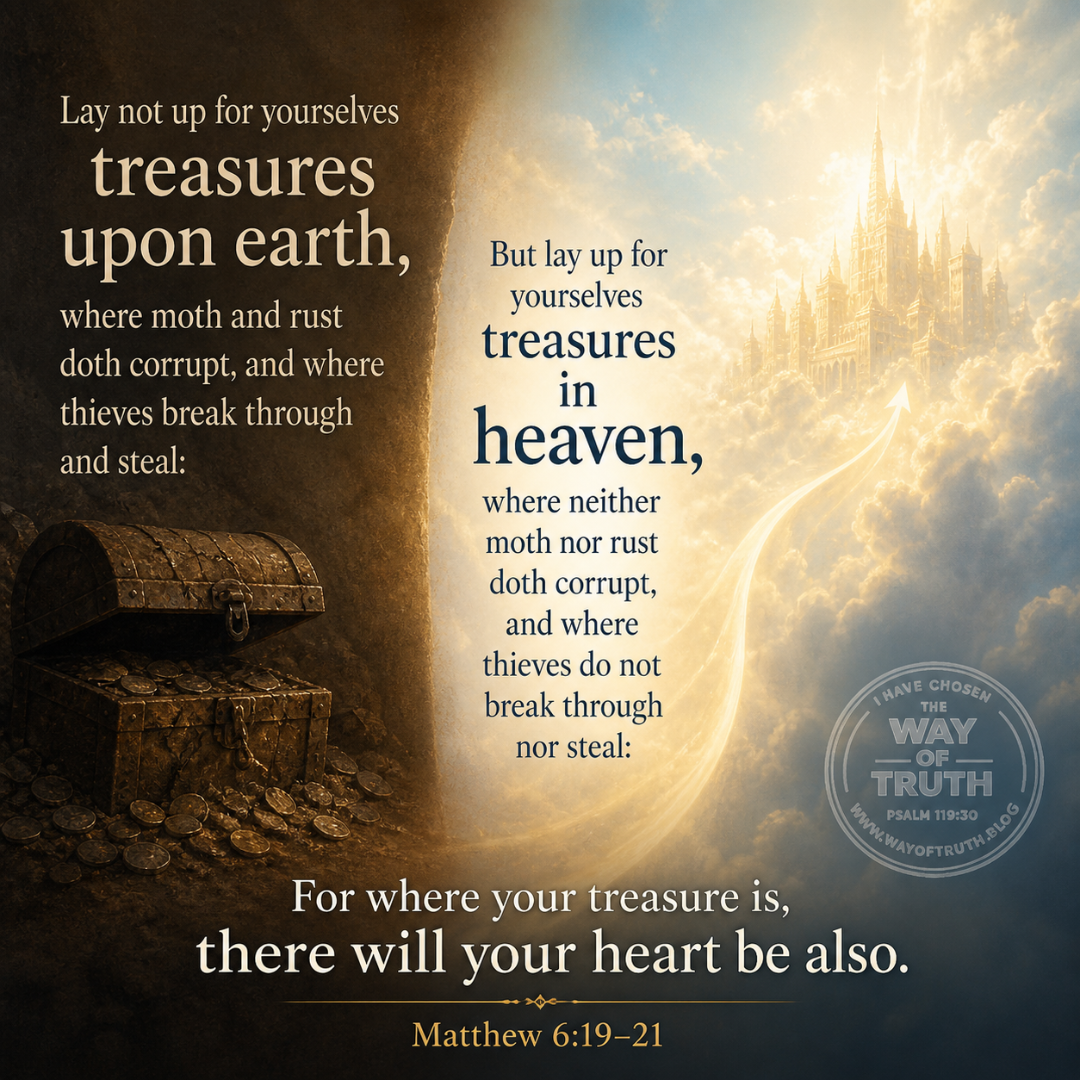
Jesus speaks plainly here, but not casually. He presents a direct challenge to how we value, pursue, and ultimately trust.
“Lay not up for yourselves treasures upon earth…” The wording assumes something important: we will store up treasure somewhere. The issue isn’t whether we value things, but what we value and where we place our confidence.
The examples Jesus gives are intentionally vivid. Moths consume clothing, rust corrodes metal, and thieves break in and steal. In other words, everything on earth is vulnerable. Even the most secure investments have a shelf life. You can insure your house, diversify your portfolio, and still lose it all to factors beyond your control. Jesus isn’t exaggerating. He’s simply describing reality.
This builds directly on what He has already said in the Sermon on the Mount. In Matthew 6:1–18, He exposed the danger of practicing righteousness for human approval. Now He goes deeper. It’s not just about why we do things. It’s about what we truly love. Public praise, material wealth, reputation, comfort, and influence can all become “treasures on earth” if they capture the heart.
Then comes the contrast: “But lay up for yourselves treasures in heaven…” This isn’t abstract or symbolic language. Jesus is describing a real, lasting reward grounded in God’s eternal kingdom. Unlike earthly treasure, heavenly treasure can’t decay, be stolen, or be lost. Why? Because it’s secured by God Himself.
Some might misunderstand this and assume Jesus is dismissing material things altogether. But that misses the point. Scripture consistently affirms that material goods aren’t inherently evil. The problem is misplaced devotion. The issue isn’t possession, but priority.
Skeptics sometimes argue that focusing on “heavenly treasure” encourages detachment from real-world responsibility. But the opposite is true. When rightly understood, it produces deeper faithfulness in this life, not less. The believer who treasures heaven most is often the one who serves most faithfully on earth, precisely because their hope isn’t tied to temporary outcomes.
The Heart Follows the Treasure
Jesus closes with a statement that feels almost surgical: “For where your treasure is, there will your heart be also.”
Notice the direction. He doesn’t say, “Where your heart is, your treasure will follow.” Instead, He flips it. Your heart follows your treasure. What you consistently invest in, think about, protect, and pursue is what shapes your affections.
This’s both revealing and uncomfortable. It means we can’t simply claim to love God while our lives are oriented entirely around something else. Our patterns tell the truth.
This also explains why Jesus addresses treasure before heart. Change the investment, and the heart begins to move. Continue investing in temporary things, and the heart becomes anchored there. Redirect that investment toward God and His kingdom, and the heart follows.
This passage stands in direct opposition to several modern worldviews. Materialism says fulfillment comes from accumulation. Secular success culture says meaning comes from achievement. Jesus cuts through all of it. None of those treasures last, and none of them can hold the heart without eventually disappointing it.
There have also been heretical misuses of this passage, particularly in prosperity theology, which twists the idea of “treasure” into a guarantee of financial blessing in this life. But Jesus is clearly contrasting earthly treasure with heavenly treasure, not promising that one leads to the other.
The internal logic of the passage is simple and profound: what you treat as ultimate will eventually control you. If your treasure is fragile, your heart will live in constant anxiety. If your treasure is secure in heaven, your heart gains a stability that circumstances can’t shake.
Investing in Eternity Without Ignoring Today
This teaching doesn’t call us to withdraw from the world. It calls us to reorient within it.
To “lay up treasures in heaven” isn’t a mystical concept. It takes shape in real, daily choices. It looks like obedience when it costs something. It looks like generosity that doesn’t expect repayment. It looks like quiet faithfulness when no one is watching. It looks like prioritizing God’s will over personal comfort.
And yes, sometimes it looks like saying “no” to things that aren’t sinful in themselves but quietly compete for your heart.
There’s a freeing honesty in this passage. Jesus isn’t asking us to pretend earthly things don’t matter. He’s reminding us they don’t last. That distinction changes everything.
For the church, this has corporate implications as well. A body of believers that treasures heaven won’t be driven by status, numbers, or cultural approval. It will be marked by faithfulness, humility, and a long view of God’s purposes. Unity grows when shared treasure is eternal, not temporary.
On a personal level, this passage invites a kind of self-audit. Not a vague feeling, but a practical look: Where does your time go? What occupies your thoughts? What do you protect most carefully? Those answers often reveal more than what we say we value.
And here’s the encouraging part. Jesus doesn’t simply expose the problem. He redirects us to something better. He offers a treasure that can’t be lost. That’s not restrictive but deeply freeing.
Living this way doesn’t mean life becomes easier. But it does mean it becomes clearer. You’re no longer chasing what fades. You’re investing in what endures.
And if we’re honest, we already know which one makes more sense.
If Your Treasure Feels Uncertain
If you’ve never really thought about where your life is headed or what you’re building toward, this passage brings that question to the surface. And if you’re honest, you may already feel the instability of earthly treasure. It doesn’t hold the weight we try to place on it.
The Bible explains why. Every one of us has sinned against God. We’ve lived with misplaced priorities, chasing things that were never meant to be ultimate. That’s not just a minor issue. Sin separates us from a holy God, and the consequence isn’t just dissatisfaction in this life, but judgment beyond it.
But God didn’t leave us there.
Jesus Christ, the very One speaking these words, came into the world to do what we could never do. He lived a perfectly righteous life, never once misplacing His treasure. Then He went to the cross and bore the penalty for sin in our place. He died, was buried, and rose again, proving His victory over sin and death.
Through Him, everything changes.
Forgiveness is offered freely, not earned. A new heart is given, not manufactured. Eternal life is secured, not uncertain.
And here’s where it connects directly to this passage: when you come to Christ, your treasure changes. Not because you force it, but because He gives you something better. He becomes your treasure.
You don’t need to clean yourself up first or figure everything out before coming to Him. You come as you are, turning from sin and trusting in Him alone.
If that’s something you’ve never done, you can do it now. Speak to Him honestly. Acknowledge your sin, believe in His finished work, and place your trust in Him.
He doesn’t turn away those who come.
And in Him, you will find what this passage points to: a treasure that will never fade, never break, and never be taken away.
Reflection and Response
- What do my daily habits reveal about what I truly treasure?
- Are there specific areas where earthly things have quietly taken priority over eternal ones?
- How might my decisions change if I consistently viewed life through the lens of eternity?
- In what ways can I begin actively “laying up treasures in heaven”?
- Who in my life needs to hear the gospel, and how can I take a step toward sharing it with them?