
Jesus closes the Lord’s prayer by turning our attention to something we feel every day, whether we admit it or not: we’re not as strong as we think we are. That’s not meant to discourage us. It’s meant to ground us.
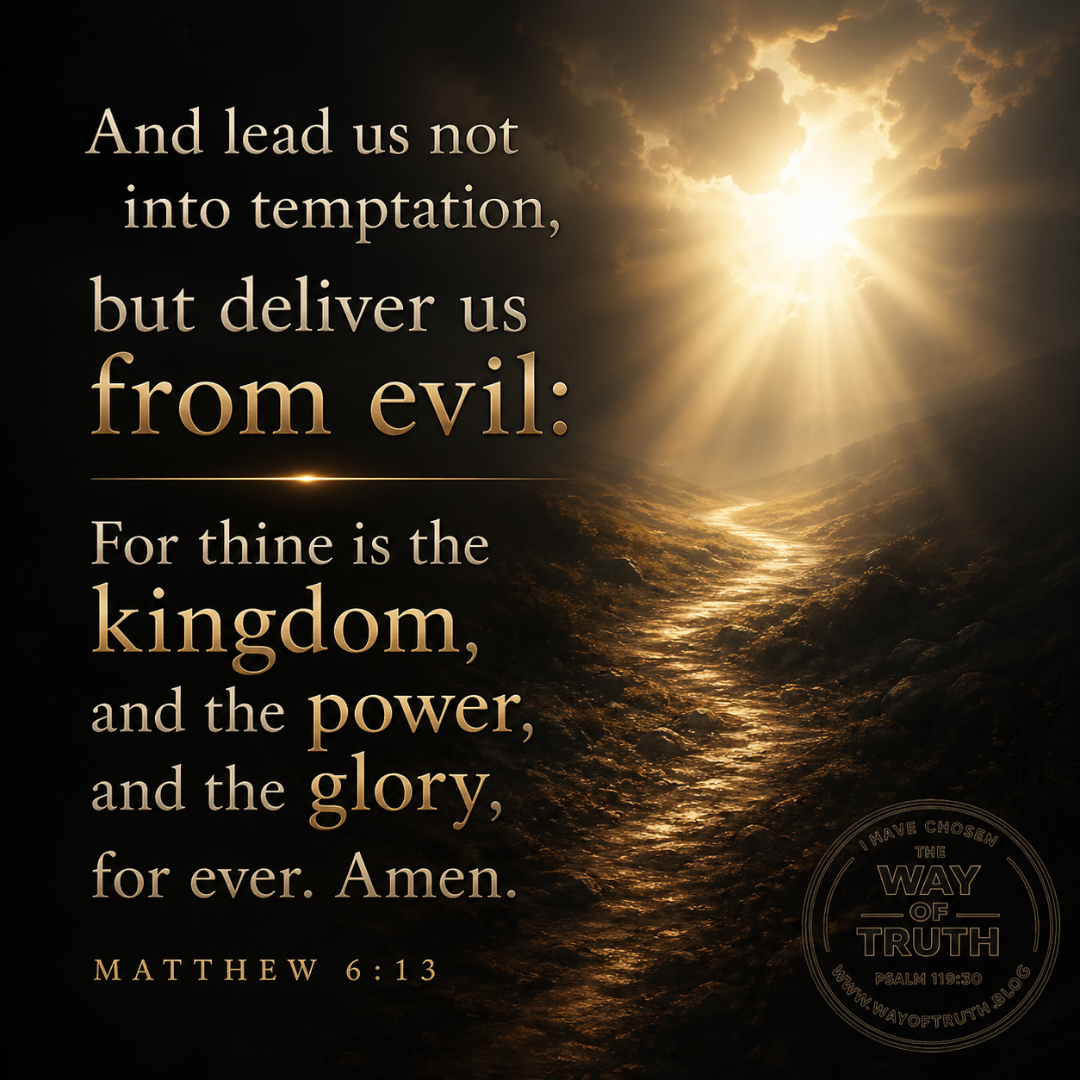
“Lead us not into temptation” doesn’t mean God is out there trying to trip us up. Scripture is clear elsewhere that God doesn’t tempt anyone to sin (James 1:13). So, what are we asking here? We’re asking for guidance away from situations where our weakness could lead to failure. It’s a humble request that says, “Lord, don’t let me walk into something that will pull me away from You.”
That builds directly on what Jesus has already taught in this prayer. After asking for forgiveness in verse 12, the natural next step is prevention. It’s one thing to be forgiven after falling; it’s another thing to ask God to keep you from falling in the first place. Forgiveness restores, but protection preserves.
Then comes the second phrase: “but deliver us from evil.” This shifts from prevention to rescue. Even with the best intentions, we still face a real enemy and a real world filled with sin. The word “evil” can refer both to evil in general and to the evil one, Satan. Scripture consistently teaches both realities. We’re not just dealing with abstract moral challenges; there’s an active adversary (1 Peter 5:8).
So, this is a two-part request: keep me from walking into temptation, and if I find myself there, rescue me.
Some critics push back here and say, “If God is sovereign, why pray this at all?” But that objection misunderstands how Scripture presents God’s sovereignty. God ordains not only the ends but the means. Prayer is one of the means He’s appointed. This isn’t a contradiction; it’s participation.
Others twist this verse into a kind of formula, as if saying these words guarantees a trouble-free life. But Jesus never promises that. In fact, the broader teaching of Scripture says the opposite. Trials will come. Temptation will come. The prayer isn’t for a bubble-wrapped life, but for God’s sustaining presence and deliverance within it.
The closing line, “For thine is the kingdom, and the power, and the glory, for ever. Amen,” anchors everything in God’s supremacy. We’re not relying on willpower or discipline alone. We’re appealing to a King who actually has the authority and power to help.
Living Like We Actually Need God
If we’re honest, this is where things get uncomfortable. Most of us don’t wake up thinking, “I’m in danger of falling into sin today.” We tend to assume we’ll be fine. That confidence sounds harmless, but it’s often where we drift.
This prayer confronts that mindset. It invites us to live with a healthy awareness of our need for God’s help, not just in big, obvious crises, but in the ordinary moments where compromise often begins.
Praying “lead us not into temptation” reshapes how we approach our day. It makes us more attentive. We start to recognize patterns. Maybe it’s a conversation that always turns unkind. Maybe it’s a habit that slowly dulls our sensitivity to truth. Maybe it’s a situation where we consistently rely on ourselves instead of trusting God. This prayer teaches us to bring those things to Him before they unravel us.
At the same time, “deliver us from evil” gives us hope when we do stumble. It reminds us that failure isn’t the end of the story. God’s not standing at a distance waiting to say, “I told you so.” He’s near, ready to rescue, restore, and strengthen. That doesn’t excuse sin, but it does keep us from despair.
For the life of the church, this matters deeply. A community shaped by this prayer will be marked by humility instead of pride, vigilance instead of carelessness, and grace instead of judgment. When we recognize our shared vulnerability, we’re quicker to support one another rather than pretend we have it all together.
There’s also a missional edge here. The world often treats temptation as either harmless or inevitable. Scripture treats it as serious but not unbeatable. When we live with dependence on God and experience His deliverance, we have something real to point others to. Not a polished image, but a lived testimony: God helps His people.
And yes, there’s a bit of irony here. The moment you think, “I’ve got this,” is usually the moment you don’t. This prayer helps to keep us from that trap.
Ultimately, this verse calls us to a daily posture: alert, dependent, and confident in God’s power. Not fearful or self-reliant, but anchored in the One whose kingdom, power, and glory never fade.
The Gift of Deliverance and New Life
Maybe as you read this, you recognize something deeper. It’s not just that you face temptation. It’s that you’ve already given in to it, repeatedly. That’s not a small issue. The Bible calls that sin, and it separates us from God. The consequence of sin isn’t just struggle in this life, but judgment. Left to ourselves, we don’t just need help, we need rescue.
That’s exactly why Jesus came.
God didn’t leave us to figure this out on our own. He sent His Son, Jesus Christ, who lived a perfectly sinless life. Where we fall, He stood firm. Where we fail, He obeyed completely. Then He went to the cross, not for His own sins, but for ours. He took the penalty we deserved. He died, was buried, and rose again, defeating sin and death.
This changes everything.
Forgiveness isn’t something we earn by trying harder. It’s something we receive by trusting in what Christ has already done. When you turn from your sin and place your faith in Him, God forgives you completely. Not partially. Not temporarily. Completely. He gives you new life, a new heart, and the promise of eternal life with Him.
And here’s the connection to this verse: the same Savior who forgives also delivers. He doesn’t just wipe the slate clean and leave you on your own. He walks with you, strengthens you, and helps you stand.
If you haven’t trusted in Christ, you can do that today. Come to Him honestly. Acknowledge your sin. Believe that He died and rose again for you. Ask Him to save you. He won’t turn you away.
And if you already belong to Him, this verse becomes even more meaningful. You’re not fighting temptation alone. You’re walking with the One who has already overcome.
Reflection and Response
- Where in my life am I most likely to underestimate the pull of temptation, and how can I begin bringing that honestly before God in prayer?
- Do I tend to rely more on my own strength or on God’s help when facing spiritual struggles? What would it look like to shift that dependence?
- How does understanding God as both protector and deliverer change the way I respond when I fail?
- In what ways can I encourage others in the church to pursue humility and vigilance rather than self-confidence?
- How can my experience of God’s deliverance become a testimony that points others to the gospel?