
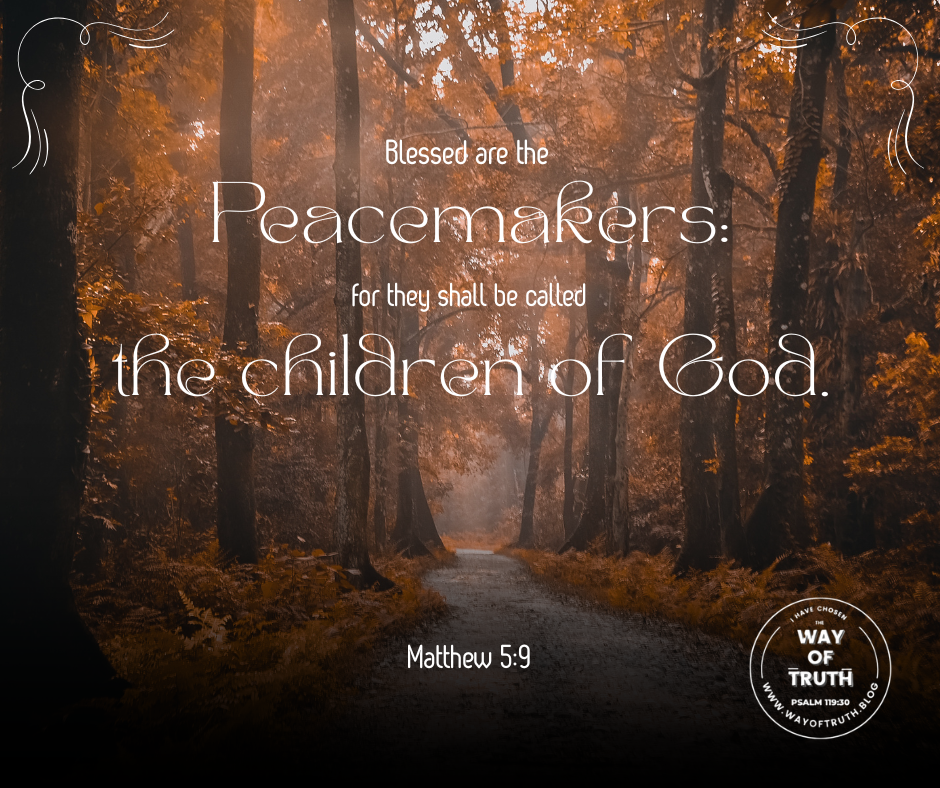
By this point in the Beatitudes, Jesus has moved from inward transformation to outward expression in increasingly relational ways. Mercy addressed how we respond to others’ failures. Purity of heart dealt with inward integrity. Now Jesus turns to something that plays out in real time, in real relationships: peace.
But He doesn’t say, “Blessed are the peace-lovers,” or even “peace-keepers.” He says, “Blessed are the peacemakers.”
That distinction matters.
Peacekeeping often means avoiding conflict. It can look like staying quiet, smoothing things over, or pretending everything is fine when it isn’t. Peacemaking, on the other hand, is active. It steps into tension, not to inflame it, but to bring resolution grounded in truth.
This builds directly on the previous beatitudes. A person who is poor in spirit isn’t driven by pride. One who mourns understands the weight of sin. The meek don’t insist on their own way. Those who hunger for righteousness care about what’s right, not just what’s easy. The merciful extend grace. The pure in heart are not divided in their motives.
Put all of that together, and you get someone who is equipped to pursue real peace.
Biblical peace isn’t merely the absence of conflict. It’s the presence of right relationship, first with God, then with others. That’s why peacemaking can’t be separated from truth. You can’t build real peace on denial, compromise of what’s right, or avoidance of what’s broken.
This also challenges a common cultural assumption that peace means never disagreeing or confronting anything. Jesus presents something more demanding. True peace often requires stepping into difficult conversations, addressing wrongs, and working toward reconciliation.
So, peacemaking isn’t passive. It’s intentional, sometimes costly, and always rooted in a desire for what is genuinely good.
The Identity of Those Who Make Peace
Jesus attaches a promise that speaks directly to identity: “For they shall be called the children of God.”
This isn’t about earning a place in God’s family through good behavior. Scripture is clear that we become children of God through faith, not through our actions. So, what does Jesus mean?
He’s describing resemblance.
Peacemakers reflect the character of God, and in doing so, they’re recognized as His children. The phrase “shall be called” carries the idea of being identified or known as something that’s visibly true.
This makes sense when you consider how Scripture presents God.
God is the ultimate peacemaker. Humanity wasn’t neutral toward Him. We were separated from Him because of sin. Yet God didn’t leave things as they were. He acted to reconcile.
This is seen most clearly in the gospel. Through Jesus Christ, God made peace with sinners. He didn’t ignore sin, but dealt with it fully at the cross. Justice was upheld, and mercy was extended.
So, when believers pursue peace in their relationships, they’re not simply being nice or agreeable. They’re reflecting something of God’s own work.
There’s also an apologetic dimension here. Some critics claim that Christianity promotes division or conflict. While it’s true that truth can create tension, Jesus makes clear that His followers are to be marked by a commitment to reconciliation where possible, without compromising what’s right.
This balance matters. Not every conflict can be resolved, and not every situation will result in peace. But the peacemaker is defined not by the outcome, but by the pursuit.
And that pursuit reveals something about who they belong to.
The Cost and Courage of Making Peace
Peacemaking sounds appealing until you realize what it often involves.
It requires humility, because you can’t pursue peace while insisting on always being right in tone and posture. It requires patience, because resolution rarely happens quickly. It requires courage, because stepping into conflict is uncomfortable.
Sometimes peacemaking means initiating a difficult conversation when you’d rather avoid it. Other times it means absorbing a wrong rather than escalating it. Occasionally, it means standing firm in truth while still seeking reconciliation, even when the other person resists.
This is where the distinction between peace and compromise becomes critical.
Peacemaking doesn’t mean abandoning truth for the sake of harmony. That kind of “peace” is fragile and temporary. Real peace is built on what’s right, even when that makes the process harder.
This also pushes back against the idea that all conflict is inherently bad. Some conflict is necessary because it exposes what needs to be addressed. The goal is not to eliminate conflict at all costs, but to move through it in a way that leads toward restoration rather than further division.
In everyday life, this plays out in families, friendships, workplaces, and churches. It affects how we handle misunderstandings, disagreements, and offenses. It shapes whether we escalate tension or work toward resolution.
Let’s be honest, though. Most of us don’t naturally drift toward peacemaking. We either avoid conflict or engage it in a way that prioritizes winning over reconciliation.
Peacemaking requires a different mindset. It asks, “What would it look like to move this situation toward what is right and whole?”
And sometimes, that means taking the first step, even when you’re not sure how it will be received.
Living as Peacemakers in the Church and the World
Within the church, this beatitude is essential.
A church that lacks peacemaking will eventually fracture. Differences in perspective, personality, and experience are inevitable. What determines the health of a church is not the absence of disagreement, but how those disagreements are handled.
Peacemakers help create an environment where truth and grace can coexist. They resist gossip, avoid unnecessary division, and work toward understanding. They’re not naive about sin or conflict, but they’re committed to dealing with both in a way that reflects God’s character.
This also connects directly to the mission of the church.
The gospel itself is a message of reconciliation. It announces that peace with God is possible through Jesus Christ. If believers are to proclaim that message, their lives should reflect it.
That doesn’t mean the church will always be seen as peaceful. The message of truth can provoke opposition. But even in disagreement, the posture should remain consistent with this beatitude.
In the broader world, peacemaking stands out precisely because it’s uncommon. Many interactions are shaped by defensiveness, competition, or indifference. A person who genuinely seeks peace, without compromising truth, creates a different kind of presence.
And that presence often opens doors for the gospel.
Because at its core, peacemaking points beyond itself. It reflects a deeper reality: that reconciliation is possible, not just between people, but between people and God.
The Ultimate Peace Made Through Christ
If you don’t already know Jesus Christ as your Lord and Savior, this verse points to something deeper than human relationships. It points to your relationship with God.
The Bible teaches that, because of sin, we’re not naturally at peace with God. We’re separated from Him, not because He has moved away, but because our sin has created a barrier we can’t remove on our own.
This isn’t just a theoretical problem. It affects our standing before God and our ultimate destiny.
But God hasn’t left things that way.
Jesus Christ came to make peace. He lived a perfect life, fully aligned with God. He then went to the cross, where He bore the penalty for sin. In that moment, He dealt with the very thing that separates us from God.
He died, was buried, and rose again, demonstrating victory over sin and death.
Through Him, peace with God is possible.
This isn’t something you earn by becoming better or trying harder. It’s something you receive by turning from sin and placing your trust in Christ. When you do, God forgives you, restores you, and brings you into a right relationship with Him.
That’s where true peace begins.
And from that foundation, the call to be a peacemaker makes sense. You’re not creating peace out of nothing. You’re reflecting the peace that God has already made available to you.
So, the invitation is clear. Don’t remain at a distance from God. Don’t assume peace will happen on its own.
Come to Christ. Trust Him. Receive the peace He has secured.
And then live in a way that reflects that peace to others.
Reflection and Response
- What’s the difference between avoiding conflict and actively making peace?
- In what situations do you tend to avoid peacemaking, and why?
- How does understanding God as the ultimate peacemaker shape your approach to others?
- Where might you need to take a step toward reconciliation in your own life?
- How can you reflect God’s peace in a way that also points others to the gospel?