
- The Biblical View of Human Moral Condition
- What Biblical Faith Actually Is (and Is Not)
- Re-examining the Key Passages in Context
- Faith and Humility vs. Pride and Self-Reliance
- The Gospel: The Ultimate Rejection of Moral Superiority
- Answering the Objection Directly
- Conclusion: Faith as Dependence, Not Superiority
The objection that Christianity promotes faith as a form of moral superiority is both common and, at times, understandable. Skeptics often observe that Scripture repeatedly commends belief, warns against doubt, and portrays faith as essential to receiving God’s favor. From this, they conclude that Christianity implicitly divides humanity into two moral categories: those who believe and are therefore “good,” and those who do not believe and are therefore “bad.” In this view, belief itself becomes a kind of moral achievement, elevating the Christian above the non-Christian.
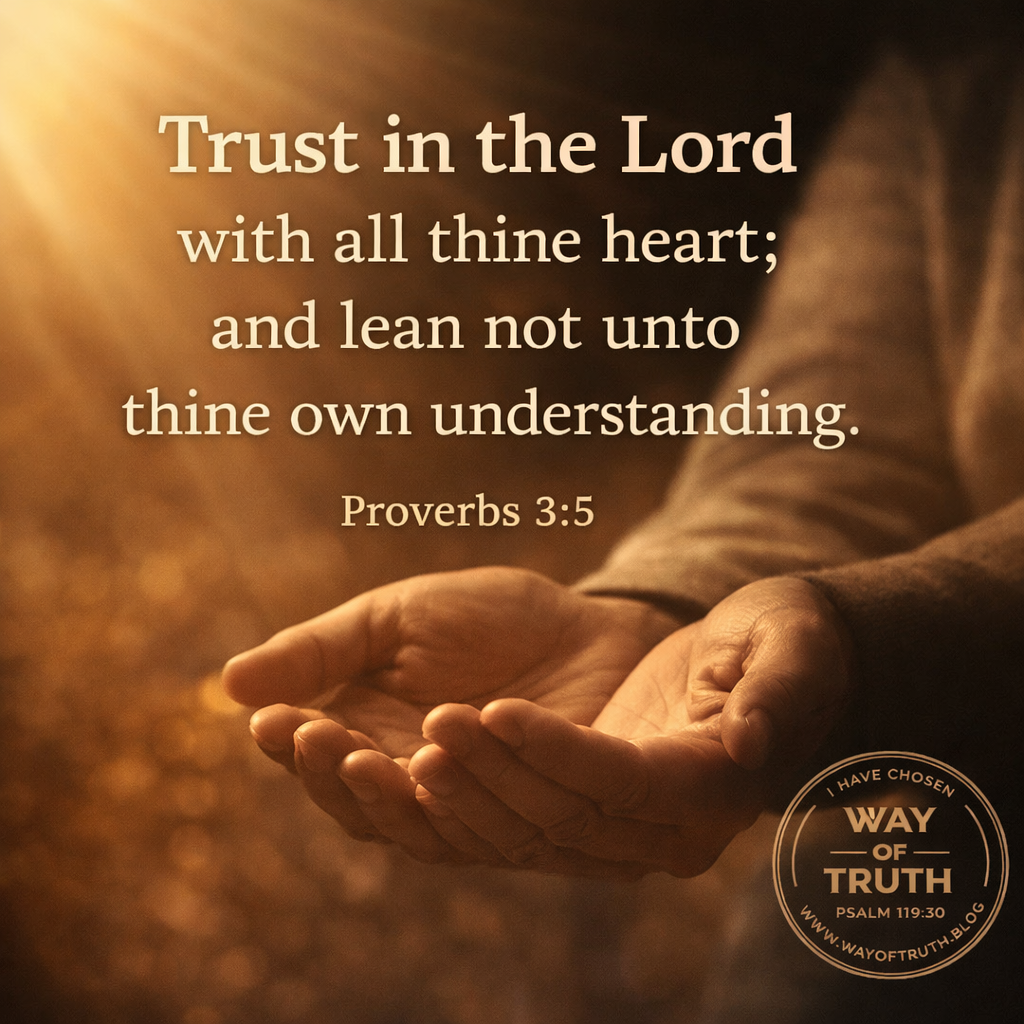
This concern is often reinforced by specific biblical passages. Proverbs 3 calls believers to trust in the Lord rather than their own understanding. James 1 warns that the one who doubts is unstable and should not expect to receive from God. Mark 11 emphasizes the power of unwavering belief, and Matthew 14 includes Jesus’ rebuke of Peter’s doubt. When these passages are read in isolation or through a modern lens that equates belief with intellectual certainty, they can appear to support the idea that faith is treated as a moral virtue that distinguishes the superior from the inferior.
However, this interpretation raises important questions. Does Christianity truly teach that belief is a moral accomplishment that earns divine approval? Does it portray unbelievers as morally inferior simply because they are not convinced? Or is something deeper at work in the biblical understanding of faith, doubt, and the human condition?
To answer these questions, it’s necessary to move beyond surface-level readings and examine the broader theological context of Scripture. Christianity does not begin with a division between “good believers” and “bad unbelievers.” It begins with a radically different claim: that all people, regardless of belief status, stand in need of grace. The passages cited by skeptics must therefore be interpreted within this larger framework, or else they will be misunderstood.
The Biblical View of Human Moral Condition
At the heart of Christianity lies a profoundly leveling doctrine: the universal moral fallenness of humanity. Scripture does not portray believers as inherently better people who have achieved a higher ethical standard. Instead, it presents all human beings as equally affected by sin, equally unable to meet God’s perfect standard of righteousness, and equally in need of redemption. Passages such as Romans 3:10–23 emphasize that “there is none righteous, no, not one,” dismantling any notion that moral superiority is attainable through human effort.
This has critical implications for how faith is understood. If all people are morally deficient before God, then faith cannot be a mark of superiority. It cannot function as a badge of honor or a distinguishing virtue that elevates one group above another. Rather, faith emerges within a context where no one has grounds for boasting. The believer is not someone who has succeeded where others have failed, but someone who has come to recognize their own inability to succeed at all.
The distinction between believer and unbeliever, therefore, is not rooted in moral excellence but in response. One recognizes their need and turns to God; the other does not. But even this distinction must be handled carefully. Christianity teaches that the capacity to respond in faith is itself enabled by God’s grace, not generated by human virtue. This further removes any basis for pride.
In this light, the skeptic’s claim begins to unravel. Christianity does not construct a hierarchy of moral worth based on belief. Instead, it flattens all human distinctions and places everyone on equal footing before God. Faith does not lift one person above another; it brings a person to the point of admitting they cannot lift themselves at all.
What Biblical Faith Actually Is (and Is Not)
A major source of misunderstanding in this discussion stems from differing definitions of faith. In contemporary discourse, faith is often caricatured as belief without evidence, or even belief in spite of evidence. Under this definition, it can appear that Christianity rewards a kind of intellectual surrender, and that those who believe are commended simply for accepting claims uncritically. If this were the biblical view of faith, the skeptic’s objection might carry more weight.
However, Scripture presents a far richer and more nuanced understanding. Biblical faith is not blind belief but trust grounded in knowledge, relationship, and revelation. It involves recognizing who God is, understanding His character, and responding to Him with reliance rather than self-sufficiency. Faith is not the abandonment of reason; it’s the proper ordering of reason under God’s authority.
This distinction is especially important when considering passages like Proverbs 3:5–6. The instruction to “lean not on your own understanding” is not a rejection of thinking, learning, or reasoning. Rather, it’s a warning against elevating human understanding to the level of ultimate authority. It calls for humility, not irrationality.
Similarly, in James 1, the contrast is not between those who ask honest questions and those who never struggle. It’s between those who genuinely seek God and those who are “double-minded,” attempting to rely on God while simultaneously clinging to self-reliance. The problem is not intellectual doubt but divided allegiance.
Faith, then, is fundamentally relational. It’s the posture of trusting God rather than oneself. It’s not a claim to superiority, but an acknowledgment of dependence. When properly understood, faith does not elevate the individual but humbles them.
Re-examining the Key Passages in Context
Proverbs 3: Trust vs. Self-Sufficiency
Proverbs 3:5–7 is often cited as evidence that Christianity discourages independent thinking and elevates unquestioning belief. However, a closer reading reveals that the passage is addressing a different issue entirely: the danger of self-sufficiency. The exhortation to trust in the Lord with all one’s heart is paired with a warning against being “wise in your own eyes.” This language reflects a concern with pride, not with intellectual inquiry.
The wisdom literature of the Bible consistently affirms the value of understanding, reflection, and discernment. The book of Proverbs itself is an extended call to pursue wisdom. Therefore, it would be contradictory to interpret this passage as a rejection of reason. Instead, it’s a call to recognize the limits of human reasoning when it’s detached from God.
The moral issue at stake is not whether a person thinks critically, but whether they elevate themselves as the ultimate authority. To “lean on your own understanding” in this context means to trust in one’s own perspective as sufficient for navigating ultimate questions of truth and morality. The passage calls for humility: a willingness to acknowledge that human insight is finite and fallible.
Seen in this light, the passage does not promote moral superiority through belief. Rather, it challenges the very attitude that often underlies claims of superiority: the belief that one’s own understanding is ultimate. Faith, in this context, is not a mark of intellectual or moral excellence, but a rejection of self-exaltation.
James 1: Faith vs. Double-Mindedness
James 1:5–8 is another passage frequently cited to support the claim that Christianity condemns doubt as a moral failing. The text describes the one who doubts as “like a wave of the sea driven and tossed by the wind,” and labels such a person “double-minded” and “unstable.” At first glance, this language may appear harsh, suggesting that doubt itself is inherently blameworthy.
However, the context of the passage clarifies its meaning. James is addressing believers who are facing trials and are encouraged to seek wisdom from God. The issue is not whether they experience questions or uncertainty, but whether they approach God with a divided heart. The “doubter” in this passage is not someone wrestling sincerely with difficult questions, but someone who is internally conflicted, wanting God’s help while remaining fundamentally committed to self-reliance.
The term “double-minded” is key. It refers to a person who is split between two allegiances, unable or unwilling to fully trust God. This is not a description of intellectual struggle, but of spiritual inconsistency. The instability James describes arises from this divided loyalty, not from the presence of honest doubt.
When understood in this way, the passage does not support the idea that believers are morally superior because they lack doubt. Instead, it emphasizes the importance of wholehearted trust. The moral concern is not intellectual uncertainty but relational inconsistency. Faith is not praised as a superior trait, but as a coherent and unified response to God.
Mark 11: Faith and the Power of God
In Mark 11:22–24, Jesus speaks of faith in striking terms, suggesting that one who believes without doubting can command a mountain to be thrown into the sea. This hyperbolic language has often been misunderstood, leading some to conclude that Christianity elevates belief as a kind of supernatural power possessed by the faithful.
However, the focus of this passage is not on the believer’s ability, but on God’s power. The imagery of moving mountains is a vivid way of illustrating that nothing is beyond God’s capability. Faith, in this context, is not a force that compels outcomes, but a means of aligning oneself with God’s will and trusting in His sovereignty.
Importantly, this passage must be read in light of the broader teaching of Scripture, which makes clear that prayer is not about imposing human desires on God, but about seeking His will (1 John 5:14). Faith does not guarantee that every request will be granted; it reflects confidence that God is able to act and will do what is best.
Therefore, the passage does not portray believers as morally superior individuals who possess a unique power. Rather, it portrays them as people who trust in a powerful God. The emphasis is entirely God-centered. Faith does not elevate the believer; it redirects attention away from the believer and toward God.
Matthew 14: Peter’s Doubt and Christ’s Response
The account of Peter walking on water provides one of the most vivid illustrations of faith and doubt in the New Testament. When Peter begins to sink after noticing the wind, Jesus responds with the question, “O thou of little faith, wherefore didst thou doubt?” This statement is sometimes interpreted as a condemnation of doubt as a moral failure.
However, the narrative as a whole tells a different story. Peter’s initial act of stepping out of the boat demonstrates remarkable trust. His subsequent doubt does not lead to rejection, but to rescue. Jesus immediately reaches out and saves him, indicating that even imperfect faith is met with compassion and grace.
The rebuke itself is gentle and instructive rather than harsh or condemnatory. It serves to redirect Peter’s focus and strengthen his trust, not to shame him or establish a hierarchy of moral worth. The emphasis is relational. Jesus is teaching Peter to rely more fully on Him.
This passage reveals an important truth about Christianity: faith is not an all-or-nothing standard that separates the superior from the inferior. Even those with “little faith” are welcomed, sustained, and saved. The presence of doubt does not disqualify a person; it becomes an opportunity for growth.
Far from supporting the skeptic’s claim, this account demonstrates that Christianity is deeply patient with human weakness. Faith is not a mark of superiority, but a journey of trust that is continually nurtured by God’s grace.
Faith and Humility vs. Pride and Self-Reliance
When the biblical teaching on faith is considered as a whole, it becomes clear that the primary moral contrast is not between belief and unbelief in terms of intellectual status, but between humility and pride. Faith represents a posture of dependence on God, while unbelief—at least in its theological sense—often reflects a preference for autonomy and self-reliance.
This distinction is crucial. Christianity does not commend faith because it’s intellectually impressive or morally superior. It commends faith because it aligns with the truth about human nature and God’s character. To trust God is to acknowledge one’s limitations and to recognize the need for divine guidance and grace.
Conversely, the refusal to trust God is not framed as a failure of intelligence, but as a deeper issue of orientation. It reflects a desire to remain self-governing and define truth and morality independently. This is why Scripture often associates unbelief with pride, not as a blanket accusation against all individuals, but as a theological diagnosis of the human tendency toward self-exaltation.
Importantly, this framework leaves no room for believers to claim superiority. If faith is an expression of humility, then boasting in one’s faith would contradict its very nature. The Christian is called not to look down on others, but to recognize that any capacity to trust God is itself a gift.
Therefore, the moral significance of faith lies not in elevating the individual, but in properly orienting the individual toward God. It’s an act of surrender, not self-assertion.
The Gospel: The Ultimate Rejection of Moral Superiority
The central message of Christianity—the gospel—provides the strongest refutation of the idea that faith confers moral superiority. At its core, the gospel declares that salvation is not earned through moral effort, religious achievement, or intellectual insight. It’s given freely by God’s grace to those who recognize their need.
This message is profoundly countercultural. In most systems of thought, acceptance or reward is based on performance. Those who succeed are elevated, and those who fail are diminished. Christianity overturns this paradigm by teaching that all have failed and that none can succeed on their own.
Jesus’ interactions throughout the Gospels reinforce this theme. He consistently challenges those who believe themselves to be righteous and extends grace to those who know they are not. The parable of the Pharisee and the tax collector (Luke 18:9–14) illustrates this vividly: the one who boasts in his own righteousness is rejected, while the one who humbly pleads for mercy is justified.
Faith, in this context, is not a work that earns salvation. It’s the means by which salvation is received. It’s like an empty hand extended to receive a gift. The value lies not in the hand itself, but in what it receives.
This completely undermines any notion of moral superiority. The Christian cannot claim to be better than others, because their standing before God is not based on their own merit. It’s based entirely on grace. And grace, by definition, excludes boasting.
Answering the Objection Directly
The skeptic’s claim that Christianity treats faith as a mark of moral superiority ultimately rests on a misunderstanding of both faith and morality within the Christian framework. While it’s true that Scripture assigns significance to faith and unbelief, it does so in a way that is fundamentally different from the caricature often presented.
Christianity does not teach that belief makes a person morally superior. It teaches that all people are morally accountable before God and that faith is the appropriate response to His revelation. The distinction is not between those who are inherently better and those who are worse, but between those who rely on themselves and those who rely on God.
Furthermore, the passages cited by skeptics do not support the idea of superiority when read in context. They address issues of trust, consistency, humility, and dependence. They call individuals to align themselves with God, not to elevate themselves above others.
It’s also important to recognize that Christianity explicitly warns against spiritual pride. Any attempt to use faith as a basis for superiority would be a distortion of the very teachings of Scripture. The believer is called to humility, compassion, and self-awareness, recognizing that they stand in need of the same grace they proclaim to others.
In this way, the objection is not entirely misplaced. It identifies a potential misuse of Christian language. But it fails to accurately represent the actual teaching of Christianity. When properly understood, faith is not a claim to superiority, but a confession of need.
Conclusion: Faith as Dependence, Not Superiority
When the biblical teaching on faith is examined in its full context, the charge that Christianity promotes moral superiority through belief cannot be sustained. Faith is not presented as a human achievement that distinguishes the worthy from the unworthy. It’s presented as a response to God’s grace, rooted in humility and dependence.
The passages often cited to support the skeptic’s claim, when read carefully, do not elevate believers above others. They call individuals away from self-reliance and toward trust in God. They address the posture of the heart, not the status of the individual.
Christianity, at its core, is not a system that rewards the morally superior. It’s a message that offers hope to the morally broken. It does not divide humanity into the good and the bad, but into those who recognize their need and those who have yet to do so.
In the end, faith is not about standing taller than others. It’s about bowing before God. And in that posture of humility, all grounds for superiority disappear.