
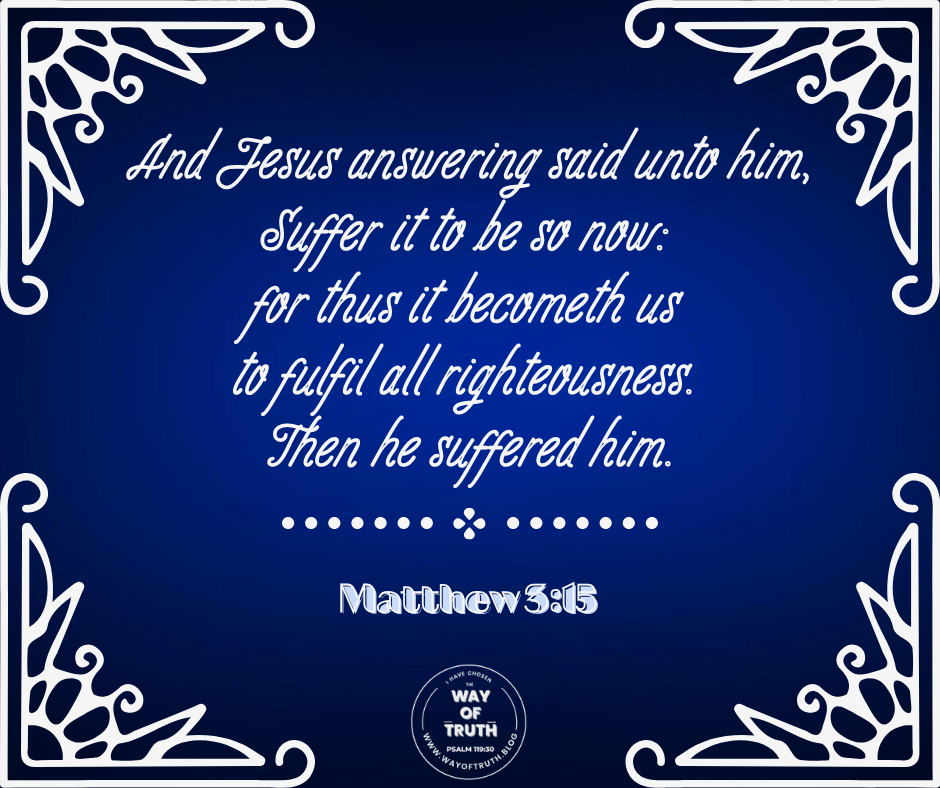
John had just tried to avoid baptizing Jesus. The objection made sense. If baptism is for repentant sinners, why would the sinless Messiah step into the water?
Jesus responds calmly: “Suffer it to be so now.” In other words, allow it. Permit this. This moment fits within a larger plan. John doesn’t yet see the full picture, but obedience is required in the present.
Jesus doesn’t argue abstract theology. He doesn’t lecture John. He gives a reason grounded in divine purpose: “for thus it becometh us to fulfil all righteousness.”
Notice the word “us.” This isn’t Christ acting alone in isolation. John has a role to play. There’s shared obedience here. God’s redemptive plan includes faithful participation from His servants.
“Fulfil all righteousness” doesn’t mean Jesus needed moral correction. Throughout Scripture, righteousness refers to conformity to God’s revealed will. Jesus is saying that this act aligns perfectly with the Father’s design.
Righteousness here isn’t private virtue. It’s covenant obedience. The Messiah must walk the path appointed for Him. That path includes identifying with sinners, endorsing John’s prophetic ministry, and inaugurating His public mission in visible submission.
John yields: “Then he suffered him.” Obedience follows understanding, even if understanding is partial.
Righteousness Fulfilled, Not Earned
This verse guards a crucial truth. Jesus doesn’t pursue righteousness because He lacks it. He fulfills righteousness because He embodies it.
The broader testimony of Scripture affirms His sinlessness. If we weaken that, the gospel collapses. A sinful Savior cannot save.
So, what does fulfillment mean here?
It means Jesus actively accomplishes everything required under God’s redemptive plan. Where Adam failed, He obeys. Where Israel stumbled, He stands firm. He doesn’t bypass obedience. He completes it.
Some interpretations attempt to treat this moment as symbolic repentance on Jesus’ part. That reading doesn’t hold. John’s objection confirms that Jesus isn’t a sinner seeking cleansing. Jesus’ own explanation anchors the act in righteousness, not remorse.
Others try to reduce this to mere public relations, as if Jesus simply wanted to endorse John’s movement. But “fulfil all righteousness” goes deeper than endorsement. It speaks to divine necessity. This is part of what must happen.
Theologically, this moment anticipates substitution. Jesus identifies with sinners at the Jordan. Later, He will bear their sins at the cross. Righteousness is not only fulfilled by His obedience in life but by His sacrifice in death.
Righteousness in Scripture isn’t achieved by human effort. It’s accomplished by Christ and received by faith. This verse quietly points in that direction. The One who fulfills righteousness will later give it.
Obedience Before Revelation
There’s something beautifully practical here.
John didn’t fully understand. But when Jesus explained enough, John obeyed. “Then he suffered him.”
That pattern matters. Sometimes God reveals His will without providing complete explanation. We want the entire blueprint. He often gives the next step.
Obedience precedes clarity.
For believers, this verse challenges selective submission. We may agree with the broad doctrines of faith yet resist specific acts of obedience that feel confusing or uncomfortable. John could have clung to his objection. Instead, he yielded.
There’s also encouragement here. If fulfilling righteousness required Christ’s active obedience, then our salvation rests not on our performance but on His.
That doesn’t make obedience optional for us. It reorders it. We obey not to establish righteousness but because righteousness has been fulfilled for us.
In the life of the church, this shapes our posture. Baptism, worship, service, repentance, generosity, and evangelism aren’t self-generated attempts to impress God. They’re responses to a righteousness already accomplished in Christ.
And we glorify God most clearly when we trust His wisdom over our instincts.
If You Have Never Received the Righteousness He Fulfilled
Jesus said this act was necessary “to fulfil all righteousness.” That righteousness includes the perfect obedience you and I have never achieved.
The Bible teaches that we fall short of God’s standard. Our thoughts, words, and actions reveal sin. The penalty is real. Separation from God is not theoretical.
But the good news is that Jesus fulfilled what we could not. He obeyed where we disobeyed. He went to the cross and bore the judgment sinners deserve. He rose again, victorious over death.
Salvation isn’t earned by religious activity. It’s received by repentance and faith. Turn from your sin. Trust in Christ alone. Believe that His obedience and His sacrifice are sufficient for you.
When you trust Him, His righteousness is credited to you. You’re not left to construct your own standing before God. You stand clothed in what He fulfilled.
That’s grace.
You can’t fulfill righteousness on your own. But you can receive the One who has.
Don’t delay. Come to Him.
Reflection and Response
- What does it mean that Jesus fulfilled righteousness rather than merely teaching it?
- In what areas am I resisting obedience because I don’t fully understand God’s purposes?
- How does Christ’s active obedience strengthen my assurance of salvation?
- Do I view righteousness as something to earn or something to receive through faith?
- Have I personally trusted in the One who fulfilled all righteousness on my behalf?